

Complete Cat Litter Production Line — Plant Setup & Equipment Guide
Introduction: What a Cat Litter Production Line Actually Involves
If you are researching a complete cat litter production line, you are almost certainly asking a bigger question than “what machine makes cat litter?” You are evaluating whether to build or expand a cat litter manufacturing plant, and you need to understand the full picture — equipment, process flow, facility requirements, investment range, and the operational commitments that come after startup.
That is what this guide covers.
A cat litter production line is not a single machine. It is a sequenced system of industrial equipment that transforms raw materials — most commonly bentonite clay, but also tofu residue, silica gel, wood pellets, or paper — into finished, packaged cat litter products at commercial scale. Depending on your raw material and product specification, the line configuration changes significantly.
LANE Machinery has designed and delivered complete granule and powder processing lines for clients across 30+ countries, primarily in the fertilizer sector. The same core technologies — crushing, mixing, granulation, drying, cooling, screening, and packaging — apply directly to cat litter production, making this a natural extension of our engineering expertise.
By the end of this article, you will understand every major component in a cat litter production line, what each one does, how to compare supplier proposals, and what questions to ask before you invest.
Understanding Cat Litter Types and Their Production Requirements
Before discussing equipment, you need to be clear on what type of cat litter you intend to produce. The production line configuration is entirely determined by the product category.
Bentonite Cat Litter (Clay-Based Clumping Litter)
Bentonite-based litter is the global market leader, accounting for approximately 60–70% of worldwide cat litter sales. It is valued for its natural clumping ability — when wet, sodium bentonite swells and forms a tight clump that can be scooped out, leaving the remaining litter clean.
Production requirements: A bentonite cat litter processing equipment line typically requires raw bentonite crushing, drying (bentonite is often mined with 25–35% moisture), fine grinding to achieve the target particle size distribution (usually 0.5–2.5 mm), screening to grade the product into specific size fractions, and a dust extraction system — because bentonite dust is both a product quality issue and a workplace safety concern.
Some manufacturers add a small percentage of soda ash (sodium carbonate) during processing to enhance the swelling properties of calcium bentonite, converting it to sodium bentonite through ion exchange. This requires an additional mixing stage.
Tofu (Soybean Residue) Cat Litter
Tofu cat litter is a fast-growing category, particularly in Asian markets and among environmentally conscious consumers worldwide. Made from soybean residue — a byproduct of tofu and soy milk production — it is biodegradable, flushable, and has natural odor-absorbing properties.
Production requirements: A tofu cat litter production line starts with drying the wet soybean residue, grinding it to a fine powder, mixing with binders (food-grade starch, guar gum, or CMC), pelletizing through an extrusion or ring-die granulator, drying the formed pellets, cooling, screening to remove fines, and packaging. The entire line must be constructed to food-grade hygiene standards if the product claims flushable/biodegradable certification.
Silica Gel Crystal Litter
Silica gel litter uses amorphous silica (silicon dioxide) crystals with a highly porous structure that absorbs liquid and traps odor. It is non-clumping but has extremely high absorbency — a small amount lasts significantly longer than clay litter.
Production requirements: Silica gel production involves chemical synthesis rather than mechanical processing, so the equipment requirements are fundamentally different — reactors, washing tanks, drying ovens, and crushers/screeners for particle sizing. This is a chemical processing plant, not a mechanical granulation plant, and is outside the scope of what most granule equipment manufacturers provide.
Recycled Paper and Wood Pellet Litter
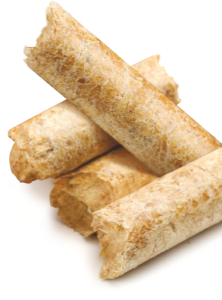
Paper-based and wood pellet litters serve the natural/biodegradable segment. Production involves shredding, pulping, pelletizing (for wood), drying, and bagging. These are lower-density products that require specialized handling equipment to manage bulk without compaction.
Key takeaway for buyers: Decide your product category first. The same equipment supplier that excels at a bentonite production line may have no experience with silica gel. LANE Machinery, for example, specializes in mineral and organic granule processing lines — bentonite, tofu, and pelletized litters fall squarely within our capability. Silica gel does not.
Core Equipment in a Complete Cat Litter Production Line
A full-scale cat litter manufacturing plant integrates the following equipment stages. The exact configuration depends on your raw material and target output, but the fundamental unit operations are consistent.
1. Raw Material Crushing and Pre-Processing
Bentonite arrives from the mine in lumps ranging from fist-sized to boulder-sized, with moisture content that can exceed 30%. The first processing stage reduces this to a manageable particle size.
Equipment used:
- Jaw crusher (primary crushing): Reduces mined bentonite to < 50 mm particles. Motor sizes typically 15–55 kW depending on throughput.
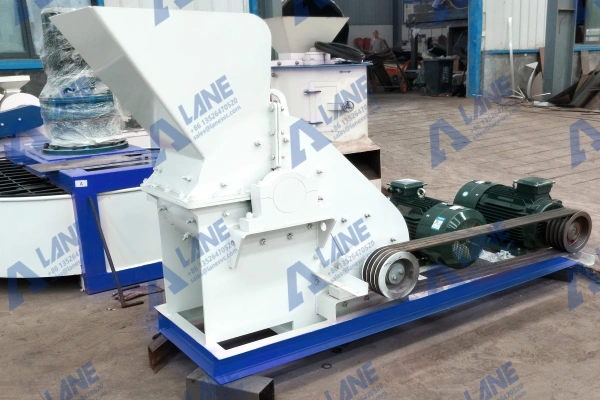
- Hammer crusher or cage mill (secondary crushing): Further reduces particles to < 5 mm. For bentonite, a hammer crusher with wear-resistant manganese steel hammers is standard.
- Moisture pre-treatment: If incoming bentonite exceeds 18–20% moisture, a pre-drying stage using a rotary drum dryer is inserted before fine grinding. Wet bentonite is sticky and will blind grinding equipment.
For tofu litter, the pre-processing stage starts with a soybean residue dryer — typically a flash dryer or rotary drum dryer — to reduce the moisture from ~80% (as received from tofu factories) to 10–12% before grinding.
2. Grinding and Particle Size Control
This stage determines the final product consistency and is one of the most critical quality control points in the line.
Equipment used:
- Raymond mill / vertical roller mill: For bentonite, a Raymond mill is the industry standard for producing powder in the 100–325 mesh range (0.044–0.15 mm). These mills achieve high throughput (3–20 tons per hour) with relatively low energy consumption.
- Ball mill: An alternative for ultra-fine grinding below 325 mesh, but with higher energy cost per ton.
- Air classifier: Integrated with the grinding mill, an air classifier separates on-spec powder from oversize material, returning the latter to the mill for re-grinding. This closed-circuit design prevents over-grinding and maintains consistent particle size.
For tofu cat litter, a universal pulverizer or pin mill is typically used, grinding the dried soybean residue to 60–100 mesh powder.
3. Mixing and Additive Dosing
Not all cat litter products require additives, but for those that do — bentonite with soda ash activator, tofu litter with starch binder, or scented litter with fragrance — the mixing stage must achieve uniform distribution.
Equipment used:
- Double-shaft paddle mixer: Provides high-shear mixing for bentonite + soda ash blends. Batch capacities from 500 kg to 3,000 kg. Mixing time is typically 3–5 minutes per batch.
- Horizontal ribbon mixer: Gentler mixing action, preferred for tofu litter powder + binder blending where you want to avoid overheating the starch binder.
- Liquid dosing system: For products requiring fragrance, mineral oil (dust suppressant), or water addition. Metering pumps with spray nozzles ensure even distribution.
4. Granulation / Pelletizing
This is the core shaping stage. The technology choice depends entirely on your product type.
For bentonite cat litter: Most bentonite litter products are sold as irregular granules or crushed-and-sized particles, not artificially formed pellets. The “granulation” is achieved through crushing and screening rather than agglomeration. The dried, ground bentonite powder is compacted (if needed), then screened to the target particle size distribution. Disc pan granulators are sometimes used if the product specification calls for rounded pellets, but this is less common for bentonite.
For tofu cat litter (and other pelletized products):
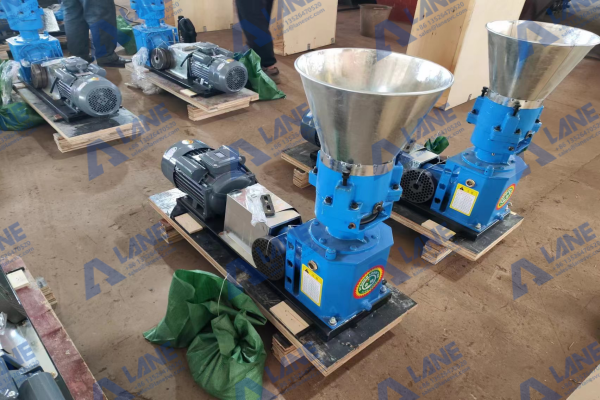
- Ring-die pellet mill: Compresses the mixed powder through a rotating ring die under high pressure. Pellet diameter is controlled by the die hole size (typically 2–5 mm for cat litter). Output: 0.5–5 tons per hour depending on die size and motor power (37–132 kW).
- Flat-die pellet mill: Lower throughput alternative, sometimes used for smaller-scale production (up to 1 ton per hour).
- Extrusion granulator: Produces cylindrical pellets through a screw or plunger extrusion mechanism. Good for consistent pellet shape and density.
5. Drying
After pelletizing (especially for tofu litter or any wet-granulated product), the pellets contain 15–25% moisture and must be dried to < 8% for shelf stability.
Equipment used:
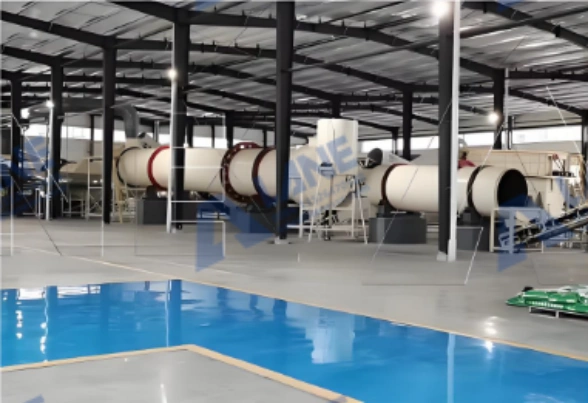
- Rotary drum dryer: The workhorse of industrial drying. A large rotating cylinder (1.2–2.8 m diameter, 8–18 m length) with internal lifting flights that cascade the product through a stream of hot air. Heat source can be natural gas, diesel, biomass, or steam coil. Drying temperature: 150–300°C at the inlet, 60–80°C at the outlet.
- Fluidized bed dryer: Alternative for temperature-sensitive products. More expensive per ton of water evaporated but gentler on the product. Less common in cat litter production due to cost.
6. Cooling
Hot product exiting the dryer cannot be packaged immediately — it will continue to release moisture inside the bag, causing clumping and potential mold growth.
Equipment used:
- Rotary drum cooler: Similar construction to the dryer but without the heat source. Ambient air is drawn through the rotating drum to bring product temperature down to < 5°C above ambient. Typically paired 1:1 with the dryer.
- Counter-flow cooler: More compact alternative, commonly used in pellet mill lines. Product flows downward through a cooling chamber while air moves upward.
7. Screening and Size Classification
This is where the product is separated into salable fractions. Screening is a quality-defining step — inconsistent particle size is one of the most common customer complaints in cat litter.
Equipment used:
- Vibrating screener: Linear or circular motion, 2–4 decks. For a typical bentonite litter line, a 2-deck screener separates: oversize (> 2.5 mm, returned to crusher), product (0.5–2.5 mm), and undersize (< 0.5 mm, which may be sold as a finer-grade product or recycled).
- Rotary drum screener: Higher capacity, gentler on granules. Preferred when throughput exceeds 15 tons per hour and breakage must be minimized.
8. Dust Collection System
Cat litter production — especially bentonite — generates significant dust. Beyond workplace safety regulations, excess dust in the final product causes consumer complaints and returns.
Equipment used:
- Baghouse (pulse-jet dust collector): Captures airborne dust at each transfer point, crusher, mill, screener, and packaging station. Designed to handle the high dust loading typical of bentonite processing. Filter bags in Nomex or polyester with PTFE membrane for fine particle capture.
- Cyclone separator: Pre-separates heavier particles before the baghouse, reducing filter loading and extending bag life.
9. Packaging
The final stage. Cat litter is typically packaged in 5–25 lb (2.3–11.3 kg) plastic bags for retail, or 25–50 lb bulk bags for commercial/institutional buyers.
Equipment used:
- Automatic weighing and bagging machine: Fills pre-made bags or forms-fills-seals from roll stock. Weighing accuracy ±0.2%. Speed: 4–12 bags per minute depending on bag size and product flow characteristics.
- Palletizing system (optional): Robotic or conventional palletizer for stacking filled bags onto shipping pallets.
Complete Production Process Flow
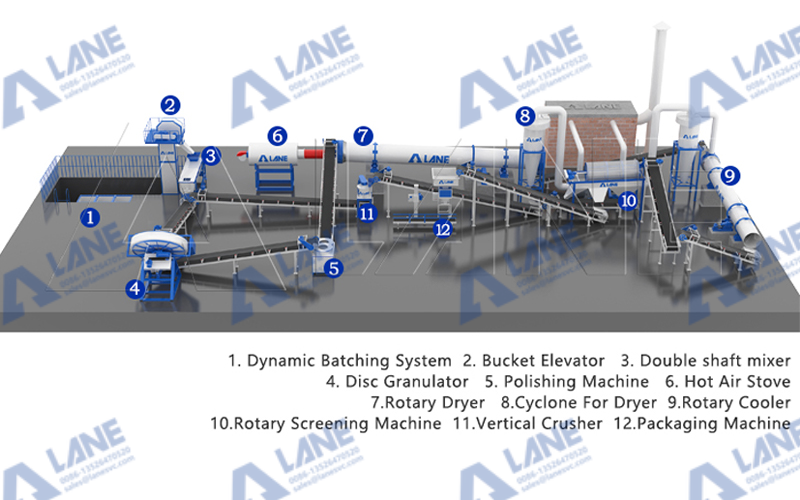
Here is how the equipment stages connect in a typical bentonite cat litter processing equipment line:
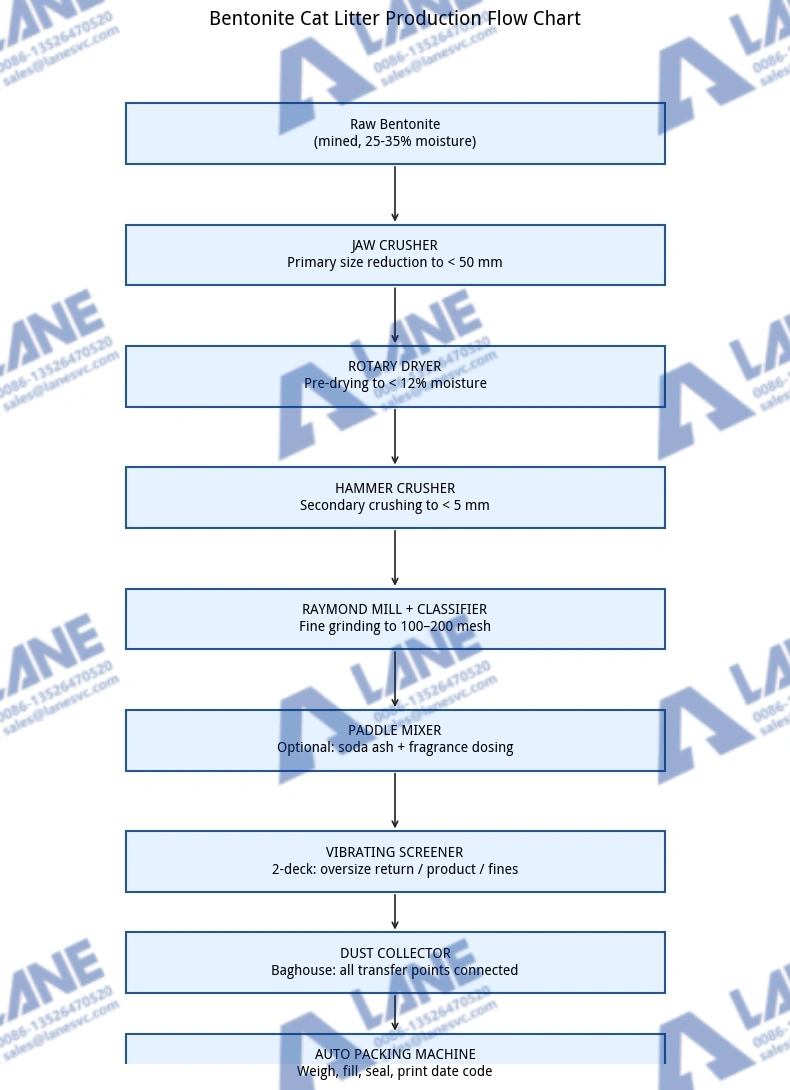
The tofu cat litter line follows a similar sequence but replaces the jaw crusher and Raymond mill with a soybean residue dryer and universal pulverizer, and adds a pellet mill between mixing and drying.
Plant Setup: Space, Utilities, and Infrastructure
A cat litter manufacturing plant requires more than equipment. When budgeting and planning, account for these infrastructure needs.
Facility Size Guidelines
| Production Capacity | Recommended Floor Area | Building Height |
|---|---|---|
| 5,000 tons/year | 800–1,200 m² | 8–10 m (eave height) |
| 10,000 tons/year | 1,500–2,000 m² | 10–12 m |
| 30,000 tons/year | 3,000–4,500 m² | 12–14 m |
| 50,000+ tons/year | 5,000–8,000 m² | 14–16 m |
These figures assume raw material and finished goods warehousing on the same site. Building height must accommodate the Raymond mill classifier (typically 6–8 m tall), dryer elevation, and overhead bin access.
Utility Requirements
Electricity: A 10,000-ton/year line typically requires 250–400 kW connected load (3-phase, voltage per your local grid). The Raymond mill and pellet mill are the largest individual consumers. Confirm with your local utility that the available fault current at your site is adequate for the motor starting currents — large mills can draw 6–8× their running current during startup.
Fuel for drying: You have options.
- Natural gas: Cleanest, most controllable. Requires pipeline connection or LNG storage. Consumption: approximately 25–40 m³ per ton of water evaporated.
- Coal / biomass: Lower fuel cost, higher ash handling and emissions control burden. A 1 million kcal/hr coal hot-blast furnace is typical for a medium-scale line.
- Steam: If your site already has a boiler, a steam-coil air heater can serve the dryer. This is common in integrated manufacturing facilities.
Water: Process water consumption is modest (mainly for dust suppression sprays). However, you need a reliable supply for equipment cleaning between product changeovers.
Compressed air: Required for pulse-jet dust collector cleaning, pneumatic valves, and packaging machine actuators. A 15–22 kW screw compressor with refrigerated air dryer is standard.
Environmental and Permitting
Bentonite dust emissions are regulated in most jurisdictions. Your permit application will typically require:
- Stack emission test results for the baghouse outlet (guaranteed < 30 mg/Nm³ for a properly sized unit)
- Fugitive dust control plan for material handling areas
- Noise assessment (main sources: Raymond mill, hammer crusher, vibrating screener)
Budget for local environmental consulting — do not assume your equipment supplier handles permitting in your jurisdiction.
Investment Considerations: What a Cat Litter Production Line Costs
The question every buyer asks: “What’s the number?” The honest answer is that it depends on capacity, raw material, automation level, and origin of equipment.
Equipment Cost by Capacity (Ballpark Ranges, FOB China)
| Annual Capacity | Line Configuration | Estimated Equipment Cost (USD) |
|---|---|---|
| 3,000–5,000 tons | Semi-automatic bentonite line | $80,000 – $150,000 |
| 10,000–15,000 tons | Full automatic bentonite line | $200,000 – $400,000 |
| 20,000–30,000 tons | Full automatic bentonite + tofu dual-purpose | $450,000 – $700,000 |
| 50,000+ tons | High-capacity dedicated line | $800,000 – $1,500,000+ |
These are equipment-only prices (FOB manufacturer’s factory). They do not include:
- Shipping and inland freight (budget 5–15% depending on destination)
- Import duties and customs clearance
- Civil works and building construction
- Installation labor and supervision (typically 8–15% of equipment cost)
- Electrical and utility connections
- Operator training and initial production support
What Separates a $150,000 Line from a $400,000 Line
This is one of the most important distinctions for buyers to understand. Two suppliers may both quote a “complete cat litter production line” at vastly different prices. Here is where the differences lie:
-
Construction material: Carbon steel vs. stainless steel (304/316L) for product-contact surfaces. Stainless steel adds 40–80% to component cost but is mandatory for tofu litter or any product making food-safety-adjacent claims.
-
Automation level: A manual line requires 8–12 operators per shift. A fully automated line needs 3–4. The difference in annual labor cost — especially in high-wage markets — can recover the equipment premium within 2–3 years. Automated lines also deliver more consistent product quality because they remove operator variability.
-
Control system sophistication: A basic line uses individual motor starters with manual controls. An advanced line uses a PLC (Programmable Logic Controller) with touchscreen HMI, centralized monitoring, recipe management for different products, and alarm logging. PLC integration adds $20,000–$50,000 but transforms how you operate and troubleshoot the plant.
-
Dust collection quality: A minimum-compliance dust system might use a single cyclone that captures 85–90% of dust. A proper system uses individual baghouses or a central baghouse with pulse-jet cleaning, capturing > 99.5% of dust. The difference is visible in your factory air quality, operator health, and regulatory compliance.
-
Supplier engineering depth: Some suppliers sell standard machines. Others (including LANE Machinery) provide process engineering, plant layout drawings, piping and instrumentation diagrams, and on-site commissioning support. You pay for engineering — but you also avoid the costly mistakes that come from piecing together a line without process integration.
Recommendation: If you are entering cat litter production for the first time, do not optimize for the lowest equipment price. Optimize for process integration and supplier engineering support. A line that costs $50,000 less but takes 6 extra months to reach stable production has cost you far more than you saved.
How to Evaluate a Cat Litter Production Line Supplier
When you receive proposals from equipment manufacturers, use this framework to compare them objectively.
1. Does the supplier have direct experience with YOUR raw material?
Bentonite, tofu residue, wood fiber, and silica gel each behave differently in processing equipment. A supplier with 20 years of fertilizer granulation experience may be excellent at a bentonite line but has no relevant experience for silica gel. Ask to see:
- References from customers producing the same type of cat litter you intend to make
- Video of their equipment running the same or similar material
- Samples of finished product from their production lines
2. What is included in the quotation — and what is excluded?
A common frustration for buyers: discovering mid-project that “complete line” did not include the dust collection system, or that the dryer quote excluded the heat source, or that electrical control panels stop at the machine and you need to wire everything together yourself.
Ask for a detailed scope-of-supply document that lists every motor, every conveyor, every chute, every sensor. Have your engineer review it against the process flow diagram.
3. Who handles installation and commissioning?
Equipment-only suppliers ship you the machines and send you a manual. Full-service suppliers provide:
- On-site installation supervision (their engineer works alongside your local contractor)
- Cold commissioning (checking rotation direction, alignment, interlocks without material)
- Hot commissioning (running with material, tuning parameters, training your operators)
- Performance test run (achieving guaranteed throughput and product quality parameters)
The difference in ramp-up time between these two approaches can be 6–12 months.
4. What are the after-sales support terms?
- Warranty period and what it covers (12 months is standard; verify it covers manufacturing defects, not just parts)
- Spare parts availability: Can they express-ship critical spares (bearings, screen meshes, mill rollers) within 72 hours?
- Remote support capability: Do their engineers speak English (or your language)? Can they diagnose issues via video call?
- Consumable parts pricing: Mill grinding rollers, screen meshes, and baghouse filter bags are recurring costs. Ask for expected service life and replacement cost for each.
Maintenance: Keeping Your Production Line Running
A well-maintained cat litter production line should operate at > 85% overall equipment effectiveness (OEE). Neglected maintenance — especially on dust collection and screening equipment — is the most common cause of production bottlenecks and product quality drift.
Daily Maintenance (Operator Level, 15–30 Minutes Per Shift)
- Check baghouse differential pressure gauge — rising ΔP indicates filter bag blinding, address before it causes dust emissions
- Inspect screen mesh condition on vibrating screener — a torn mesh lets oversize into the product stream
- Verify all bearing temperatures with an infrared thermometer — any bearing running > 70°C needs investigation
- Walk the line and listen for unusual noise — grinding, squealing, or rhythmic knocking at any piece of rotating equipment warrants a shutdown inspection
Weekly Maintenance (Maintenance Team, 2–4 Hours)
- Grease all bearing housings per the lubrication schedule in your equipment manual
- Check drive belt tension on crushers, mills, and fans
- Clean or replace air compressor intake filters
- Test all emergency stop buttons and safety interlocks
Monthly Maintenance
- Inspect mill grinding rollers and grinding ring for wear — replace before wear exceeds 50% of original thickness
- Check rotary drum dryer and cooler tire and trunnion roller wear patterns
- Calibrate the packaging machine weighing system with test weights
- Inspect all flexible connections (bellows, hose connections) for dust leaks
Annual Shutdown Maintenance (Plan 5–7 Days)
- Replace all bearings in critical-path equipment (mill, dryer, pellet mill)
- Replace gearbox oil in all drives
- Clean and inspect the baghouse — replace filter bags if > 2 years in service by time or if pressure drop does not recover after pulse cleaning
- Perform laser alignment on all motor-to-driven-equipment couplings
- Remove and inspect the dryer internal lifting flights for wear
- Full electrical inspection: tighten all terminal connections, test insulation resistance on all motors
Maintenance cost budgeting: Plan for approximately 2–3% of the equipment purchase price per year in spare parts and consumables. This increases to 4–5% after year 5 as major components reach end of service life.
Frequently Asked Questions
1. What is the minimum investment to start a small cat litter manufacturing plant?
A semi-automatic bentonite cat litter production line with 3,000–5,000 tons/year capacity typically requires $80,000–$150,000 for core equipment (FOB). With building, installation, utilities connection, and initial working capital, a realistic minimum project budget is $200,000–$350,000 depending on your local construction and labor costs.
2. Can I produce both bentonite and tofu cat litter on the same line?
Partly. The material handling, drying, cooling, screening, dust collection, and packaging stages can be shared. However, the grinding equipment is fundamentally different — bentonite requires a Raymond mill, while tofu litter starts with a soybean residue dryer and pulverizer. A dual-purpose line requires investment in parallel front-end processing, which typically adds 40–60% to the equipment cost. Evaluate whether your market justifies both product types before committing to a dual-purpose configuration.
3. How long does it take from placing an order to starting production?
Equipment manufacturing: 45–90 days from confirmed order and deposit. Shipping: 15–45 days depending on destination. Installation and commissioning: 30–60 days from equipment arrival, assuming your civil works are complete. Plan for 4–6 months total timeline from order to first commercial production.
4. What are the most common quality problems in cat litter production?
The three most frequent issues: (1) inconsistent particle size distribution, usually caused by worn screen meshes or incorrect mill classifier settings; (2) excessive dust in the finished product, caused by undersized or poorly maintained dust collection; (3) inadequate clumping performance in bentonite litter, caused by using the wrong bentonite grade or incomplete soda ash activation.
5. Do I need different packaging equipment for different bag sizes?
Modern automatic packaging machines can be adjusted to handle a range of bag sizes (typically 2–25 kg) with a changeover time of 15–30 minutes. If you plan to produce both retail-size bags (5–10 lb) and bulk bags (25–50 lb), specify this during equipment selection — the bag clamp, filling spout, and heat sealer dimensions need to accommodate your full size range.
6. What certifications or standards apply to cat litter manufacturing?
This depends on your target market. For the US and EU: no specific mandatory certification for non-food cat litter products. However, retailers often require third-party lab test reports for dust content, silica content (respirable crystalline silica is a health concern), and clumping performance. If you market a “flushable” or “biodegradable” product, you may need testing to support these claims under local consumer protection regulations. Tofu litter sold with food-grade claims requires production in a facility that meets food safety standards (HACCP or equivalent).
7. What is the typical profit margin in cat litter manufacturing?
Industry benchmarks suggest gross margins of 25–40% for branded cat litter, and 15–25% for private-label or bulk production. The largest cost components are raw materials (30–45% of COGS), packaging (10–15%), energy (8–12%), and labor (5–15% depending on automation level and location). Margins are highly sensitive to bentonite sourcing — manufacturers located close to bentonite mines or ports have a structural cost advantage.
8. Can existing fertilizer production equipment be converted to produce cat litter?
Yes — with qualifications. Many of the core unit operations (crushing, drying, screening, packaging) are identical in principle. The differences are in material-specific adjustments: screen mesh sizes, mill classifier settings, and — critically — the cleaning and contamination control standards. A line that previously produced NPK fertilizer cannot produce cat litter without a thorough decontamination cleaning procedure, and you must verify that no cross-contamination risk remains. The dust collection system may also need upgrading for the finer particle sizes typical of cat litter products.
9. Is there a market advantage to producing multiple types of cat litter?
It depends on your distribution strategy. If you sell to supermarkets and pet chains, offering bentonite + tofu + crystal gives buyers a one-vendor solution and can improve your shelf space allocation. If you sell private-label to a single large retailer, they will typically specify one product type. Manufacturing multiple types increases operational complexity — more raw material inventory, more changeover cleaning, more quality testing protocols. Start with one product type, establish stable production and cash flow, then evaluate adding a second line.
10. What ongoing technical support should I expect from a good equipment supplier?
A reputable supplier should provide: (a) telephone/video support within 24 hours for operational issues; (b) spare parts shipment within 72 hours for critical items; (c) an annual service visit option for preventive maintenance inspection; (d) continuous improvement recommendations — as they develop better mill roller materials or screen mesh designs, you should be informed. A supplier who goes silent after the warranty expires is not a partner — they are a transactional vendor.
Get Expert Guidance on Your Cat Litter Production Line
Every cat litter manufacturing project is different. Your raw material source, target market, budget, and automation requirements are unique. A generic quotation will not serve your business.
LANE Machinery provides no-obligation process consultation for prospective cat litter manufacturers. We will:
- Review your raw material specification and target product requirements
- Propose a line configuration matched to your capacity and budget
- Provide a preliminary plant layout drawing
- Share reference cases and sample production data
With 30+ countries of export experience in granule processing equipment, we understand what it takes to build, commission, and operate a line that delivers consistent product quality — year after year.
Cat litter production is a growing market. Build your plant on proven equipment engineering, not on trial and error.