

How to Reduce Dust Emissions in Cat Litter Production Lines: Practical Solutions for Cleaner and More Efficient Manufacturing
How to Reduce Dust Emissions in Cat Litter Production Lines: Practical Solutions for Cleaner and More Efficient Manufacturing
1. Why Dust Is a Hidden but Critical Problem in Cat Litter Production
In cat litter manufacturing, dust is often underestimated—but it directly affects product quality, worker safety, and production efficiency.
Many factories experience:
✦ excessive airborne dust in workshops
✦ high material loss during processing
✦ unstable product quality
✦ environmental compliance challenges
In reality, understanding How to Reduce Dust Emissions in Cat Litter Production Lines is essential for building a modern, efficient, and sustainable production system.
Dust control is not a single solution—it requires optimization across the entire production line.
2. Where Does Dust Come From in the Production Process?
To solve the problem, manufacturers must first identify its sources.
✦ Major Dust-Generating Stages
♡ raw material crushing
♡ mixing and material transfer
♡ granulation process
♡ drying and cooling
♡ screening and packaging
Each of these steps contributes to dust generation, which means that How to Reduce Dust Emissions in Cat Litter Production Lines must be addressed systematically rather than at a single point.
3. 🪨 Raw Material Handling: Control Dust at the Source
Dust control should begin at the very first stage of production.
✦ Common Issues
✦ fine particles released during crushing
✦ uncontrolled feeding systems
✦ poor material sealing
✦ Practical Solutions
♡ use enclosed crushing systems
♡ install dust collection units
♡ optimize feeding methods
Proper raw material handling is a foundational step in solving How to Reduce Dust Emissions in Cat Litter Production Lines.
4. 🌀 Mixing Stage Optimization: Reduce Dust Formation
Mixing is not only about material uniformity—it also impacts dust levels.
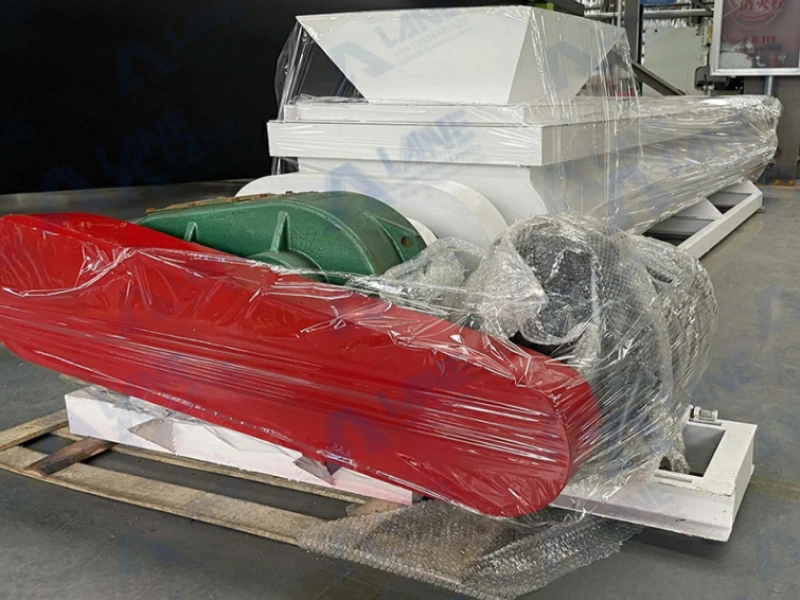
✦ Equipment Used
- Horizontal Mixer
- Twin Shaft Mixer
✦ Key Strategies
♡ ensure proper moisture adjustment
♡ avoid over-drying raw materials
♡ maintain sealed mixing systems
Well-controlled mixing reduces fine particle dispersion and improves overall process stability.
5. ⚙️ Granulation Stage: Turning Dust into Value
Granulation is one of the most effective ways to reduce dust.
✦ Equipment Used
✦ How It Helps
♡ converts fine powder into pellets
♡ reduces airborne particles
♡ improves product consistency
A properly adjusted granulation process plays a key role in How to Reduce Dust Emissions in Cat Litter Production Lines by transforming dust into usable product.
6. 🔥 Drying and Cooling: Prevent Secondary Dust
Improper drying can create additional dust problems.
✦ Common Issues
✦ over-drying leading to brittle pellets
✦ excessive airflow causing dust spread
✦ Optimization Methods
♡ control drying temperature
♡ optimize airflow design
♡ maintain stable material movement
Drying systems must be carefully designed to support overall dust reduction.
7. 🌬️ Screening and Conveying: Critical Dust Control Points
Screening and material transfer are often the biggest sources of visible dust.
✦ Equipment Used
- Vibrating Screener
- Belt Conveyors
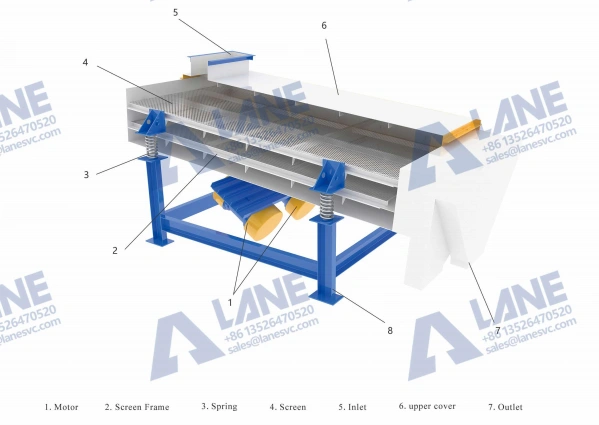
✦ Solutions
♡ install dust covers and enclosures
♡ use sealed conveying systems
♡ integrate dust collection systems
These improvements are essential when addressing How to Reduce Dust Emissions in Cat Litter Production Lines.
8. 📦 Packaging Stage: Final Dust Control Barrier
Packaging is the last opportunity to control dust before products leave the factory.
✦ Common Problems
✦ dust release during filling
✦ spillage around packaging machines
✦ Solutions
♡ use automatic packing machines with dust control
♡ install local dust extraction systems
♡ ensure precise material feeding
An optimized packaging system helps complete the dust control strategy.
9. 🌟 LANE’s Dust Control Solutions Across the Production Line
At LANE, dust control is integrated into the entire production system—not treated as an afterthought.
🌱 ✦ Integrated Equipment Design
We design production lines with:
- enclosed crushing systems
- sealed mixers (Horizontal / Twin Shaft)
- optimized disc granulators
- controlled drying systems
- enclosed screening and conveying
- automated packing systems
🌱 ✦ Engineering Optimization
♡ airflow management
♡ material flow optimization
♡ system sealing design
🌱 ✦ Customized Solutions
Each project is tailored based on:
♡ raw material characteristics
♡ plant layout
♡ production capacity
Our goal is to provide practical solutions for How to Reduce Dust Emissions in Cat Litter Production Lines while maintaining production efficiency.
10. 💡 Practical Tips for Continuous Dust Reduction
Beyond equipment, operational practices also matter.
✦ Recommended Actions
✦ monitor moisture content regularly
✦ maintain equipment sealing
✦ clean dust collection systems
✦ train operators properly
Consistent management ensures long-term success in controlling dust.
11. 🧾 Conclusion
Dust control is not a single upgrade—it is a system-level improvement.
By understanding and implementing strategies for How to Reduce Dust Emissions in Cat Litter Production Lines, manufacturers can achieve:
✔ cleaner production environment
✔ improved product quality
✔ reduced material loss
✔ compliance with environmental standards
A well-designed dust control system enhances both operational efficiency and long-term sustainability.
For more details, please feel free to contact us.
Henan Lane Heavy Industry Machinery Technology Co., Ltd.
Email: sales@lanesvc.com
Contact number: +86 13526470520
Whatsapp: +86 13526470520