

Industrial Cat Litter Production Line: Full Setup Guide
There’s a moment — usually around the third factory visit — when you stop seeing a cat litter plant as a building full of machines and start seeing it as a system. Every dryer, every granulator, every conveyor plays a role. Getting that system right from day one separates operations that scale from those that stall. Whether you’re entering pet care manufacturing for the first time or expanding existing capacity, choosing the right industrial cat litter production line is the most consequential decision you’ll make.
This guide covers what you actually need to know before investing in an industrial cat litter production line: the process, the core equipment, the realistic costs, and the decisions that matter most before you commit.
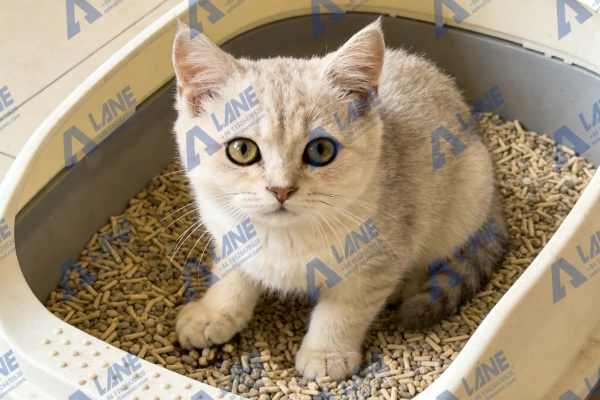
What Is an Industrial Cat Litter Production Line?
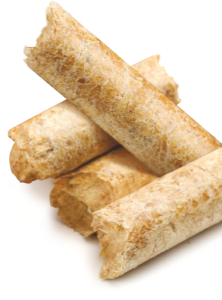
An industrial cat litter production line is a fully integrated set of machines that transforms raw materials — typically bentonite clay, silica, tofu-based compounds, or recycled paper — into finished, market-ready product at commercial volumes. Unlike batch-scale setups, a properly configured industrial cat litter production line operates continuously, with automatic feeding, granulating, drying, screening, coating, and packaging running in sequence.
The distinction matters. I’ve worked with clients who bought individual machines thinking they’d built a production line. They hadn’t. A real industrial cat litter production line is engineered as a unit, not assembled from mismatched components.
Core Equipment: What a Full Line Requires
The equipment configuration depends on your raw material and product type. Most standard bentonite or granulated litter setups share a consistent set of core machines:
- Hammer mill— Reduces bulk inputs to workable particle sizes. Feed consistency here affects every downstream stage.
- Mixing machine— Blends base material with binders, moisture-control additives, and deodorants. Horizontal paddle or twin-shaft models are standard.
- Rotary drum granulator— One of the most critical pieces on any industrial cat litter production line. Forms wet granules that become the finished litter pellets. Drum angle, rotation speed, and moisture input all drive granule size distribution.
- Disc granulator— An alternative for smaller-diameter, highly uniform granules. Some producers run both types to differentiate product grades.
- Rotary drum dryer— Reduces post-granulation moisture to target spec, typically 10–14%. Temperature control is non-negotiable. Over-drying weakens granule structure.
- Rotary drum cooler— Follows the dryer directly. Hot product packed straight from the dryer clumps in bags. Cooling also stabilizes the granule before coating is applied.
- Rotary drum screener— Separates on-spec product from oversized material and fines. Undersized returns to granulation; oversized goes back to crushing. A well-tuned screening stage meaningfully improves yield.
- Coating machine— Applies fragrance, clumping agents, or antibacterial treatments to granule surfaces. Rotary drum coating is standard.
- Automatic packaging machine— Weighing, bagging, and sealing. Often becomes the production bottleneck if under-specified relative to line output.
- Dust collection system— Required at every dry-process stage. Fine particle losses add up fast at volume, and regulatory compliance is non-negotiable in most markets.
From what I’ve seen in the field, the granulation and drying sections generate the majority of quality complaints when industrial cat litter production lines underperform. Invest well there.
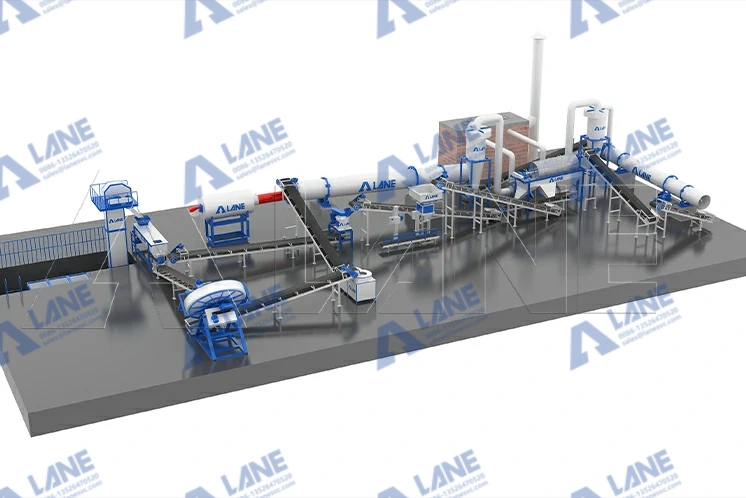
Process Flow: How the Line Connects
Raw material is crushed, blended, granulated, dried, cooled, screened, optionally coated, then packaged. Straightforward in concept. The complexity is in the handoff points.
Throughput must be matched across every stage. A 5 t/h dryer paired with a 3 t/h packaging line creates constant backup. A packaging speed exceeding dryer output creates idle time. Mass balance across the full line matters more than the spec sheet of any individual machine.
Investment Overview: Realistic Cost Ranges
Full-line costs vary considerably by capacity, automation level, and raw material type. Rough benchmarks for complete setups:
- Small scale (1–3 t/h): $80,000–$200,000 USD
- Medium scale (3–8 t/h): $200,000–$500,000 USD
- Large scale (8+ t/h): $500,000+ USD
This quote covers equipment costs only. Civil engineering, utility facilities, installation and working capital are additional expenses. New investors typically underestimate installation and commissioning costs by 20%–30%.
Common Setup Mistakes Worth Knowing About
Undersizing the dryer. Producers often size to granulator output at ideal conditions. Real-world moisture inputs vary. Build in margin.
Skipping the cooler. Some buyers cut initial costs by relying on ambient air. In humid climates or high-throughput operations, this doesn’t work. The rotary drum cooler earns its place on every serious line.
Buying cat litter equipment piecemeal. Compatibility between components — shaft speeds, conveyor heights, control systems — matters enormously. Sourcing cat litter equipment from a single supplier who designed the line as a system reduces integration problems considerably.
Ignoring dust management early. Bentonite dust is fine, pervasive, and damaging to both equipment and workers. Design dust collection into the initial layout. Retrofitting it later costs more and disrupts production.
Skipping a proper site assessment. Before specifying any cat litter equipment, understand your building layout, utility capacity, and material flow paths. These constraints shape equipment selection more than many buyers expect.
Practical Notes Before You Start
Visit a working line before ordering anything. Supplier reference visits are generally available and genuinely useful. Talk to the operators, not just the sales team.
Raw material supply security matters as much as equipment quality. An industrial cat litter production line running at 60% capacity because bentonite supply is inconsistent is a far more common problem than equipment failure.
And honestly — don’t try to build the largest industrial cat litter production line you can afford on day one. Scale up from proven throughput.
Conclusion
An industrial cat litter production line is a significant capital commitment, but it’s a well-understood process. The equipment is mature, supply chains are established, and market demand — across Asia, North America, and Europe — keeps growing.
Get the process layout right before you buy. Know your raw material. Size for realistic conditions, not ideal ones. Selecting the right cat litter equipment partner — one with genuine commissioning support, not just delivery — makes a measurable difference in how quickly your line hits stable output.
Ready to plan your project? Get customized plant layouts and real project references. Compare options first — our preliminary consultation is free.
Frequently Asked Questions
Q1: What raw materials can an industrial cat litter production line process?
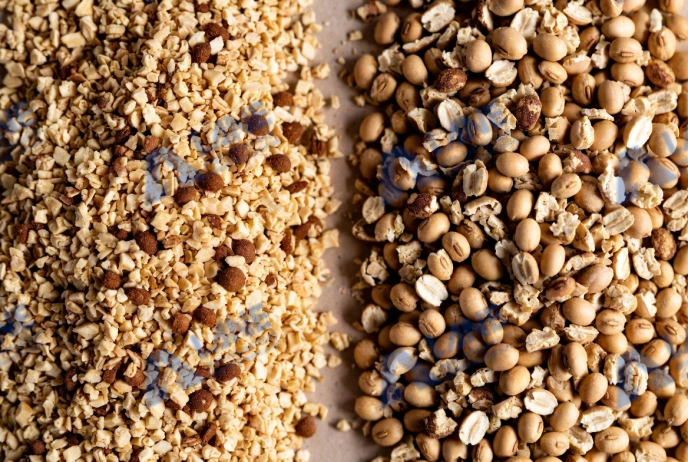
The most common are bentonite clay, silica gel, tofu or soy fiber, corn starch compounds, and recycled paper pulp. Each requires different configurations, particularly at granulation and drying. Bentonite-based industrial cat litter production lines are the most widely deployed globally.
Q2: How long does commissioning take?
From equipment delivery to stable production, expect 30–90 days depending on site readiness, line complexity, and operator experience. Lines sourced from a single supplier typically commission faster than multi-source setups.
Q3: What output capacity should I plan for?
Most commercially viable entry points begin at 2–3 t/h. Below that, unit economics are difficult. Operations targeting export markets typically run 5–10 t/h lines. Your market size, storage capacity, and capital budget should all inform this decision.
Q4: How much does cat litter equipment maintenance cost annually?
For a mid-size line running two shifts, budget 3–5% of equipment value per year for maintenance, wear parts, and consumables. Dryer flights, screen meshes, and granulator liners are the most frequent replacement items.
Q5: Can one line produce multiple litter types?
With formula adjustments, moisture control changes, and screen resizing, many lines can produce both clumping and non-clumping products. Switching between fundamentally different raw materials generally requires significant reconfiguration or a dedicated line.
Q6: What certifications should cat litter equipment meet?
Equipment for EU or North American markets should meet CE or equivalent safety standards. Electrical systems must comply with local regulations. Ask suppliers for documentation before purchase — not after.
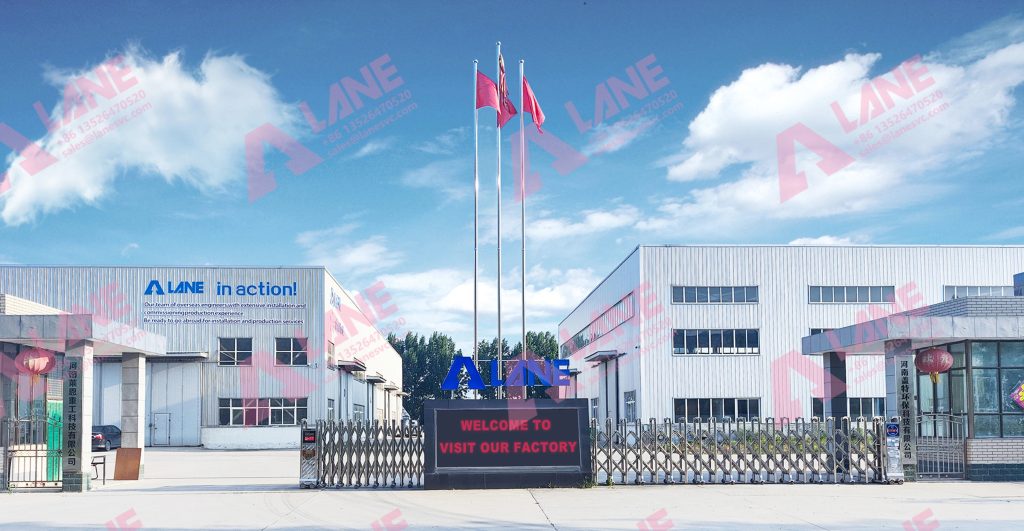
For more details, please feel free to contact us.
Henan Lane Heavy Industry Machinery Technology Co., Ltd.
Email: sales@lanesvc.com
Contact number: +86 13526470520
Whatsapp: +86 13526470520