

How to Start Cat Litter Business Operations at Scale: Equipment, Costs & Production Line Planning
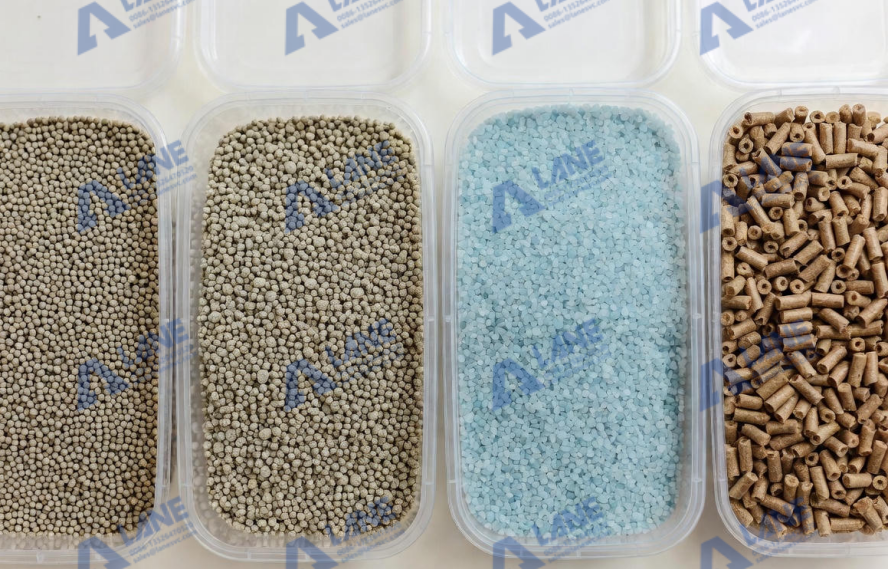
There’s a window of opportunity in the cat litter business that serious manufacturers should not be sleeping on. Global pet ownership keeps climbing, and with it, demand for absorbent, odor-controlling litter products — across bentonite, tofu-based, silica gel, and blended formulations. But here’s the thing: knowing how to start cat litter business operations at scale is a fundamentally different challenge from understanding the market. The equipment decisions, facility layout, and production planning you make in year one will shape your margins for the next decade.
This guide provides detailed explanations, what this facility looks like—from raw material handling to finished packaging—along with the type of operational details involved, These factors do indeed play a role on the factory floor.
Understanding What “At Scale” Actually Means
A small pilot line and a commercial production facility are two completely different animals. When we talk about scaling a cat litter business, we mean output targets above 5,000 metric tons per year, continuous production runs, and equipment that can handle feedstock variability without constant intervention.
After that, what I saw in the field, The biggest mistakes made by early interventionists are their underestimation of the material handling complexity and the overestimation, Bentonite, for example, behaves quite differently at 12% humidity compared to 18%. This variance has real consequences downstream.
Therefore, before specifying machinery, You need answers to three things: What raw materials do you source? What end product specifications do you pursue? And how realistic is your throughput in the first year compared to the third year?
Core Equipment for a Cat Litter Business Production Line
Let me walk you through the equipment categories that make up a properly configured cat litter business production line. Every piece matters — and cutting corners on one usually creates bottlenecks somewhere else.
Material Preparation & Processing
- Hammer crusher— primary size reduction for raw bentonite or mineral clay blocks
- Raymond mill— fine grinding to achieve the particle size distribution needed for good clumping performance
- Rotary drum dryer— critical for moisture control before granulation; moisture content directly impacts final product hardness and absorbency
- Belt conveyor system— continuous material transfer between processing stages; layout efficiency here affects your entire floor plan
Granulation
- Rotary drum granulator— the workhorse of many bentonite litter lines; produces the rounded, uniform granules consumers expect
- Disc granulator— often preferred for tofu-based or composite litters where gentler agglomeration is needed
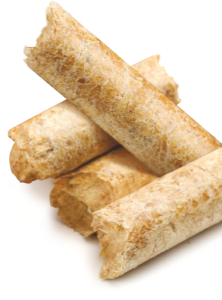
- Extrusion granulator— common for plant-fiber or activated carbon litter formats; produces the distinctive cylindrical pellet shape
Post-Processing & Finishing
- Rotary drum cooler— brings granule temperature down after drying; skipping this step causes packaging problems and degraded shelf life
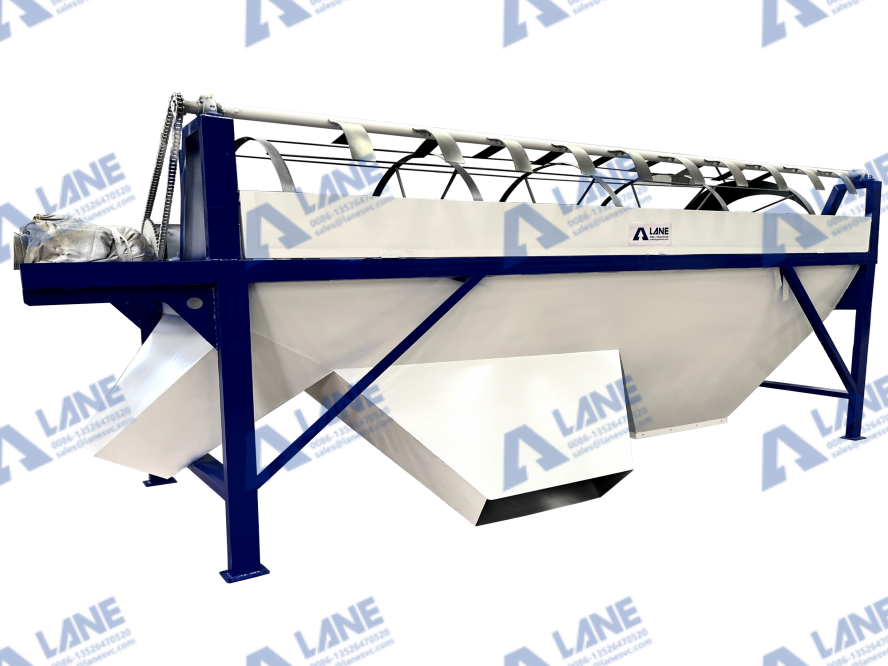
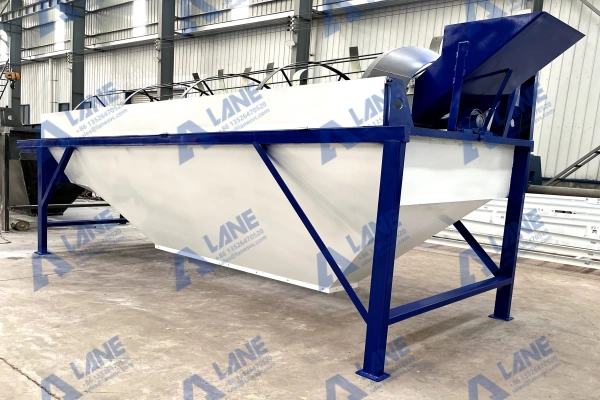
- Vibrating screen— particle size classification; separates on-spec product from fines and oversized material for recycle
- Automatic packing machine— weight-based filling for retail bags (1 kg, 5 kg, 10 kg formats); integration with conveyor for continuous output
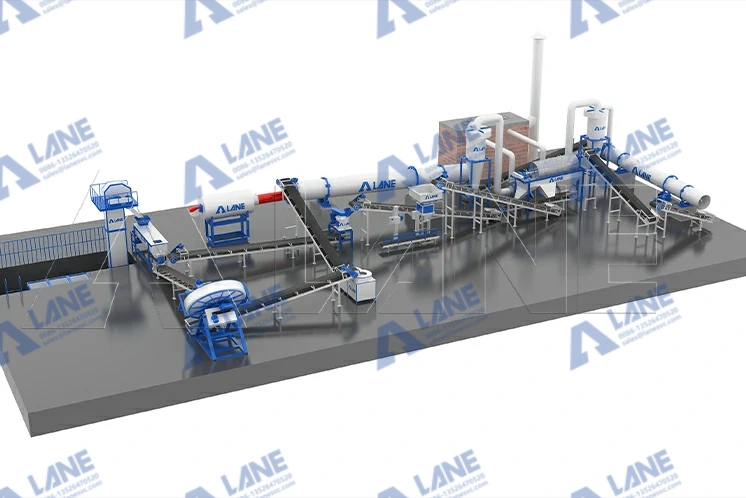
Production Layout and Facility Planning
You can have excellent individual machines and still have a poorly performing cat litter business operation. Layout matters enormously — and this is actually where a lot of first-time producers underestimate their needs.
A functional facility typically requires a main processing building of 2,000-4,000 square meters for medium-sized enterprises as well as raw material warehouses, a finished goods warehouse and supply infrastructure. Dust management and drainage must be installed from the outset and not retrofitted.
Equipment suppliers with experience in industrial granulation—companies such as LANE, which is extensively involved in granular product applications – often offer layout consulting as part of their equipment package. This should be taken seriously, especially when you are configuring a line for the first time. The value lies not only in the machines; it is the line architecture.
Cost Benchmarks: What Should You Actually Budget?
To be honest, the cost question is where a lot of cat litter business feasibility studies go wrong. They quote equipment at list price and ignore installation, commissioning, staff training, and the first six months of production inefficiency while operators learn the system.
Rough benchmarks for a mid-scale cat litter business (annual capacity: 8,000–15,000 MT):
- Equipment (full line): USD 300,000–700,000 depending on automation level and granulation technology
- Civil construction / facility fit-out: USD 150,000–400,000
- Raw material pre-inventory: USD 50,000–150,000
- Working capital buffer (12 months): at minimum, 20–25% of total equipment cost
These numbers shift significantly by region. Southeast Asian markets tend to offer lower construction costs; EU and North American plants face higher compliance-related expenses.
From Planning to First Production Run
Based on my experience with industrial granulation projects, the realistic time frame from signed equipment contracts to the first commercial production series is 8-14 months for a Greenfield plant, including the lead time to equipment production (typically 45-90 days), Shipping, Installation, Dry commissioning, Initial commissioning and production trials.
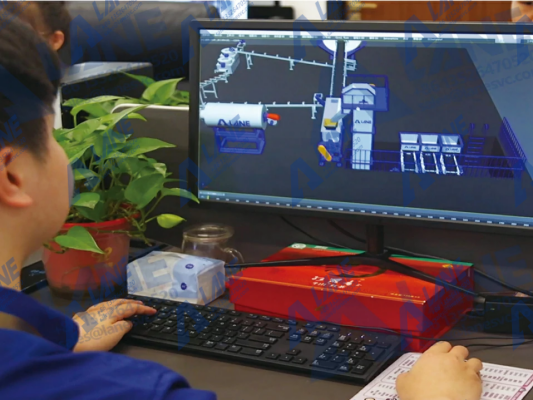
Which variables compress or extend this timeline? Approvals, Infrastructure readiness and how quickly your operators become familiar with process control. Do not underestimate the third.
Conclusion: Build the Right Line, Not Just a Line
Knowing how to start cat litter business operations properly is really about sequencing decisions correctly. Lock in your product specifications first. Then design your production line around those specs — not the other way around. The equipment exists to serve your product, and your product exists to serve a market with specific performance expectations.
If you’re at the feasibility or equipment sourcing stage for your cat litter business, speak with suppliers who have actual granulation line experience, not just catalog sellers. The difference in post-sale support alone can determine whether your first year is a learning experience or a costly crisis.
FAQ
Q1: What is the minimum investment to start a cat litter business at commercial scale?
A realistic minimum for a functional mid-scale cat litter business with proper equipment and facility setup starts around USD 500,000–800,000 all-in. Smaller pilot operations exist below that threshold, but they are generally not viable for competitive retail market entry.
Q2: What raw materials are most commonly used in industrial cat litter production?
Sodium bentonite clay is the dominant raw material globally, valued for its natural clumping properties. Other materials include sepiolite, tofu residue (soybean fiber), silica gel, activated carbon, and various plant-fiber blends. Raw material choice drives equipment selection significantly.
Q3: How long does it take to set up a cat litter business production line?
For a greenfield facility, expect 8–14 months from equipment order to first commercial production. Key variables include equipment lead time, facility construction, regulatory approvals, and operator training.
Q4: Is a rotary drum granulator suitable for all types of cat litter?
Not universally. Rotary drum granulators perform excellently for bentonite-based litters. For plant-fiber or composite formulations, disc granulators or extrusion granulators often produce better particle characteristics. Equipment selection should always follow product specification.
Q5: What certifications or standards apply to cat litter business manufacturing facilities?
This varies by target market. Export-oriented producers typically need ISO 9001 quality management certification at minimum. Markets in the EU and North America may require additional safety, environmental, and labeling compliance. Dust control systems must meet local occupational health standards regardless of export destination.
Q6: Can existing fertilizer or mineral processing equipment be repurposed for a cat litter business?
In some cases, yes — particularly equipment like rotary drum dryers, belt conveyor systems, and vibrating screens. Granulation equipment compatibility depends heavily on the specific material properties and target particle size. A process engineer should assess suitability before any repurposing decision is made.
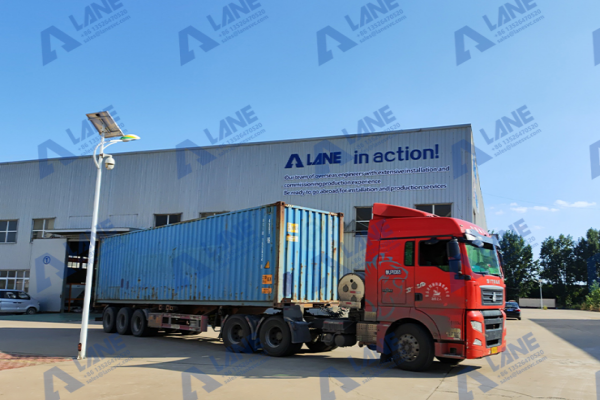
For more details, please feel free to contact us.
Henan Lane Heavy Industry Machinery Technology Co., Ltd.
Email: sales@lanesvc.com
Contact number: +86 13526470520
Whatsapp: +86 13526470520