

Why a Screening Machine Plays a Bigger Role in Cat Litter Consistency Than Expected
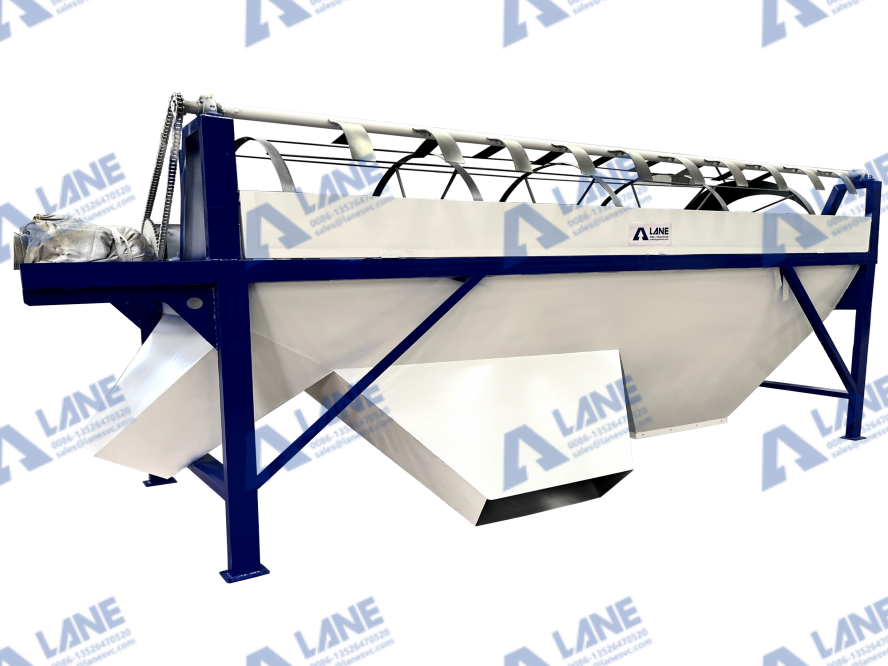
Why a Screening Machine Plays a Bigger Role in Cat Litter Consistency Than Expected
Lead in – The Invisible Step Behind Consistent Products
In many cat litter factories, quality issues such as uneven granules, excessive dust, or unstable clumping performance are often traced back to forming or crushing stages.
However, in practice, these problems frequently originate later in the process. The screening machine, often viewed as a simple sorting device, plays a far more critical role than most manufacturers expect.
A well-designed screening machine does not just separate particles by size. It acts as a quality gate that determines whether downstream processes remain stable and whether the final product meets long-term consistency requirements. In modern cat litter production, screening is no longer a passive step—it is an active control point within the entire production line.
Screening Is Not Just Sorting
It is common to describe screening as “separating qualified and unqualified particles,” but this explanation is incomplete. In reality, a screening machine performs three essential functions simultaneously:
-
It defines the acceptable particle size window.
-
It isolates unstable material before it reaches packaging.
-
It provides feedback to upstream equipment.
Without effective screening, even well-performing crushing or forming equipment cannot deliver consistent results. Oversized granules, fines, and fragile particles will mix into the finished product, creating batch-to-batch variation. This is why screening must be considered part of the quality control system rather than a simple mechanical operation.
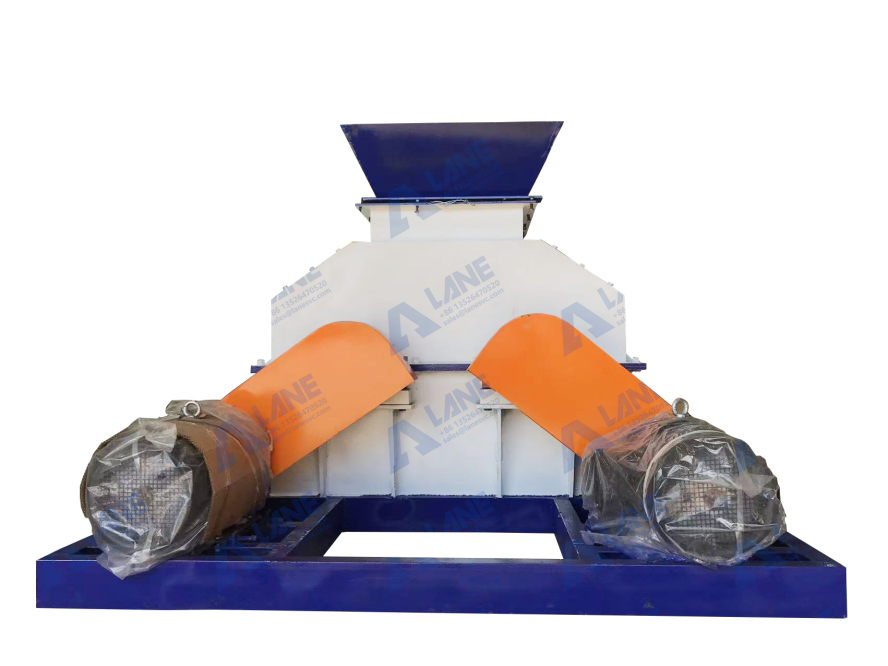
Particle Size Is a Result, Not a Setting
Particle size distribution is often treated as a parameter that can be “set” during production. In practice, it is a result shaped by multiple interacting factors. Among them, the screening machine is one of the most decisive.
While crushing determines how particles break down, screening determines which particles are allowed to move forward.
If screening efficiency fluctuates, particle size distribution will drift even if crushing settings remain unchanged. Stable screening ensures that only granules within the target size range enter the next stage, reinforcing consistency over time.
Where Dust and Broken Granules Really Come From
Dust and broken granules are often blamed on raw materials or forming pressure. However, insufficient or unstable screening is frequently the underlying cause. When fine particles are not properly separated, they circulate within the system, increasing abrasion and weakening granule structure.
A screening machine that operates outside its optimal range may also apply excessive mechanical stress, causing otherwise acceptable granules to fracture. This leads to a higher percentage of broken cat litter granules and contributes directly to dust generation during handling and packaging.
Clumping Performance Starts Before the Litter Box
Clumping strength is usually evaluated during product testing or end-user feedback, but its foundation is established much earlier. Granules with uneven size distribution absorb moisture inconsistently, leading to weak or unstable clumps.
By enforcing uniform particle size, a screening machine indirectly stabilizes clumping behavior. Granules of similar size interact with moisture at comparable rates, producing stronger and more predictable clumps. In this sense, clumping performance is not only a formulation issue but also a screening outcome.
Screening as a Feedback Mechanism, Not a Final Step
In advanced production systems, screening is not positioned as the final step before packaging. Instead, it functions as a feedback mechanism that continuously informs upstream equipment.
Oversized particles are redirected to crushing, while excessive fines may signal over-processing or raw material issues. This closed-loop interaction allows the production line to self-correct and maintain balance. A screening machine, therefore, supports system stability rather than acting as an endpoint.
Why Automation Changes Screening Behavior
Manual or semi-automatic screening can work at small scale, but it struggles to maintain consistency under high throughput. Automated screening machines are designed to operate continuously with controlled vibration, load distribution, and separation efficiency.
Automation reduces variability caused by operator intervention and allows screening performance to remain predictable over long production cycles. In integrated lines, automated screening aligns seamlessly with upstream processing and downstream packaging, supporting higher output without compromising quality.
Stability Over Precision: A Quality Perspective
In industrial production, extreme precision is less valuable than long-term stability. A screening machine does not need to achieve perfect separation at every moment; it must maintain consistent performance across weeks and months of operation.
From a quality management perspective, stable screening minimizes production risk, reduces customer complaints, and lowers reprocessing costs. Manufacturers who prioritize screening stability often achieve better overall performance than those focusing solely on individual machine optimization.
Related Solutions for Particle Control
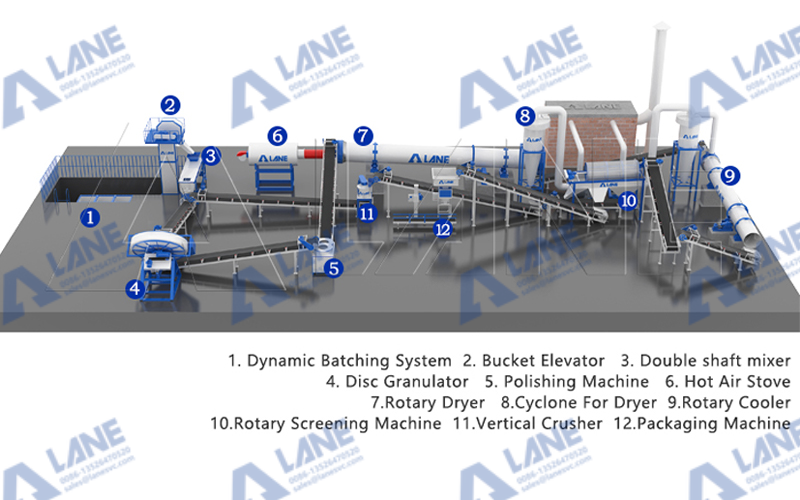
Modern cat litter production relies on multiple interconnected systems to achieve consistent quality. Solutions that commonly work alongside a screening machine include:
-
Cat litter crushing machines for controlled particle breakdown
-
Mixed cat litter production lines for system-level stability
-
Automated packaging systems to protect granule integrity
These components form a coordinated framework where screening plays a central balancing role.
Conclusion – The Screening Machine as a Quality Gate
A screening machine is more than a sorting device. It is a quality gate that determines whether granules meet size, strength, and consistency requirements before reaching the customer. By controlling particle flow, supporting feedback loops, and stabilizing downstream performance, screening contributes directly to reliable and scalable cat litter production.
For manufacturers seeking long-term consistency rather than short-term adjustments, investing attention in screening performance is not optional—it is essential.
For more details, please feel free to contact us.
Henan Lane Heavy Industry Machinery Technology Co., Ltd.
Email: sales@lanesvc.com
Contact number: +86 13526470520
Whatsapp: +86 13526470520