

Wheat Cat Litter Production Line Solution: Efficient Workflow for Biodegradable Cat Litter
Wheat Cat Litter Production Line Solution: Efficient Workflow for Biodegradable Cat Litter
In response to growing market demand for eco‑friendly and biodegradable pet products, many manufacturers are now investing in a dedicated wheat cat litter production line solution. This type of production line is engineered to process wheat‑based and plant‑derived raw materials into high‑performance litter that meets modern consumer expectations for sustainability, clumping performance, and dust control. A well‑designed wheat cat litter production line not only achieves efficient workflow but also ensures product consistency, reduced labor costs, and scalability for different production targets.
1. Introduction: Understanding the Wheat Cat Litter Production Line
A wheat cat litter production line refers to a fully integrated manufacturing system tailored to produce cat litter from wheat fiber and other plant‑based raw materials. Unlike conventional clay or silica litter processes, this line focuses on biodegradable materials that are environmentally friendly and align with global trends toward sustainable pet care products. The workflow typically includes raw material preparation, precise mixing, granulation, drying, screening, and packaging. This structured process ensures that each batch of litter has consistent quality and reliable performance in use.
2. Raw Materials & Formula Design: Biodegradable Base and Performance Factors
For a wheat cat litter production line, choosing the right raw materials is crucial. Wheat fiber and wheat bran provide a natural, biodegradable base that absorbs moisture and clumps effectively when processed correctly. These materials offer inherent environmental benefits and are easier on the user compared to traditional mineral litters. With proper formula design, the litter will deliver superior clumping, odor control, and minimal dust generation — all key quality indicators for biodegradable cat litter.
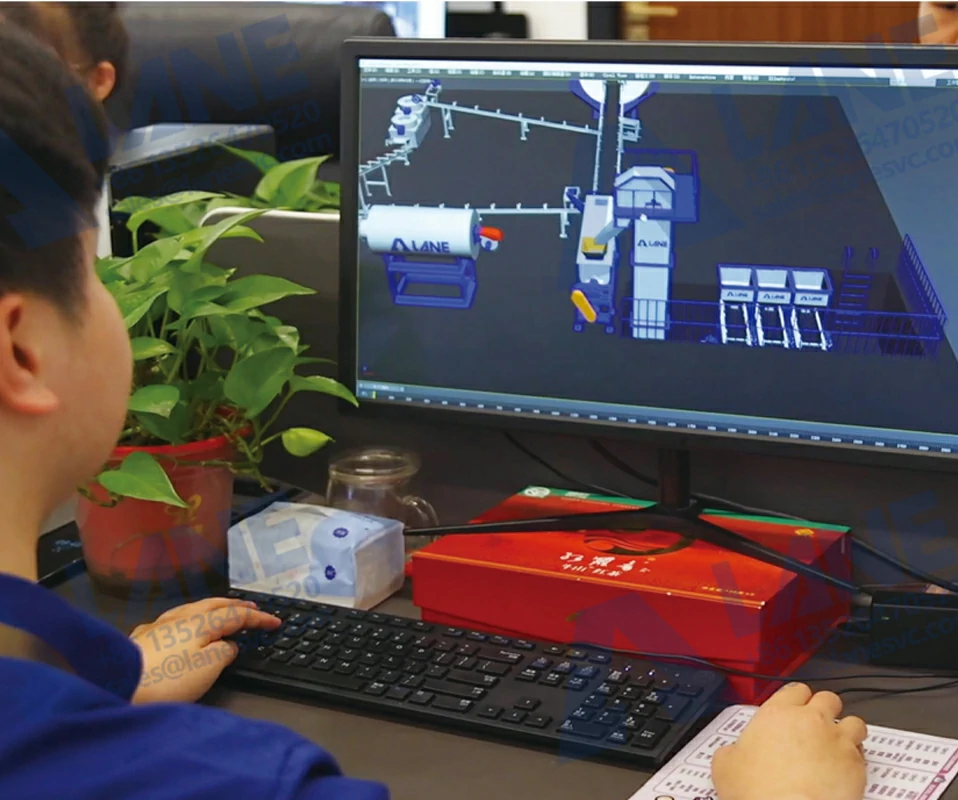
When designing the raw material blend, factors such as water absorption capacity, particle binding, and dust suppression must be balanced. The typical formula will combine wheat‑derived fiber with binders (e.g., starch) to enhance structural integrity while maintaining degradation characteristics suitable for eco‑friendly products.
3. Core Process Steps: Key Stages of the Production Workflow
A reliable wheat cat litter production line follows a series of carefully coordinated steps, each contributing to final product quality and output efficiency:
- Raw Material Preparation & Feeding
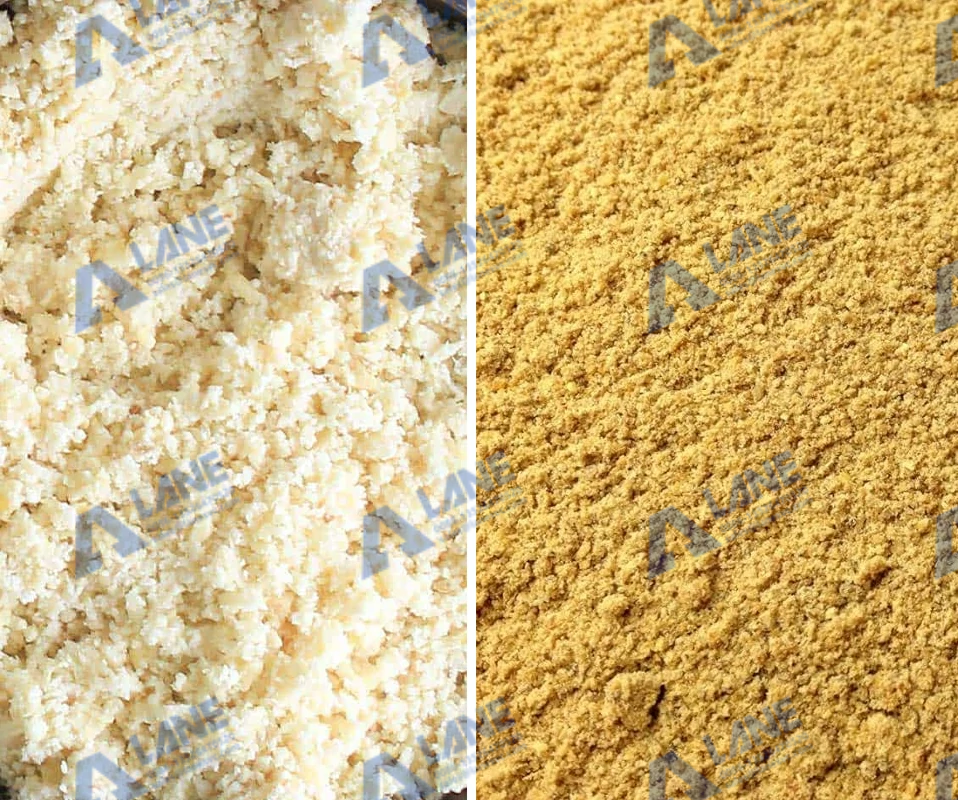
Raw wheat‑based components must first be processed to ensure uniform particle size. This often involves crushing and sieving to remove impurities and prepare the material for mixing.
- Precise Mixing & Batching
Accurate mixing is essential to uniformly distribute materials such as wheat fiber, binders, and additives across the batch. Industrial mixers — typically double shaft mixer or ribbon mixers — ensure homogeneity, which leads to consistent performance in the finished product.
- Granulation / Pelletizing
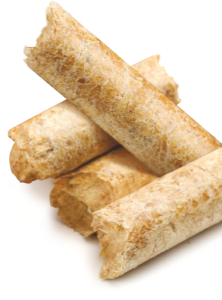
The granulation phase is the heart of the wheat cat litter production line. Pelleting equipment shapes the mixed material into uniform pellets that deliver desirable clumping and absorbency. Pelletizing machines can vary by capacity and technology, such as ring die or extrusion designs, depending on production goals.
- Drying & Moisture Control
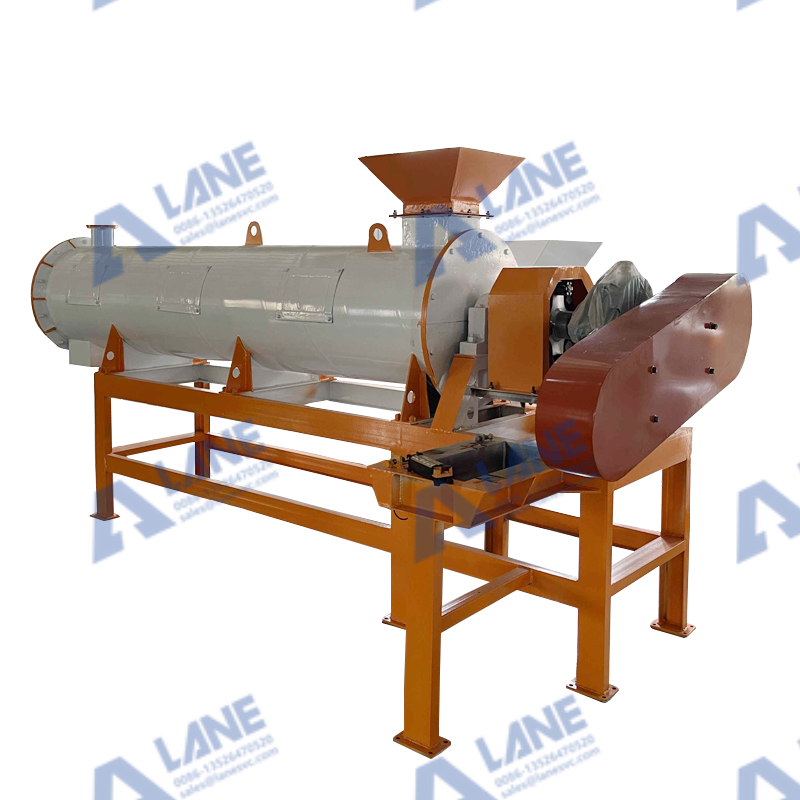
After granulation, drying equipment removes excess moisture to stabilize the pellets, ensuring they are ready for screening and long‑term storage. Proper moisture regulation enhances product shelf life and prevents bacterial growth.
- Screening & Packaging
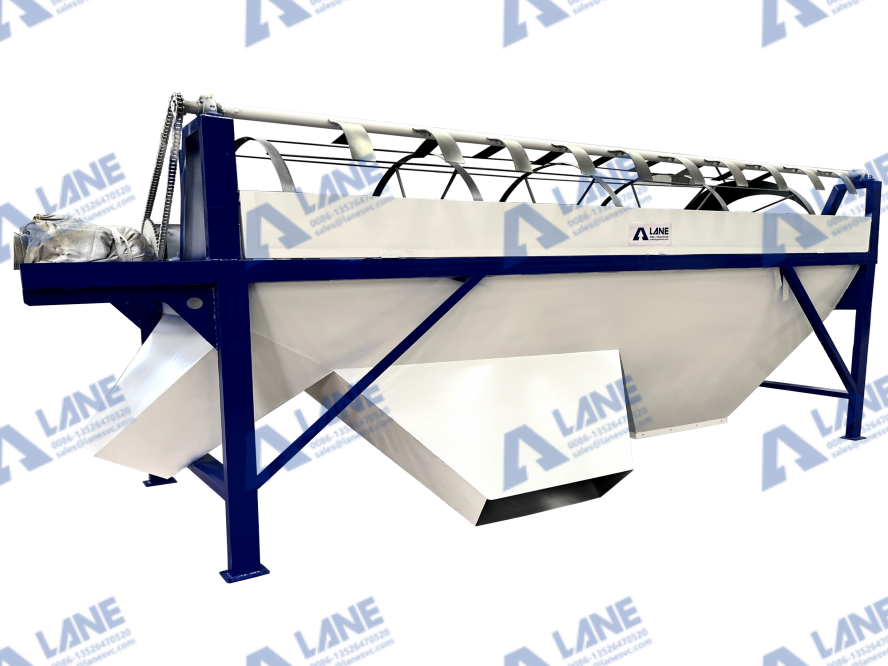
Final screening removes irregular particle sizes and fines. Once sized, the product moves to automatic packaging systems that fill and seal units according to target weights and specifications.
This structured sequence ensures the wheat cat litter production line operates efficiently, handling raw inputs through to market‑ready product with minimal downtime.
4. Step‑by‑Step Equipment Workflow: Equipment Breakdown
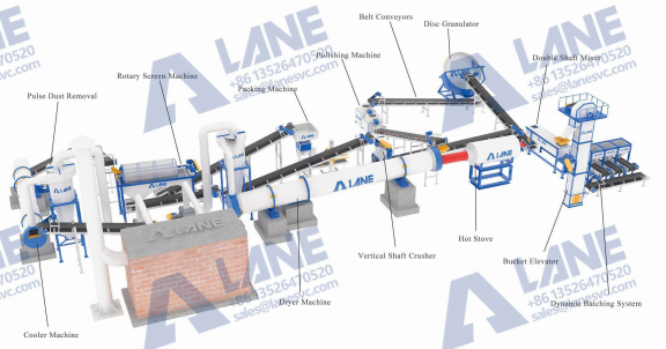
A high‑performing wheat cat litter production line is composed of several specialized machines, each fulfilling a specific role in the production workflow:
- Wheat Powder Crusher
Used at the beginning of the line, this device breaks raw wheat fiber into uniform particle sizes for consistent processing further down the line.
- Mixing Machine
Blends all components (wheat fiber, binders, additives) thoroughly. Choosing a mixer with adjustable speed and high‑efficiency power ensures stable mixing outcomes.
- Pelletizing Machine
Central to the line, the pelletizer transforms mixed materials into compact, uniform pellets. Correct pellet sizing influences the litter’s performance characteristics, particularly absorbency and clumping.
- Rotary Dryer / Conveyor Dryer
These dryers are designed to remove moisture while minimizing thermal damage to biodegradable materials.
- Vibrating Screen & Automatic Packaging Machine
Vibrating screens segregate correct particle sizes, and packaging machines streamline the transition to retail packaging — improving labor efficiency and throughput.
This equipment lineup, when integrated into a single workflow, maximizes output while maintaining consistent product standards.
5. Quality Control & Output Optimization: Ensuring Consistency and Scale
Quality control across the wheat cat litter production line is vital for producing biodegradable litter that meets both performance and market expectations. Producers monitor raw material consistency, moisture content, pellet size distribution, and packaging integrity. Advanced control systems and automation help stabilize parameters across batches, enabling output optimization and reduced variability. By controlling these key indicators, manufacturers ensure each finished product delivers predictable performance for clumping, odor control, and dust suppression.
6. Economic & Sustainability Benefits: Business and Environmental Value
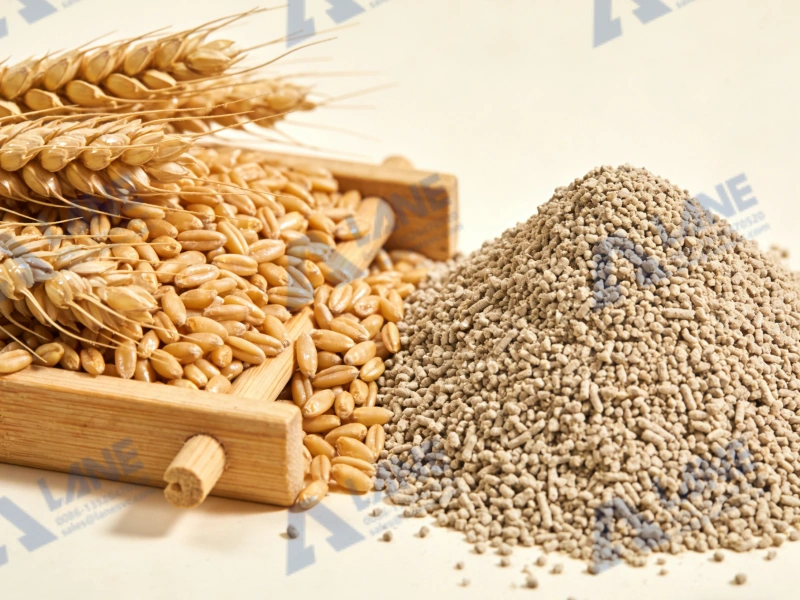
Investing in a wheat cat litter production line delivers both economic and environmental advantages. Wheat‑based litters use renewable agricultural resources instead of mined minerals, aligning with consumer trends toward biodegradable and eco‑friendly products. Such lines enable reduced labor costs via automation and can scale from small to industrial output capacities to suit different business models. In addition to lower raw material costs, the environmental positioning of biodegradable cat litter can help brands capture niche markets that prioritize sustainability.
7. Company Value & Support Services: Why Choose Our Solutions
Selecting a capable partner for your wheat cat litter production line means more than buying equipment — it means gaining design expertise, customized solutions, and reliable after‑sales support. Our company offers:
-
Tailored production line configurations to match your capacity goals
-
High‑efficiency machines engineered for stable operation
-
Full installation and commissioning support
-
Ongoing technical assistance and training
With our comprehensive services, clients can build a production line that not only meets operational targets but also supports long‑term growth and product quality enhancement.
8. FAQ – Common Questions About Wheat Cat Litter Production Line
Q1: How does a wheat cat litter production line differ from a traditional clay litter line?
A wheat line focuses on processing plant‑based materials like wheat fiber, which requires specific mixing and pelleting steps that preserve biodegradability, unlike mineral‑based clay litter workflows.
Q2: Are wheat‑based cat litters truly biodegradable?
Yes, when produced correctly using natural wheat fiber and starch binders, the resulting litter can break down more readily in composting or safe disposal environments than conventional clay litters.
Q3: What determines output efficiency in the production line?
Key factors include machine throughput capacity, automation level, process control systems, and material consistency. A well‑optimized line reduces downtime and maintains quality consistency.
Q4: Can different plant‑based raw materials be used with this line?
Yes. A flexible wheat cat litter production line can adapt to wheat fiber mixed with other plant fibers like corn or pea fiber to tailor final product characteristics.
Q5: How cost‑effective is investing in this production line?
Long‑term cost savings come from automation, reduced labor needs, lower raw material costs, and market potential for eco‑friendly products.
9. Conclusion
A wheat cat litter production line solution provides a structured and efficient workflow for producing high‑quality biodegradable cat litter. From raw material selection and formula design through core processing steps and advanced equipment integration, this production line supports consistency, scalability, and sustainability. With expert partner support and tailored equipment choices, manufacturers can confidently enter or expand within the eco‑friendly pet product market, positioning their brand for long‑term success with environmentally conscious consumers.
For more details, please feel free to contact us.
Henan Lane Heavy Industry Machinery Technology Co., Ltd.
Email: sales@lanesvc.com
Contact number: +86 13526470520
Whatsapp: +86 13526470520