

Vertical Crusher vs Horizontal Crusher for Cat Litter: Choosing the Right Crushing Configuration
Vertical Crusher vs Horizontal Crusher for Cat Litter: Choosing the Right Crushing Configuration
Introduction: Crushing’s Critical Role in Cat Litter Production
Crushing is an essential step in the cat litter production process. Whether the goal is to process raw biomass, paper pulp, or organic waste into a form suitable for granulation, the choice between a vertical crusher vs horizontal crusher for cat litter can significantly affect pellet quality, process stability, and production efficiency.
For manufacturers establishing or upgrading a cat litter production line, crushing is not simply a pre-step—it determines how well raw materials are prepared to interact with mixing, granulation, drying, and screening stages. Understanding the differences between crushing configurations helps avoid bottlenecks and improves downstream performance. Based on real-world project experience, analyzing Vertical Crusher vs Horizontal Crusher for Cat Litter at the system level allows manufacturers to avoid mismatched equipment configurations and reduce long-term maintenance risks.
Understanding Vertical Crushers in Cat Litter Applications
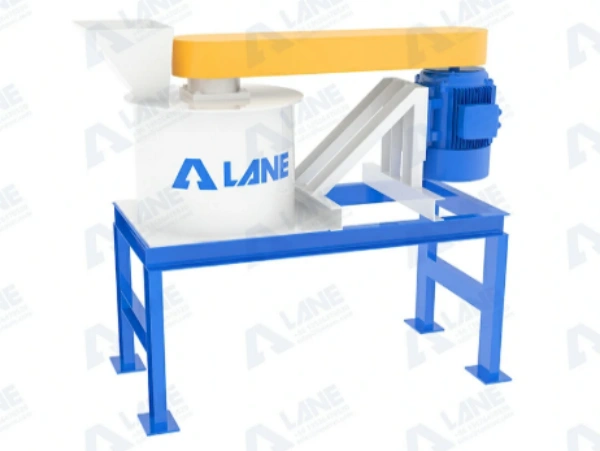
A Vertical Crusher is widely used in various material preparation scenarios, especially where high moisture raw materials are involved. The design of a vertical crusher allows material to be impacted and sheared in a compact space, making it suitable for reducing large chunks into consistent smaller particles with minimal clogging.
Due to its structural advantages, a vertical crusher works effectively for moist, fibrous, and return material that may be encountered in cat litter raw streams, such as recycled paper pulp or high-moisture biomass. Vertical crushers are known for:
-
Good handling of materials with higher moisture content
-
Smooth discharge with reduced blockages
-
A relatively simple structural design that supports long-term operation
Features of Vertical Crusher: Ideal for wet material crushing and reprocessing of returned materials, especially performing exceptionally well in the initial crushing stage.
Exploring Horizontal Crushers in Cat Litter Processing
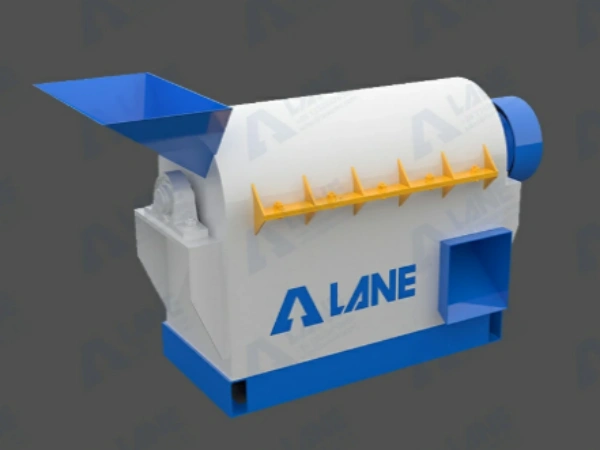
In contrast, the Horizontal Crusher (also known as a semi-wet material crusher) is configured to handle a broader range of moisture conditions, especially when materials are not overly wet but require thorough size reduction.
Horizontal crushers are often selected when raw materials for cat litter have:
-
Mixed moisture content
-
Moderate fibrous texture
-
Requirement for more uniform particle output
In a horizontal crusher, material is sheared between rotors and hammers to produce consistent granules. This makes it suitable for a wide variety of semi-wet biomass and recycled organic materials. Its design typically supports:
-
Comfortable integration with conveyors and feeding systems
-
Better handling of intermediate material sizes
-
Enhanced wear resistance due to hammer and rotor configuration
Vertical Crusher vs Horizontal Crusher for Cat Litter: Process-Level Comparison
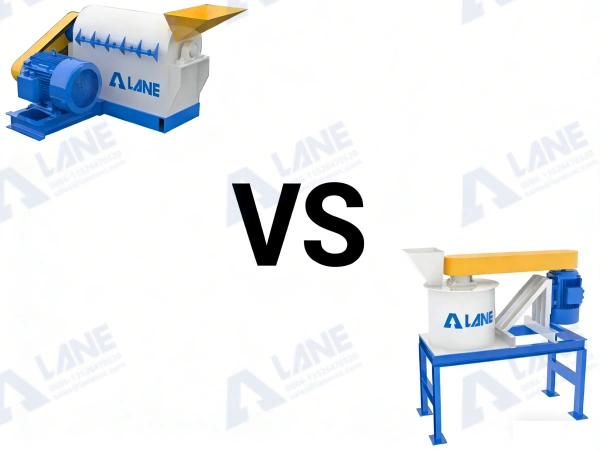
When comparing vertical crusher vs horizontal crusher for cat litter, the choice is less about which type is universally superior, and more about which configuration best matches your raw material properties and process needs. When evaluating Vertical Crusher vs Horizontal Crusher for Cat Litter, manufacturers should focus on how moisture tolerance, particle uniformity, and line integration influence overall production stability rather than viewing crusher selection as an isolated decision.
Moisture Adaptability
-
Vertical Crusher: More effective with higher moisture materials that would tend to stick or clog in other designs, making it ideal for wet raw inputs.
-
Horizontal Crusher: Excels at handling materials with medium moisture content where consistent particle size is a priority.
Particle Uniformity
-
Vertical designs efficiently break down large, sticky clumps
-
Horizontal designs provide smoother and more uniform size reduction
In practical engineering discussions, Vertical Crusher vs Horizontal Crusher for Cat Litter is often evaluated based on how different material states—such as wet reclaimed litter or dry pre-processed granules—behave under continuous crushing conditions.
Integration Compatibility
- Vertical crushers often perform well as a preliminary crushing step, preparing material for mixing and granulation.
- Horizontal crushers are better suited as intermediate crushers when material is already partially processed or has variable moisture.
This functional comparison underscores that the best crushing configuration depends on material type, moisture content, and production objectives.
How Crusher Selection Affects Downstream Cat Litter Equipment
Correct crusher selection has a ripple effect on downstream stages of cat litter production:
-
Mixing: Uniform particle size improves mixing consistency, reducing process variability.
-
Granulation: Feed material from appropriate crushing leads to more stable pellet formation.
-
Drying: Even-sized particles dry more predictably, reducing energy consumption and cycle time.
Inadequate crushing often leads to inconsistent material feed, increasing the likelihood of equipment clogging or uneven pellet quality. Selecting the right crusher—vertical or horizontal—helps ensure smooth operation throughout the production line. From a system design perspective, understanding Vertical Crusher vs Horizontal Crusher for Cat Litter helps engineers reduce process interruptions and improve consistency across mixing, granulation, and drying stages.
Integrating Crusher Selection into a Complete Production Line
Crushing is rarely a standalone consideration. When designing a cat litter production line, engineers look at crushing not just as material size reduction, but as a bridge between raw handling and pellet formation.
Correct integration of a vertical crusher vs horizontal crusher for cat litter into the wider line can:
-
Reduce manual intervention
-
Lower breakdown risk due to material inconsistency
-
Improve overall throughput and product uniformity
For example, many cat litter production lines built by LANE Machinery begin with a vertical crusher to handle high-moisture or irregular input, then transition to a horizontal crusher before homogenization and granulation to ensure balanced feed quality. This is why the topic of Vertical Crusher vs Horizontal Crusher for Cat Litter is closely linked to overall line reliability, rather than being treated as a simple equipment comparison.
This integrated thinking enhances both equipment synergy and operational efficiency.
Conclusion: Selecting Crushers Based on Cat Litter Process Needs
In cat litter manufacturing, choosing between a vertical crusher vs horizontal crusher for cat litter should be guided by your material properties and production goals, not by preconceived assumptions.
📌 Vertical crushers are ideal when moisture levels are high and clogging risk is a concern
📌 Horizontal crushers excel when particle uniformity and throughput consistency are needed
📌 Combined crushing strategies often provide the best preparation for downstream mixing and pelletizing
Ultimately, making the right decision between Vertical Crusher vs Horizontal Crusher for Cat Litter is essential for building a stable, scalable, and cost-efficient cat litter production line. By understanding how these crusher configurations interact with raw materials and process flows, manufacturers can build more reliable, stable, and scalable cat litter production systems.
For more details, please feel free to contact us.
Henan Lane Heavy Industry Machinery Technology Co., Ltd.
Email: sales@lanesvc.com
Contact number: +86 13526470520
Whatsapp: +86 13526470520