
2026-01-09 | BLOG

Tofu Cat Litter Production From Soybean Residue: Process Design and Equipment Integration
Tofu Cat Litter Production From Soybean Residue: Process Design and Equipment Integration

Tofu Cat Litter Production From Soybean Residue: Process Design and Equipment Integration

Why Soybean Residue Is Suitable for Tofu Cat Litter Production

Soybean residue, often called okara in daily production, is a by-product that comes in large quantities during the processing of tofu and soy milk.
For a long time, people mostly treated it as organic waste to dispose of, or used it as low-value animal feed. But recently, it has been getting more and more attention – especially as a raw material for tofu cat litter production from soybean residue. This shift isn’t random; it’s driven by the unique properties of soybean residue that fit perfectly with cat litter manufacturing needs. Specifically, its advantages are reflected in the following aspects:
  • Excellent material properties: Soybean residue is rich in natural plant fibers and residual proteins. These components, after proper processing, play a key role in the two core functions of cat litter: water absorption and clumping. The fibrous structure provides a solid framework for forming pellets, and its organic nature meets the market demand for biodegradable, eco-friendly cat litter products.
  • Stable supply guarantee: Unlike seasonal agricultural wastes, soybean residue is produced continuously by food processing plants all year round. This continuity is crucial for tofu cat litter production from soybean residue, especially industrial-scale operations, supporting long-term production planning and secure investment in scalable equipment.
  • Compatible processing characteristics: Soybean residue shares many processing traits with organic fertilizer raw materials (e.g., strict moisture control requirements, similar fiber handling methods). This overlap allows existing fertilizer processing technologies to be adapted to tofu cat litter production from soybean residue with minimal modification, saving time and R&D costs.
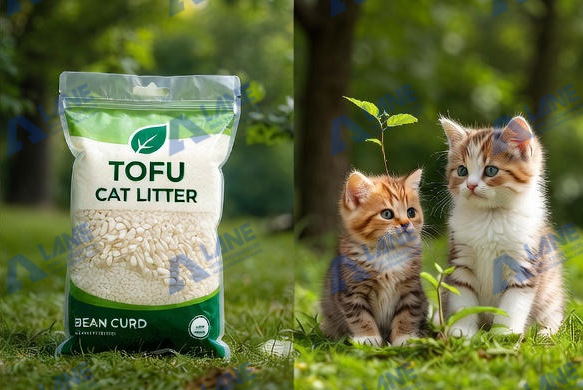
tofu cat litter production from soybean residue

Core Process of Tofu Cat Litter Production From Soybean Residue

A stable tofu cat litter production from soybean residue relies on a clearly structured, well-coordinated process (not just individual equipment selection). The typical production flow consists of 5 interconnected stages, each with distinct core requirements:

1. Pre-treatment (critical initial step)

Fresh soybean residue has high moisture (often over 60%) and uneven particle size. Core operations: size reduction (breaking large clumps into uniform particles) + moisture adjustment (to 40-50%, matching subsequent forming process). This step lays the foundation for smooth downstream processing.

2. Mixing (quality guarantee step)

Blend processed soybean residue with auxiliary materials (starch-based binders for clumping strength, functional additives like deodorants/antibacterial agents). Key requirement: uniformity – uneven mixing leads to inconsistent pellet strength.

3. Forming/granulation (shaping core step)

Convert mixed material into cat litter pellets. Directly affects pellet density, shape consistency, and breakage resistance. Requires matching equipment pressure with material characteristics (avoid over-compaction or loose structure).

4. Drying (stability key step)

Stabilize pellet structure and reduce moisture to below 12% (safe for storage). Controlled temperature (80-120℃) and airflow are critical – avoid cracking (over-drying) or mold (insufficient drying).

5. Screening (quality inspection step)

Separate qualified pellets from fines and oversized particles. Qualified pellets enter packaging; unqualified ones are recycled to pre-treatment/mixing stage (reducing waste). Ensures final product consistency.
Note: All stages are interconnected – process continuity is more important than individual machine performance for tofu cat litter production from soybean residue.

Key Processing Challenges in Soybean Residue Cat Litter Manufacturing

While soybean residue has many advantages for tofu cat litter production from soybean residue, it also brings some technical challenges. These challenges can’t be solved by just upgrading a single machine; they need to be addressed at the entire process level.
Moisture control is definitely the biggest headache. Fresh soybean residue not only has high moisture content but also variable levels – sometimes it’s 65%, sometimes it’s 70%, depending on the tofu/soy milk production process. If you don’t coordinate pre-treatment and drying properly, the problems will pile up: pellets will be too soft, deform easily, or even develop microbial growth (like mold) due to excess moisture. So manufacturers need a dynamic moisture control system that adjusts according to the incoming raw material’s moisture level.

Then there’s fiber structure management. We know that fibers are good for water absorption, but if the fiber length is too long or the size distribution is uneven, it will cause trouble. Overly long fibers can get tangled in the equipment, affecting production efficiency. They can also reduce pellet strength – the pellets might fall apart when touched. So during pre-treatment, it’s important to cut the fibers to a suitable length (usually 1-3mm) and ensure uniform distribution.

Odor control is another issue that can’t be ignored. Soybean residue contains residual organic compounds, and if processing conditions (like drying temperature or time) aren’t optimized, these compounds will produce an unpleasant smell. This is a big problem for cat litter, as pet owners are very sensitive to odors. So manufacturers need to adjust processing parameters – for example, using a two-stage drying process to remove volatile organic compounds effectively – to control odors.

Forming stability is also closely linked to upstream processes. If the feeding speed is inconsistent during mixing, or if the moisture content of the mixed material fluctuates, the forming stage will suffer. You’ll end up with pellets that are uneven in size, or that break easily. So ensuring stability in mixing and moisture adjustment is the foundation for good forming results. All these challenges tell us: tofu cat litter production from soybean residue requires a system-level approach, not just single-machine optimization.

Equipment Configuration for Tofu Cat Litter Production From Soybean Residue
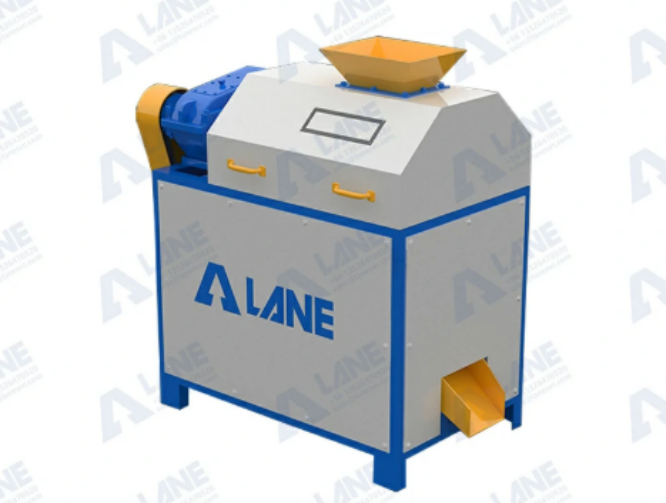
When configuring equipment for tofu cat litter production from soybean residue, the focus should be on functional compatibility and process logic – not just standalone specifications. It’s about making sure all machines work together as a team, not as separate units.
Starting with pre-treatment equipment: since soybean residue is fibrous, the equipment needs to handle this type of organic material without over-pulverizing it. Hammer Crusher or Horizontal Crusher are usually a good choice – they can break down large clumps into uniform particles while preserving the fiber structure (which is essential for water absorption). The key here is to adjust the screen size of the mill to control the particle size accurately.
Mixing systems need to be able to handle high-moisture materials. Ordinary mixers might have trouble with sticky soybean residue, so double shaft mixers or horizontal mixers are more suitable. These mixers have strong mixing capacity and can ensure that binders and additives are evenly distributed in the soybean residue. Remember, mixing stability directly affects how well the material forms pellets downstream.
For granulation or forming equipment, the main requirement is controllable pressure and shape consistency. Double Roller Granulators or disc granulators are commonly used. Whichever type you choose, it’s important to adjust the pressure according to the material’s characteristics – too much pressure will make the pellets too compact, too little will make them fragile.
tofu cat litter production from soybean residue
Drying systems need to balance efficiency and gentleness. Rotary dryers are often used for tofu cat litter production from soybean residue. Rotary dryers are more efficient for large-scale production. The key is to control the drying temperature (usually 80-120℃) and airflow – over-drying will cause cracking, while uneven airflow will lead to inconsistent moisture levels.
Screening equipment is the last line of defense for product quality. Vibrating screens with multiple layers are usually used – they can separate qualified pellets, fines, and oversized particles. The screened fines and oversized particles can be recycled back to the pre-treatment stage, reducing waste. All in all, a successful tofu cat litter production from soybean residue line depends on how well these machines coordinate with each other, not just how good each machine is on its own.

How Fertilizer Processing Technology Supports Stable Cat Litter Production

If you look closely, many of the challenges in tofu cat litter production from soybean residue are familiar to the organic fertilizer manufacturing industry. Both industries deal with high-moisture organic materials, fiber-rich inputs, and the demand for continuous, large-scale processing. This overlap means that fertilizer processing technology can provide strong support for stable cat litter production.
For example, organic fertilizer manufacturers have years of experience in material conditioning – adjusting moisture and particle size to optimize processing. This experience can be directly applied to tofu cat litter production from soybean residue, helping manufacturers solve moisture control and fiber management issues more quickly. Similarly, technologies for organic fertilizer granulation (like extrusion granulation and roller press granulation) and drying (like belt drying and rotary drying) can be adapted to cat litter production with minor adjustments.
This cross-industry knowledge transfer has big benefits. It reduces the trial-and-error period during production line setup – manufacturers don’t have to start from scratch to solve common problems. It also improves production predictability – since the technologies are already proven in fertilizer manufacturing, they’re more reliable for cat litter production. What’s more, when manufacturers want to expand production capacity, they can use the scalability experience from the fertilizer industry to upgrade the cat litter production line smoothly.

Scalable Solutions for Tofu Cat Litter Production From Organic Waste

In today’s cat litter market, scalability and flexibility are becoming more and more important for manufacturers. A well-designed tofu cat litter production from soybean residue line shouldn’t be a fixed, unchangeable system – it should be able to support gradual capacity expansion, adapt to raw material variations, and adjust to different product specifications.
In-line material recycling is also part of scalable solutions – as we mentioned earlier, the fines and oversized particles from screening are recycled back to the pre-treatment stage. This not only reduces waste but also makes the production line more flexible in handling raw material variations. By treating soybean residue not just as a waste product but as a standardized organic input, manufacturers can develop long-term, sustainable production strategies that meet both environmental requirements and industrial efficiency goals. This is especially important as more countries introduce stricter regulations on organic waste disposal – turning soybean residue into cat litter is a win-win for both the environment and the business.

Conclusion: Building a Reliable Tofu Cat Litter Production Line

Tofu cat litter production from soybean residue is more than just a new production method – it’s a practical way to turn organic waste into a high-value pet product. The key to success here isn’t about finding the most expensive or advanced individual machines. It’s about having an integrated process design, good coordination between equipment, and a deep understanding of soybean residue’s properties.

By adopting a solution-oriented mindset, leveraging the experience and technology from the fertilizer processing industry, and focusing on scalable system design, manufacturers can build reliable, sustainable tofu cat litter production from soybean residue lines. These lines will not only produce high-quality cat litter that meets market demand but also help reduce organic waste, aligning with global environmental goals. Whether you’re a new entrant to the cat litter market or an existing manufacturer looking to upgrade your production line, focusing on these core elements will help you stay competitive in the long run.

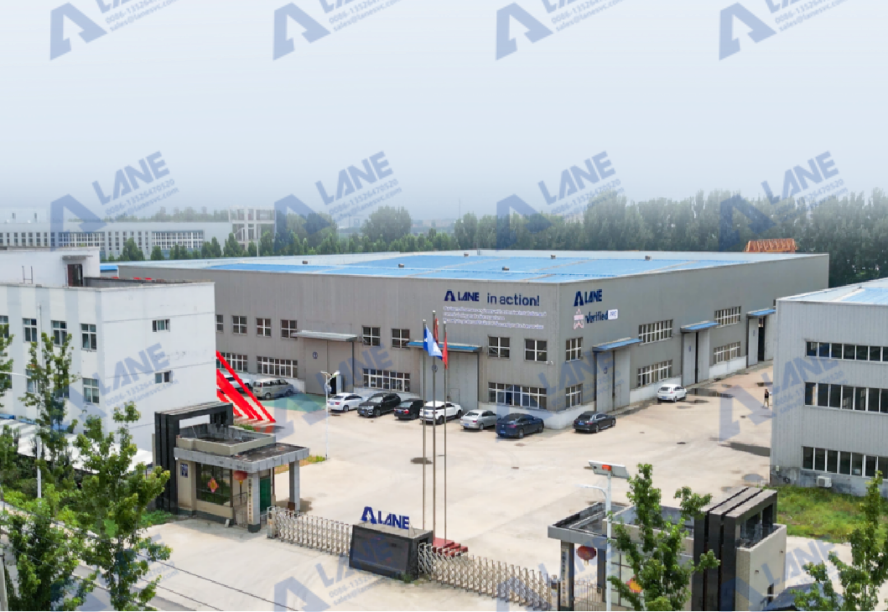
If you are interested in tofu cat litter production from soybean residue, LANE will be your trustworthy partner.
tofu cat litter production from soybean residue

For more details, please feel free to contact us.

Henan Lane Heavy Industry Machinery Technology Co., Ltd.

Email: sales@lanesvc.com

Contact number: +86 13526470520

Whatsapp: +86 13526470520
arrow icon

More Blogs

2026-01-08 | Solution
Cat Litter Production From Organic Waste: Integrated Equipment Solutions For Sustainable Manufacturing
Read More
2025-12-18 | News
Crystal Cat Litter Production Line: What Manufacturers Really Need to Know
Read More