
Small Scale Cat Litter Manufacturing Plant for Sale: What the Listing Won’t Tell You
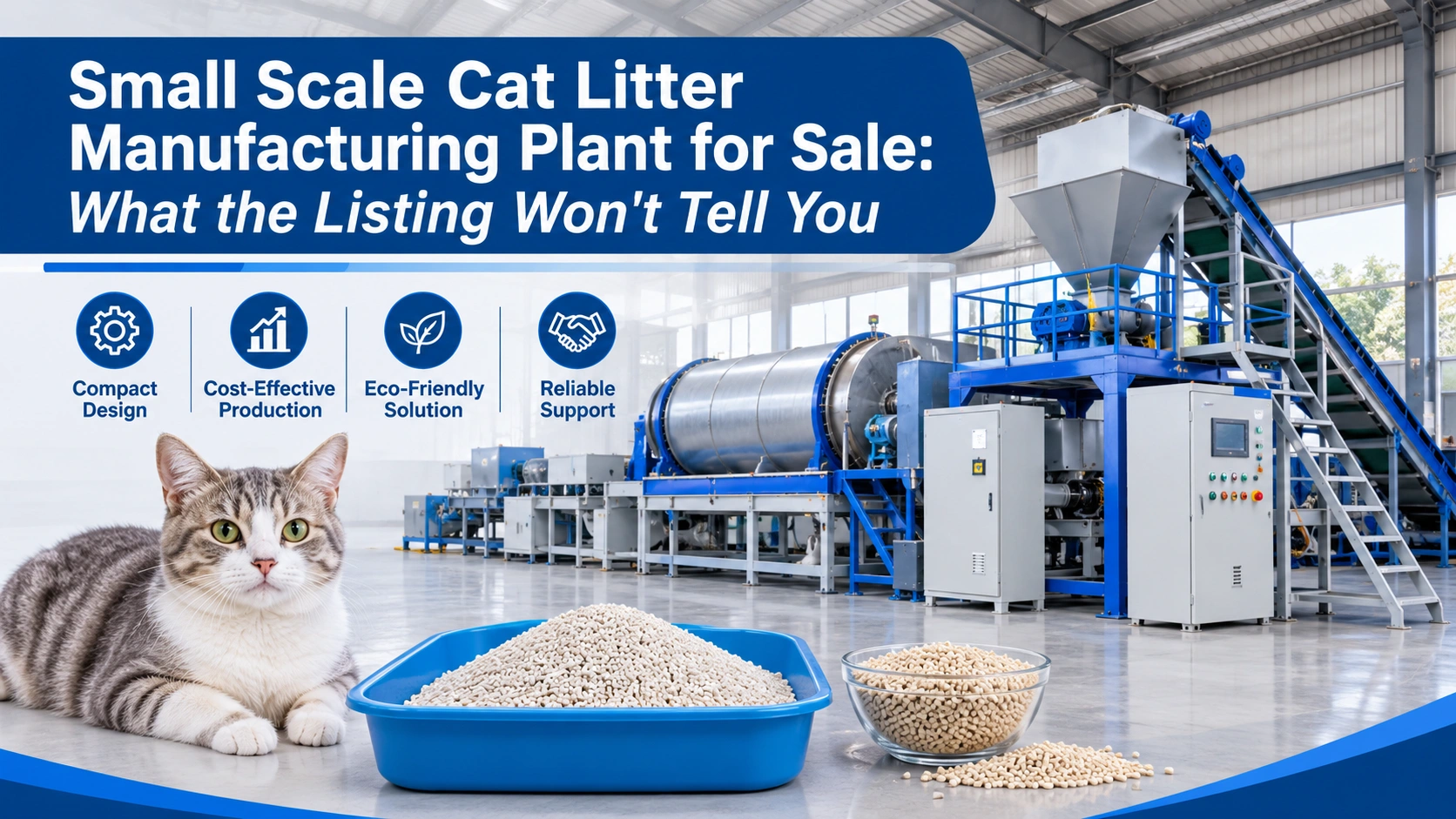
Search for a small scale cat litter manufacturing plant for sale and you will find hundreds of listings, most of them showing the same cat litter making machine from the same three angles. Almost none of them tell you what the plant will actually cost to run, or whether the clay you can buy will make a product anyone wants to rebuy.
That is the gap this guide fills. Not the equipment list, which is the easy part, but the decisions that determine whether a bentonite cat litter production line makes money or makes dust.
The clay decides the plant, not the machine
Cat litter is a clay business with a machine attached. Before comparing suppliers, establish what clay you can buy.
Sodium bentonite swells to many times its dry volume and absorbs several hundred percent of its weight in water. It is the benchmark for clumping litter, and it is mined in relatively few places, which means most plants import it.
Calcium bentonite is more widely available and much cheaper, but it does not swell enough on its own. It needs sodium activation with soda ash, usually 2 to 5 percent by weight, which adds a mixing step, a reagent cost, and a quality variable.
That single choice changes the process flow, the additive cost, and the product performance. A supplier quoting a line without asking which clay you will feed is quoting a machine, not a plant.
Drying is where the money goes
Bentonite comes out of the ground at 25 to 35 percent moisture. It has to reach roughly 8 to 12 percent before grinding and granulation, and that means evaporating 200 kilograms or more of water per ton of product.
The dryer, not the granulator, is the largest energy line in the plant. It is also the piece most often undersized in a low-cost quotation, which shows up as a line that runs at 70 percent of rated capacity because the clay never gets dry enough.
If your clay arrives wetter than the supplier assumed, everything downstream slows down. Ask for the design moisture, in writing, and ask what the capacity becomes at your actual delivered moisture.
Two routes, one of them much cheaper to run
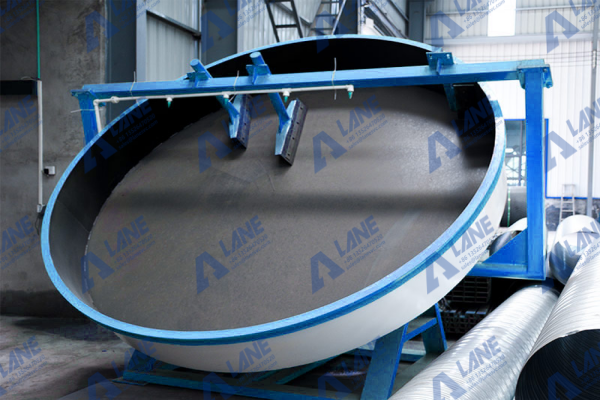
Wet granulation. Grind the dried clay, add water in a disc pan or drum granulator, then dry the granules again. The product is round and consistent, and you pay for drying twice.
Dry compaction. Grind dry clay, press it between rollers into a sheet or briquette, crush, and screen to size. No second drying step, lower energy, and a slightly angular granule that most markets accept without complaint.
For cat litter specifically, compaction is usually the better first investment: it removes a whole dryer from the flowsheet and from the energy bill. Wet granulation earns its place when the market demands a round, dust-free bead and pays for it.
Both routes are sold under the same “cat litter making machine” label, which is why two quotations for the same capacity can differ by a factor of two.
The bentonite cat litter production line, stage by stage
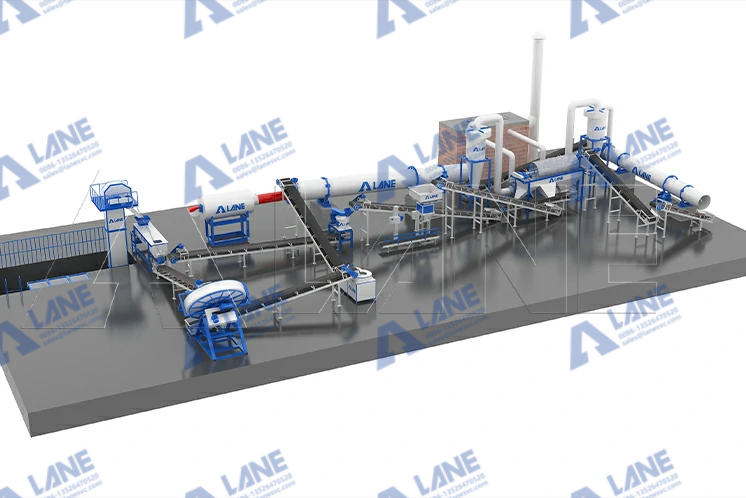
Receiving and storage. Covered storage matters more than people expect. Clay that rehydrates in the yard costs you dryer capacity before it costs you anything else.
Crushing and grinding. A mill reduces the clay to the fineness the next stage needs. Hardness and silica content drive liner wear.
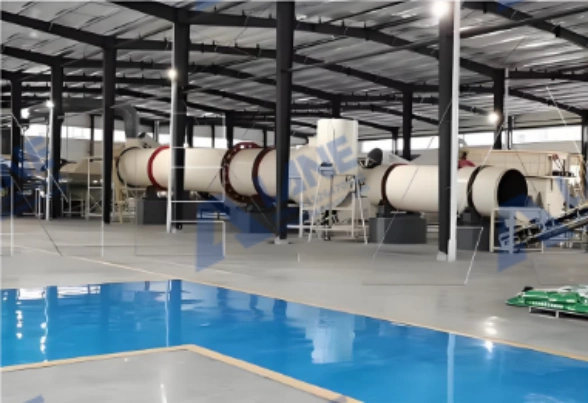
Drying. Rotary or belt dryers, sized on the wet end of the moisture range. This is the unit to specify conservatively.
Granulation or compaction. Disc pan, drum, or roller press, whichever route the bentonite cat litter production line is designed around.
Screening. Product cut is typically 0.5 to 2.5 millimeters for clumping litter, with oversize returned to the crusher and fines recycled.
Dedusting and coating. A coating agent binds surface dust. This is the step that decides whether customers complain, and it is frequently the first thing cut from a budget quote.
Packing. 5, 10, or 20 kilogram bags, with weight accuracy and palletizing.
What “small scale” actually means
A small scale cat litter manufacturing plant for sale is usually rated in finished tons per hour, and that number hides the input side.
A cat litter making machine at 0.5 to 1 ton per hour suits a regional brand, contract packing, or a first plant testing a market. A 2 to 3 ton per hour line is the common commercial entry point. Above 5 tons per hour you are into export volumes and a different capital class.
Work backward from sales, not forward from the machine. A 2 ton per hour line running one shift, 250 days a year, produces 4,000 tons. If your realistic first-year volume is 800 tons, you have bought four times the plant you can sell.
Cost structure, and what the quote leaves out
For a small scale cat litter manufacturing plant for sale, equipment is usually 45 to 60 percent of a complete project. Civil works, installation, electrical, and commissioning take the rest.
Four items sit outside most equipment quotations for a bentonite cat litter production line:
The building, which needs height for the dryer and floor loading for the mill. The dust collection system, a safety requirement rather than an accessory. The coating and dedusting unit, which protects the product’s reputation. And the working capital for clay inventory, which is bought by the container and paid for before the first bag ships.
A quotation that is dramatically cheaper than the others is almost always a quotation with a smaller boundary. Compare scope line by line before comparing price. That is especially true on a cat litter making machine quote, where the dryer and the dust system are the two lines that disappear first.
Quality tests that decide whether the product sells
Four tests separate a product that repurchases from one that gets returned.
Clumping strength. A clump that breaks on scooping is the most common complaint in the category.
Dust. Measured as fines generated during handling. Dust is a health issue in the plant and a satisfaction issue in the home.
Absorption. Grams of liquid absorbed per gram of litter, tested on your finished product, not on the raw clay certificate.
Odor control. Often a function of additives rather than the clay itself, and worth testing before you promise it on a label.
Run these on samples from every clay source you consider, and again after every significant process change. A plant that cannot test its own output is guessing at its own quality.
Safety and compliance
Bentonite dust contains crystalline silica, and respirable crystalline silica is regulated in most industrial jurisdictions, including under the US OSHA silica standard for general industry. That means dust collection at every transfer point, enclosure at the mill, and respiratory protection as a backup rather than as the primary control.
Product labeling and import rules vary by market. Confirm what your destination requires before printing packaging.
Where the margin actually comes from
The margin is not made at the cat litter making machine. It is made in three places: buying clay at the right moisture so you are not paying freight for water, running the dryer on the cheapest fuel available to you, and selling a bag that does not generate complaints.
Private label work pays less per ton and fills capacity. A brand pays more and needs marketing. Most small plants do both for the first two years, and the ones that survive are the ones that never shipped a dusty bag.
What to demand from a supplier
If you are evaluating a small scale cat litter manufacturing plant for sale, ask for a mass and energy balance, not an equipment list. The energy balance is what proves the dryer is sized for your clay.
Ask for a test on your clay, not on a reference clay. Swelling and granulation behavior vary enough that a trial on someone else’s material proves very little.
Ask what the line does at 60 percent of rated capacity, because that is where year one runs.
And ask for references at your capacity and your clay type, then call them. A supplier with twenty bentonite cat litter production line installations may never have run a calcium clay with soda ash activation.
FAQ
What does a bentonite cat litter production line include?
Drying, crushing and grinding, granulation or compaction, screening, dedusting, and packing, plus dust collection and the building services that support them.
What is the difference between bentonite and tofu cat litter production?
Bentonite lines are mineral processing: drying, grinding, granulating or compacting, screening. Tofu litter lines are food-processing style: mixing, extruding, drying. The equipment and the skills are different.
Can I use calcium bentonite instead of sodium?
Yes, with soda ash activation. It adds a reagent cost and a process step, and the finished clumping performance is usually lower than a good sodium clay.
How much clay does the plant consume?
Roughly 1.05 to 1.15 tons of dry clay per ton of finished product, before losses. Wet clay consumption is higher and depends on delivered moisture.
Do I need a dryer?
For bentonite, yes, unless you buy pre-dried clay at a premium. Drying is the largest energy cost in the plant.
What capacity should a first plant have?
One to two tons per hour is the common entry point. Size from your sales forecast and your clay supply contract, not from the machine catalog.
What is the biggest operating risk?
Dust and moisture. Dust is a compliance and quality problem, and wet clay is a capacity problem. Both are solved in design, not in operation.