

Rotary Screener Design Considerations for High-Output Cat Litter Plants
Rotary Screener Design Considerations for High-Output Cat Litter Plants
Introduction: Screening Defines the Boundary of Product Quality
In cat litter manufacturing, many producers focus heavily on granulation, drying, or packaging efficiency. However, even with a well-optimized upstream process, final product quality can still fluctuate if screening is not properly controlled. Particle size inconsistency, excessive fines, or unstable yield often trace back to screening performance rather than earlier stages.
This is why a rotary screener is not simply a finishing device, but a quality-defining component in high-output cat litter plants. By separating usable granules from oversized particles and fines, the rotary screener establishes the final particle size distribution that reaches the market.
In continuous production environments, screening stability directly influences downstream efficiency, reprocessing load, and long-term operational costs.
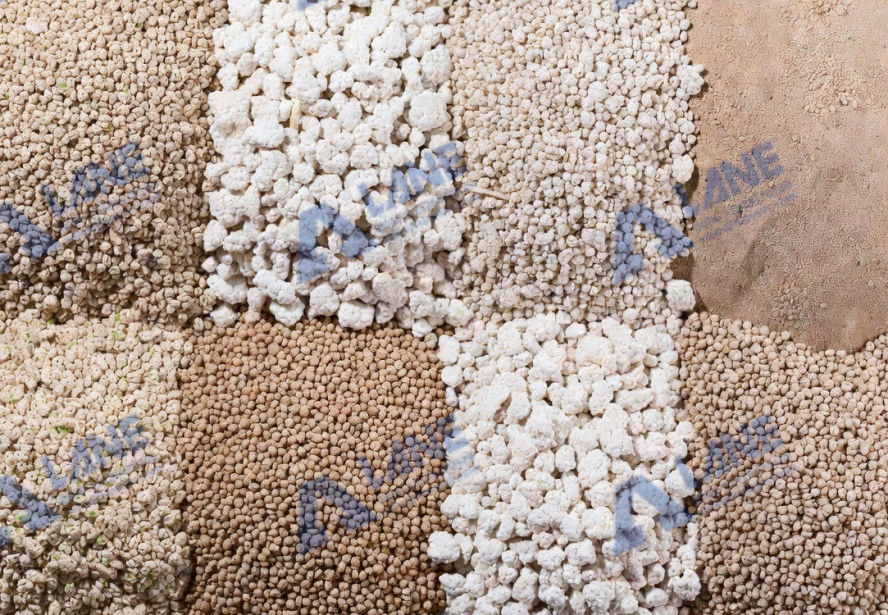
What a Rotary Screener Controls in Cat Litter Production
The primary function of a rotary screener is particle classification, but its influence extends far beyond size separation. In practice, it directly affects several key quality indicators.
First, a rotary screener defines the acceptable size range of finished cat litter. Granules that are too large may compromise user experience, while excessive fines contribute to dust and packaging inconsistency. Accurate screening ensures only compliant particles proceed to packaging.
Second, screening efficiency impacts yield. Poor separation leads to unnecessary recycling of acceptable material or, conversely, contamination of finished product with off-spec particles. Over time, this imbalance increases energy consumption and mechanical wear upstream.
Finally, the rotary screener stabilizes material flow. Uniform particle size improves conveying behavior and reduces fluctuations in downstream processes such as coating or packaging.
Rotary Screener vs Other Screening Methods
In cat litter plants, several screening methods may be considered, including vibrating screens, linear screens, and rotary screeners. Each has its place, but their suitability varies depending on production goals.
Vibrating screens offer high separation intensity but can be aggressive on fragile granules, increasing breakage and dust generation. Linear screens perform well for certain materials but may struggle with continuous high-throughput applications.
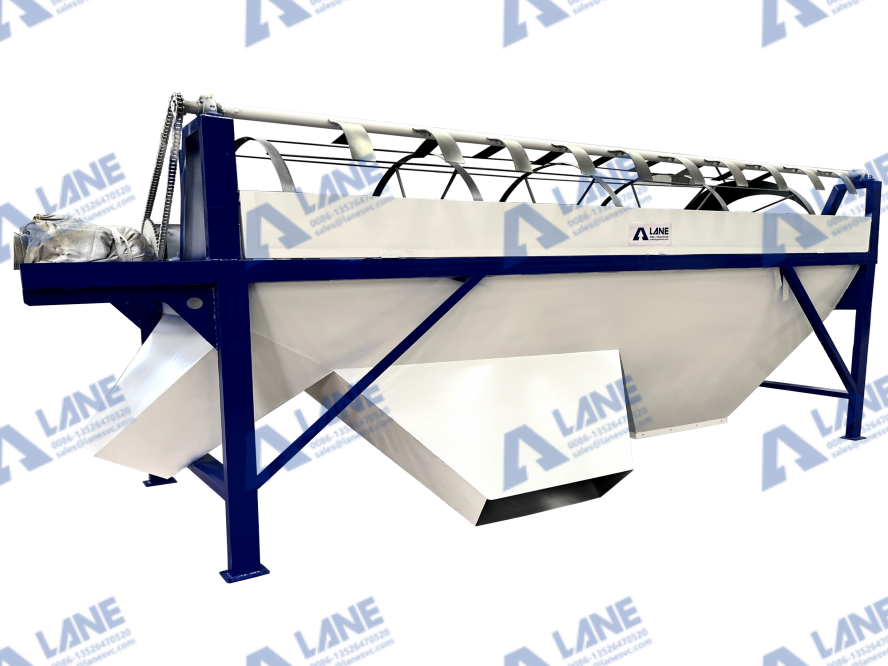
A rotary screener, by contrast, provides gentle, continuous screening. Its rotating drum allows material to tumble naturally, reducing impact stress while maintaining consistent separation. This makes it particularly suitable for cat litter formulations that require both high output and low breakage rates.
For plants prioritizing long-term stability over short-term throughput peaks, the rotary screener often proves to be the more balanced solution.
Key Design Features That Affect Screening Accuracy
Not all rotary screener designs deliver the same performance. Several structural and operational features directly influence screening accuracy and durability.
Drum diameter and length determine effective screening area and material residence time. Larger drums allow smoother material distribution, while adequate length ensures sufficient contact with the screen surface.
Screen mesh configuration is equally critical. Mesh size must align precisely with target particle size requirements, and modular designs allow faster adjustments when product specifications change.
Rotation speed controls the balance between throughput and separation accuracy. Excessive speed may reduce screening efficiency, while insufficient speed can limit capacity.
Finally, dust sealing and enclosure design affect workplace cleanliness and equipment longevity. A well-sealed rotary screener minimizes dust leakage while protecting internal components from premature wear.
Typical Technical Parameters of a Rotary Screener for Cat Litter
In practical production, selecting a rotary screener involves evaluating a combination of technical parameters rather than focusing on a single specification.
Common parameters include:
-
Drum diameter: typically designed to balance residence time and throughput
-
Drum length: determines effective screening area for continuous operation
-
Screen mesh size: customized according to target particle size distribution
-
Rotation speed: adjustable to accommodate different material characteristics
-
Processing capacity: matched to upstream granulation and drying output
-
Material contact surfaces: wear-resistant steel or customized linings
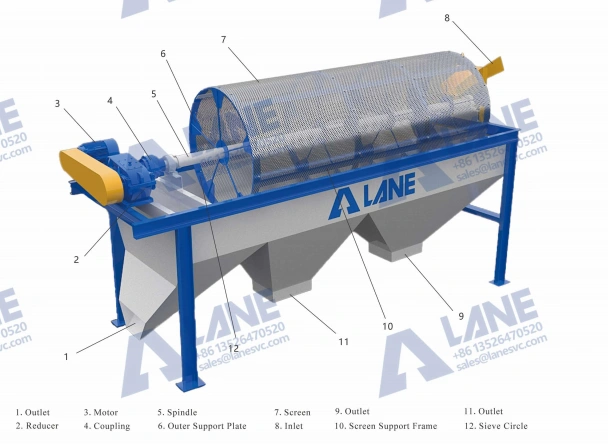
LANE Rotary Screener Parameter Table:
| Model | Capacity(tph) | Drum Diameter(m) | DrumLength(m) | Tilt Angle(°) | Rotation Speed(r/min) | Power(kw) |
| LAS-0.8*2M | 1-2.5 | 0.8 | 2 | 2-3 | 22 | 3 |
| LAS-0.8*3M | 1.5-3 | 0.8 | 3 | 2-3 | 22 | 3 |
| LAS-1*3M | 2-4 | 1 | 3 | 2-3 | 22 | 3 |
| LAS-1.2*4M | 3-5 | 1.2 | 4 | 2-3 | 17 | 4 |
| LAS-1.5*4M | 4-8 | 1.5 | 4 | 2-3 | 17 | 4 |
| LAS-1.5*5M | 5-10 | 1.5 | 5 | 2-3 | 14 | 5.5 |
| LAS-1.5*6M | 5-10 | 1.5 | 6 | 2-3 | 14 | 7.5 |
| LAS-1.8*7M | 10-12 | 1.8 | 7 | 2-3 | 14 | 7.5 |
| LAS-2*6M | 12-15 | 2 | 6 | 2-3 | 14 | 15 |
These rotary screener parameters work together to define screening accuracy, mechanical stability, and long-term performance. Evaluating them as a system helps avoid mismatches that could disrupt overall line balance.
Integration with Upstream and Downstream Equipment
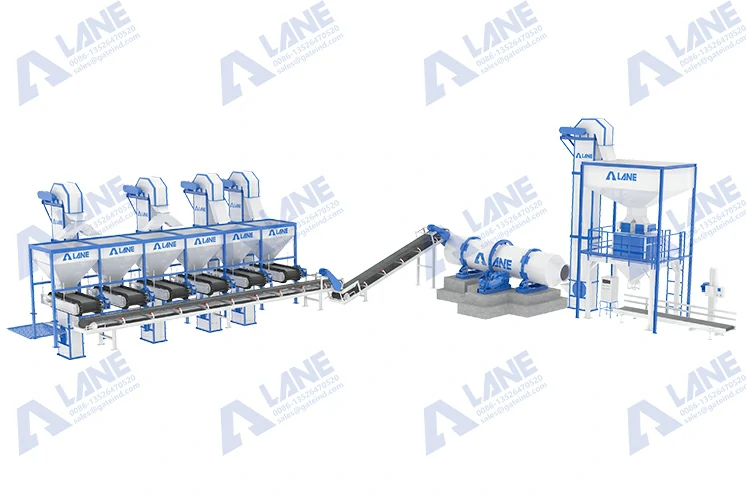
A rotary screener does not operate in isolation. Its performance is closely linked to upstream and downstream machines within the production line.
Upstream, granulators and crushers determine the initial size range entering the screener. Stable screening reduces unnecessary reprocessing and protects granulation equipment from overload.
Downstream, screening accuracy influences cooling, coating, and packaging efficiency. Uniform particle size improves airflow during cooling and ensures smoother operation in automated packaging systems.
When properly integrated, the rotary screener acts as a buffer that stabilizes material flow across the entire production line.
LANE Rotary Screener Solutions for High-Output Plants
At LANE, rotary screener design is approached from a system perspective rather than as a standalone machine. Our equipment is developed to match real production conditions, including continuous operation, variable material properties, and long service intervals.
LANE rotary screeners are configured to support different cat litter types, such as bentonite-based, tofu-based, and blended formulations. Parameter optimization focuses on stable screening accuracy, reduced maintenance, and compatibility with upstream and downstream equipment.
Rather than maximizing theoretical capacity, our rotary screener solutions emphasize operational reliability and consistent output over long production cycles.
Why Screening Stability Matters at Scale
As cat litter plants increase capacity, small inconsistencies become amplified. Minor screening deviations that are tolerable at low output can lead to significant losses in large-scale production.
A properly designed rotary screener helps maintain consistency as throughput increases. By delivering predictable separation performance, it reduces operator intervention and supports automation across the line.
For manufacturers planning expansion or upgrading existing facilities, screening stability is a foundational requirement rather than a secondary consideration.
Conclusion: Screening Is a Strategic Quality Control Step
In high-output cat litter plants, screening defines the boundary between acceptable and unacceptable product. An excellent equipment ensures that this boundary remains consistent, even under continuous operation and high throughput.
By focusing on thoughtful design, balanced parameters, and system integration, manufacturers can transform screening from a corrective step into a strategic quality control process. When properly implemented, the rotary screener supports stable yield, protects downstream equipment, and contributes to long-term production reliability.
For modern cat litter production lines, effective screening is not optional—it is essential.
For more details, please feel free to contact us.
Henan Lane Heavy Industry Machinery Technology Co., Ltd.
Email: sales@lanesvc.com
Contact number: +86 13526470520
Whatsapp: +86 13526470520