

Rotary Drum Dryer Designed for Stable, High-Throughput Cat Litter Production
Rotary Drum Dryer Designed for Stable, High-Throughput Cat Litter Production
Introduction – Why Drying Stability Matters in Cat Litter Production
In modern cat litter manufacturing, drying is far more than a simple moisture removal step. It directly affects granule strength, dust levels, downstream screening efficiency, and even packaging performance. An unstable drying stage often leads to a chain reaction of quality and efficiency issues across the entire production line.
This is why the rotary drum dryer plays such a critical role in cat litter production. When properly designed and matched with upstream and downstream equipment, a rotary drum dryer ensures consistent moisture control, supports continuous operation, and helps maintain overall production stability. For manufacturers aiming at large-scale, long-term output, drying reliability is not optional—it is foundational.
The Role of a Rotary Drum Dryer in the Cat Litter Process
Within a typical cat litter production flow, drying usually takes place after granulation and before screening and packaging. At this stage, freshly formed granules still contain residual moisture that must be reduced to a controlled range.
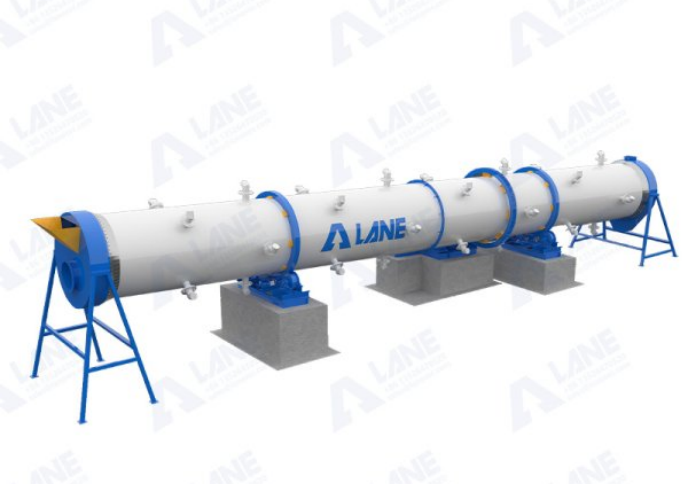
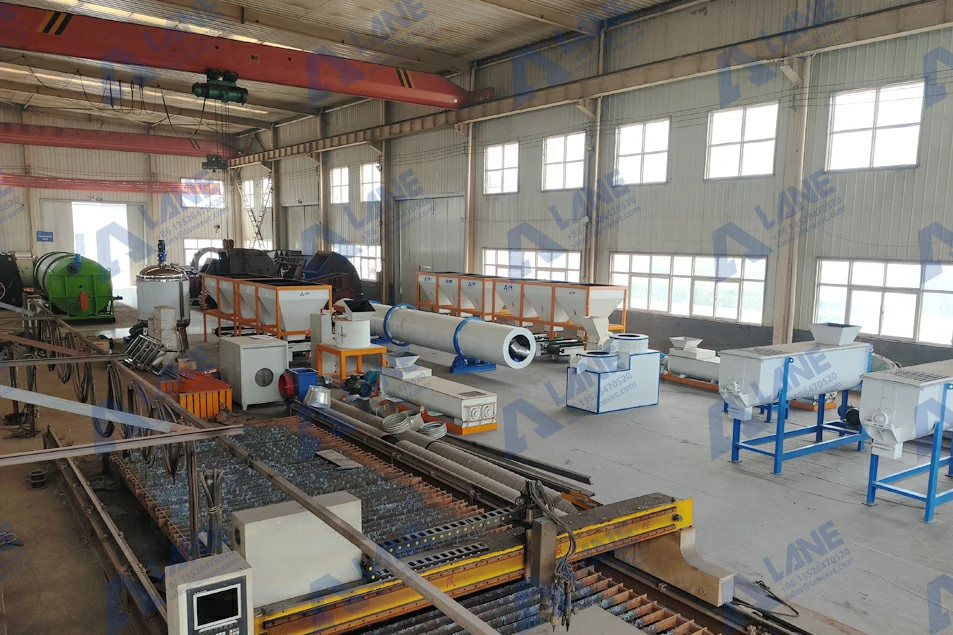
A rotary drum dryer handles this task by continuously rotating a cylindrical drum while hot air passes through the material bed. As granules are lifted and cascaded by internal flights, moisture evaporates evenly, preventing localized overheating or under-drying.
When integrated correctly, the rotary drum dryer supports smooth transitions to downstream equipment such as screening machines and cooling systems. Stable drying ensures that granules maintain structural integrity, reducing breakage and excessive fines during subsequent handling.
Common Drying Challenges in Cat Litter Manufacturing
Many cat litter producers experience drying-related issues, especially when scaling up production or introducing new formulations. These challenges are often underestimated at the design stage.
Common problems include:
- Uneven moisture distribution across granules
- Over-drying that weakens particle strength
- Insufficient drying leading to clumping during storage
- High energy consumption with low thermal efficiency
- Material sticking to the drum wall during long runs
Such issues rarely originate from a single parameter. Instead, they result from mismatched equipment design, unstable material flow, or dryers not optimized for cat litter characteristics. Addressing these challenges requires equipment that is specifically designed for this application—not generic drying solutions.
LANE Rotary Drum Dryer: Design Features & Performance Advantages
LANE’s rotary drum dryer is developed specifically to meet the demands of continuous cat litter production, balancing efficiency, reliability, and operational stability.
1.Structural Design Optimized for Cat Litter Materials
The internal structure of the rotary drum dryer is engineered to handle various cat litter formulations, including bentonite-based, tofu-based, and mixed materials. Carefully designed lifting flights ensure that granules are evenly distributed within the drum, avoiding dead zones or material accumulation.
Anti-sticking considerations are incorporated into both drum surface treatment and internal layout, minimizing buildup and reducing the need for frequent cleaning during long production cycles.
2.Stable Drying Performance
Consistent moisture control is essential for maintaining downstream quality. The rotary drum dryer provides uniform heat exposure through controlled airflow and rotational speed, ensuring that each granule experiences similar drying conditions.
This stability helps maintain predictable granule hardness, reduces dust generation, and supports consistent screening results. Manufacturers benefit from fewer process adjustments and more reliable batch-to-batch quality.
3.Energy Efficiency and Heat Utilization
Energy consumption is a major cost factor in drying operations. LANE’s rotary drum dryer is designed to maximize heat utilization by optimizing airflow paths and minimizing heat loss.
The system can be configured to work with various heat sources depending on local energy availability, allowing manufacturers to balance operating costs with performance requirements. Over long-term operation, this efficiency translates into measurable cost savings.
4.Reliability for Continuous Operation
Cat litter plants often operate on extended shifts or around-the-clock schedules. The rotary drum dryer is built with industrial-grade components, robust drive systems, and stable support structures to withstand continuous operation.
Maintenance-friendly design features allow for easier inspection and servicing, reducing downtime and supporting long equipment life.
Typical Technical Parameters
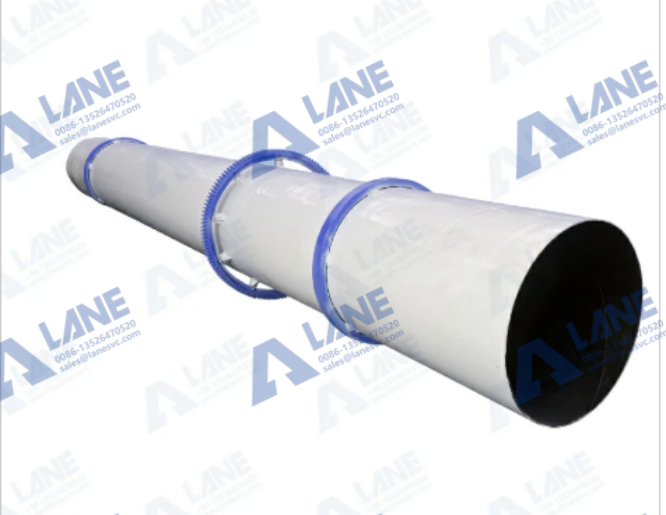
| Model | Diameter(mm) | length(mm ) | rotation speed(r/min) | capacity (t/h) | inlet temperature | outlet temperature | power (kw) |
| LARD-0.8*8 | 800 | 8000 | 5 | 1-1.5 | 150-250 | 30-60 | 5.5 |
| LARD-1.0*10 | 1000 | 10000 | 5 | 1.5-2.5 | 150-250 | 30-60 | 7.5 |
| LARD-1.2*12 | 1200 | 12000 | 5 | 2-5 | 150-250 | 30-60 | 7.5 |
| LARD-1.5*15 | 1500 | 15000 | 5 | 3-10 | 150-250 | 30-60 | 11 |
| LARD-1.8*18 | 1800 | 18000 | 5 | 11-20 | 150-250 | 30-60 | 22 |
| LARD-2.0*20 | 2000 | 20000 | 5 | 15-25 | 150-250 | 30-60 | 37 |
To support different production scales and formulations, the rotary drum dryer can be customized within a wide technical range. The following parameters are provided as reference values:
- Drum diameter: customizable based on capacity requirements
- Drum length: adaptable to drying time and material behavior
- Processing capacity: matched with upstream granulation output
- Heat source options: compatible with multiple energy systems
- Power consumption: optimized for continuous operation
- Moisture reduction range: adjustable to target product specifications
All parameters can be tailored according to specific production goals, ensuring compatibility with existing cat litter production line machinery.
Integration with Cat Litter Production Line Machinery
A rotary drum dryer should never be evaluated in isolation. Its true value lies in how well it integrates with the full production system. Drying capacity must align with granulation output, while discharge conditions should support efficient screening and cooling.
When properly matched, cat litter production line machinery operates as a coordinated system rather than a collection of independent machines. This system-level integration minimizes bottlenecks, stabilizes material flow, and improves overall line efficiency.
Why Equipment Design Philosophy Matters
Beyond specifications and capacity, equipment design philosophy influences long-term production success. LANE focuses on designing machines that prioritize stability, continuity, and real-world operating conditions rather than peak theoretical output.
This approach reflects an understanding that cat litter production is a long-term industrial process. Equipment must perform consistently over years, not just under ideal test conditions. By emphasizing system compatibility and operational balance, LANE helps manufacturers achieve sustainable, scalable production.
Conclusion – Choosing the Right Rotary Drum Dryer for Long-Term Production
Selecting the right rotary drum dryer is a strategic decision for any cat litter manufacturer. A well-designed dryer ensures stable moisture control, supports downstream processes, and contributes to continuous, high-throughput production.
When integrated thoughtfully into cat litter production line machinery, the rotary drum dryer becomes a cornerstone of operational reliability. For manufacturers seeking consistent quality and long-term efficiency, investing in purpose-built drying equipment is essential.
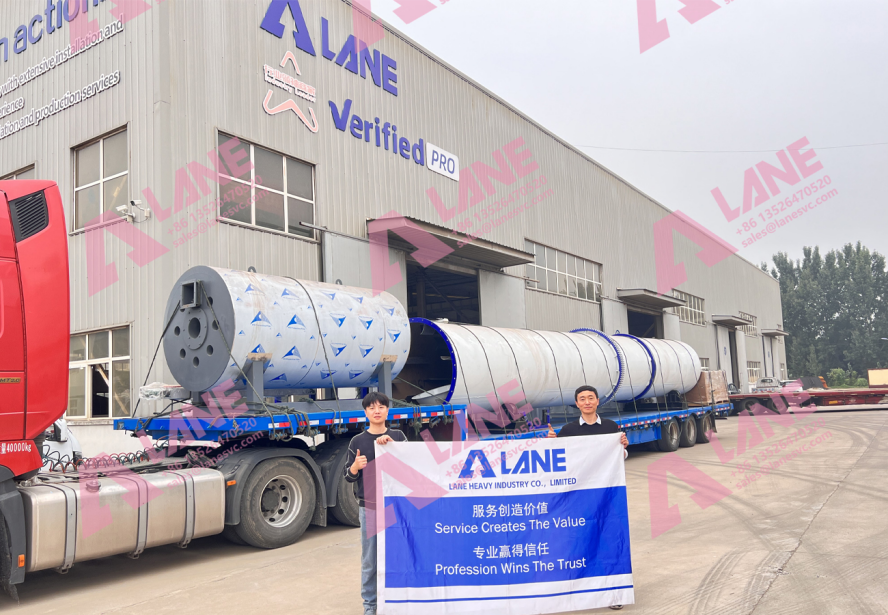
For more details, please feel free to contact us.
Henan Lane Heavy Industry Machinery Technology Co., Ltd.
Email: sales@lanesvc.com
Contact number: +86 13526470520
Whatsapp: +86 13526470520