

From Drying to Cooling: The Role of a Rotary Drum Cooler in Cat Litter Processing
From Drying to Cooling: The Role of a Rotary Drum Cooler in Cat Litter Processing
Introduction: Cooling Is Not the End of Drying
In a cat litter production line, drying is often seen as the final thermal step. Once moisture targets are reached, materials leave the dryer and move downstream. In practice, however, drying alone does not guarantee stable material conditions. Without proper cooling, hot granules can create problems that only become visible during screening, coating, or packaging.
This is where a rotary drum cooler plays a critical role. Positioned directly after the drying stage, it allows cat litter granules to gradually release heat, stabilize their internal structure, and prepare for the next processing steps. Rather than acting as a standalone machine, the rotary drum cooler functions as a bridge between thermal processing and mechanical handling.
In continuous cat litter manufacturing, cooling is not simply about lowering temperature. It is about ensuring that materials behave consistently once they enter downstream equipment.
What Happens When Cooling Is Insufficient
When cat litter granules leave a dryer at elevated temperatures, several issues can occur if cooling is rushed or uneven.
First, hot materials tend to generate condensation once they encounter cooler ambient air. This can lead to surface moisture returning to the granules, affecting flowability and increasing the risk of clogging in screening or conveying systems. Second, residual heat may weaken granule strength, making them more vulnerable to breakage during transport.
Inconsistent cooling can also impact coating processes. Additives applied to warm or unevenly cooled granules may not adhere properly, resulting in uneven performance in the final product. Over time, these issues can reduce yield and increase fines, even if upstream drying parameters appear correct.
By incorporating a rotary drum cooler into the production line, manufacturers can stabilize material temperature before it reaches sensitive downstream stages. This controlled transition helps protect overall line efficiency rather than correcting problems after they appear.
How a Rotary Drum Cooler Works Within the Production Line
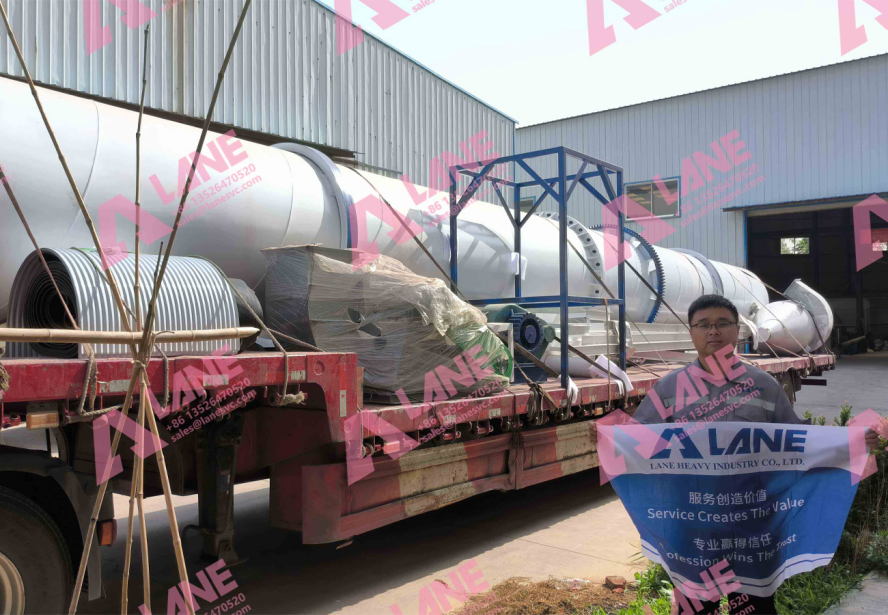
A rotary drum cooler operates on a simple but effective principle. Hot granules enter a rotating drum where they are gently lifted and cascaded through a controlled airflow. As materials tumble forward, heat dissipates gradually instead of being released all at once.
Key operating elements include drum rotation speed, internal flight design, and airflow direction. These factors determine residence time and cooling uniformity. Unlike batch cooling methods, a rotary drum cooler supports continuous operation, matching the throughput of upstream drying equipment.
In cat litter production, this alignment is particularly important. The rotary drum cooler is typically synchronized with a rotary drum dryer, allowing materials to move seamlessly from moisture reduction to temperature stabilization without interruption.
By maintaining steady material flow, the cooling stage becomes a natural extension of drying rather than a corrective measure.
Design Factors That Influence Cooling Performance
Not all cooling systems perform equally, especially when dealing with fragile or irregular cat litter granules. Several design considerations directly affect the effectiveness of a rotary drum cooler.
-
Drum dimensions: Length and diameter determine residence time and influence how evenly heat is released.
-
Internal flight configuration: Proper lifting and cascading reduce dead zones and prevent localized overheating.
-
Airflow control: Balanced airflow ensures efficient heat exchange without disturbing granule integrity.
-
Structural durability: Continuous production demands stable mechanical performance under long operating cycles.
A well-designed rotary drum cooler addresses these factors simultaneously rather than optimizing one at the expense of others. In integrated cat litter production lines, these details often determine whether cooling improves consistency or introduces new variability.
Technical Parameter Of Rotary Drum Cooling Machine
| Model | rotation speed r/min | capacity t/h | Diameter mm | Length mm | power |
| LARD-0.8*8 | 5 | 1-1.5 t | 800 | 8000 | 5.5 |
| LARD-1.0*10 | 5 | 1.5-2.5 t | 1000 | 10000 | 7.5 |
| LARD-1.2*12 | 5 | 2-5 t | 1200 | 12000 | 7.5 |
| LARD-1.5*15 | 5 | 3-10 t | 1500 | 15000 | 11 |
| LARD-1.8*18 | 5 | 11-20 t | 1800 | 18000 | 22 |
| LARD-2.0*20 | 5 | 15-25 t | 2000 | 20000 | 37 |
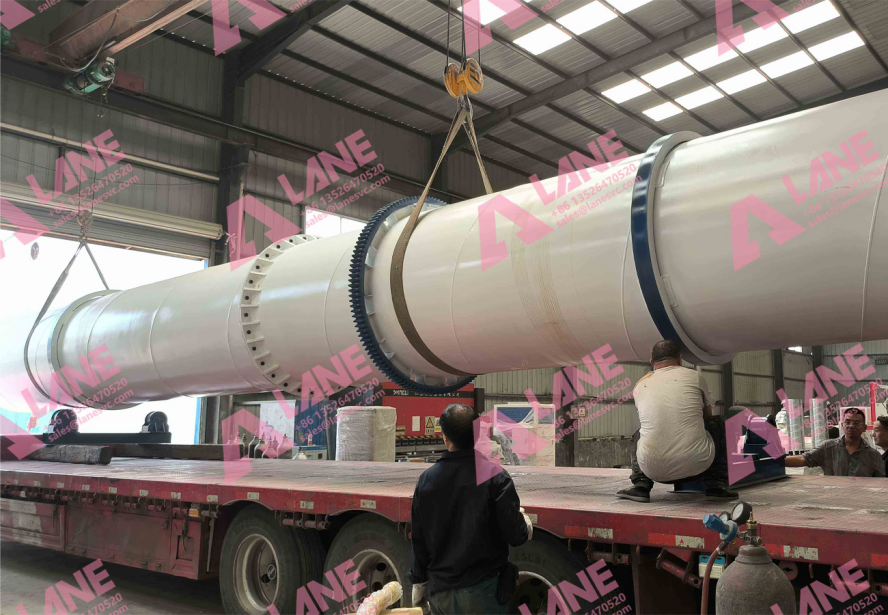
LANE Rotary Drum Cooler Solutions for Cat Litter Applications
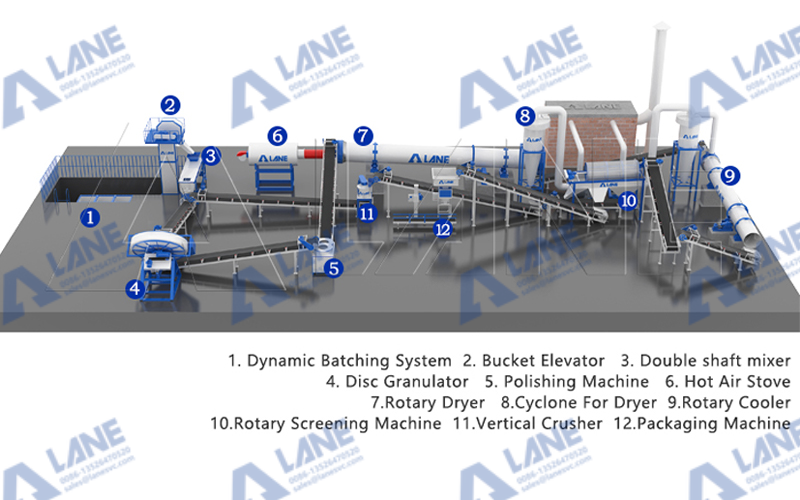
At LANE, rotary drum coolers are designed as part of a complete production system rather than as isolated machines. Our equipment is developed to support different cat litter formulations, including tofu-based, bentonite-based, and blended materials, each with unique cooling characteristics.
Our rotary drum cooler designs focus on three priorities: cooling uniformity, minimal granule damage, and seamless integration with upstream and downstream equipment. By matching cooler capacity and airflow parameters with the drying stage, we help ensure that material temperature stabilizes without creating thermal shock.
LANE’s experience in supplying full cat litter production lines allows us to consider cooling from a system-level perspective. This approach reduces adjustment time during commissioning and supports long-term operational stability.
Rather than emphasizing complexity, our solutions aim for reliable performance that aligns with real-world production demands.
Supporting Downstream Screening and Packaging
Proper cooling has a direct influence on downstream equipment performance. Once granules exit a rotary drum cooler at stable temperatures, screening efficiency improves because material behavior becomes more predictable. Mesh blockage is reduced, and size classification remains consistent over longer runs.
Cooling also benefits coating and packaging stages. Stable granules accept surface treatments more evenly, and packaging operations experience fewer issues related to condensation or material deformation. In high-throughput environments, these small improvements accumulate into measurable gains in productivity.
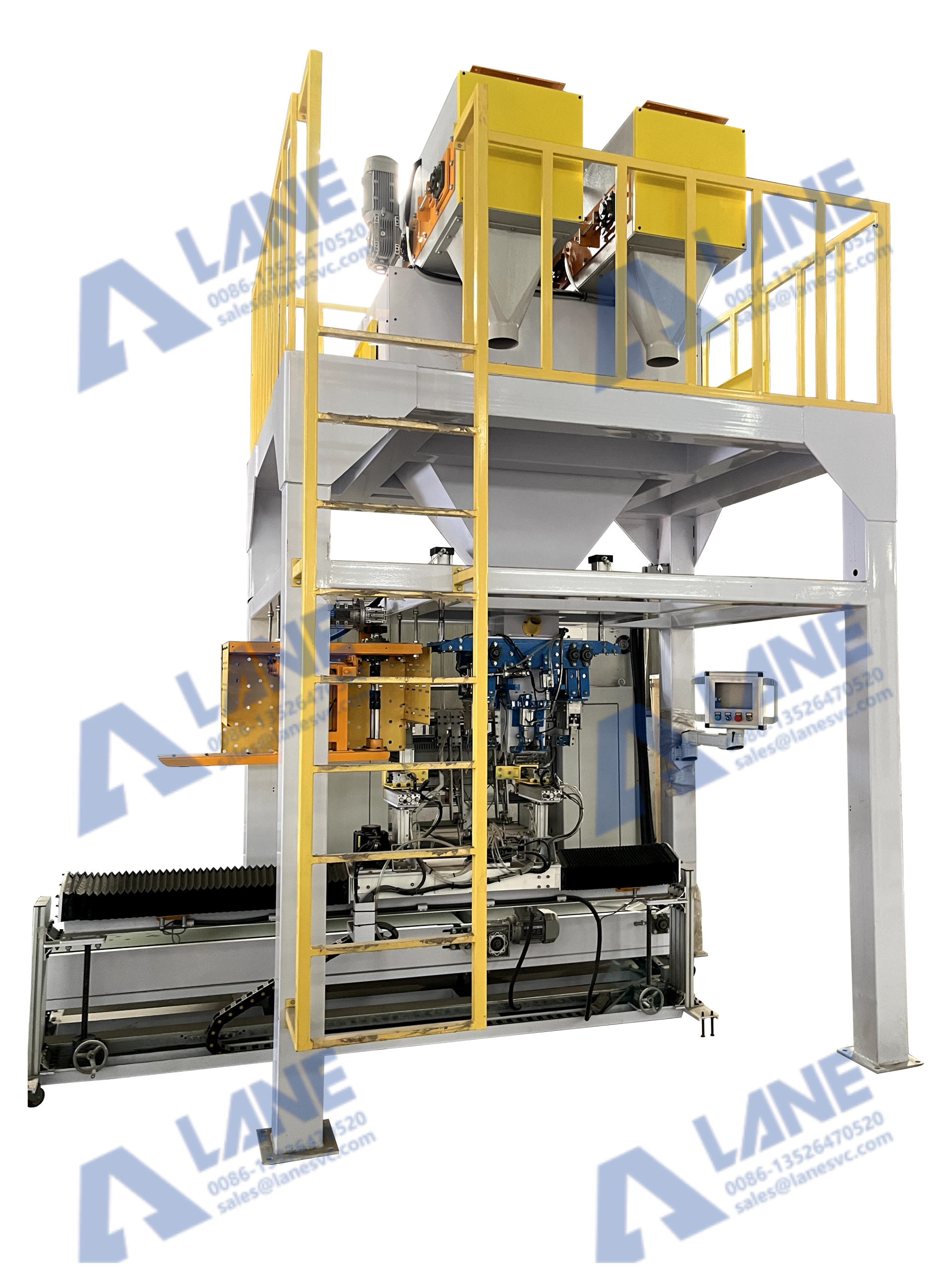
When viewed across the entire production line, the rotary drum cooler helps protect investments made in screening machines, coating systems, and automated packaging equipment.
Cooling as Part of a Coordinated Production Strategy
In modern cat litter manufacturing, individual machines cannot be evaluated in isolation. Each stage influences the next, and performance depends on how well equipment works together.
The rotary drum cooler represents this philosophy clearly. Its function is not limited to cooling materials but to conditioning them for stable downstream handling. When cooling is designed as an integrated process step, production lines become easier to control and more resilient to variation.
This system-oriented mindset is central to how LANE approaches equipment design and project planning. By focusing on coordination rather than individual components, manufacturers can achieve consistent output without excessive manual intervention.
Conclusion: Cooling Defines Material Readiness
Drying removes moisture, but cooling defines readiness. In cat litter processing, a rotary drum cooler ensures that granules leave the thermal zone in a stable, predictable condition. This controlled transition supports screening accuracy, coating quality, and packaging reliability.
When properly integrated, the rotary drum cooler becomes a quiet but essential contributor to continuous production. Instead of reacting to downstream problems, manufacturers can prevent them by stabilizing materials at the right moment.
For production lines seeking long-term consistency, cooling is not an optional add-on—it is a defining step in material conditioning.
For more details, please feel free to contact us.
Henan Lane Heavy Industry Machinery Technology Co., Ltd.
Email: sales@lanesvc.com
Contact number: +86 13526470520
Whatsapp: +86 13526470520