

Pellet Machine Used in Tofu Cat Litter Production: Selection Logic and Process Fit
Pellet Machine Used in Tofu Cat Litter Production: Selection Logic and Process Fit
Why Pellet Machines Matter in Tofu Cat Litter Production
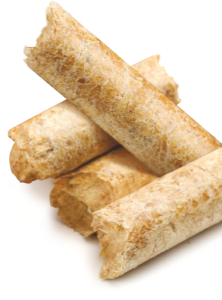
In tofu cat litter production, pellet quality is not a secondary consideration—it is the foundation of the entire product experience. Pellet strength, size consistency, surface smoothness, and resistance to breakage all originate from one critical step: pelletizing.
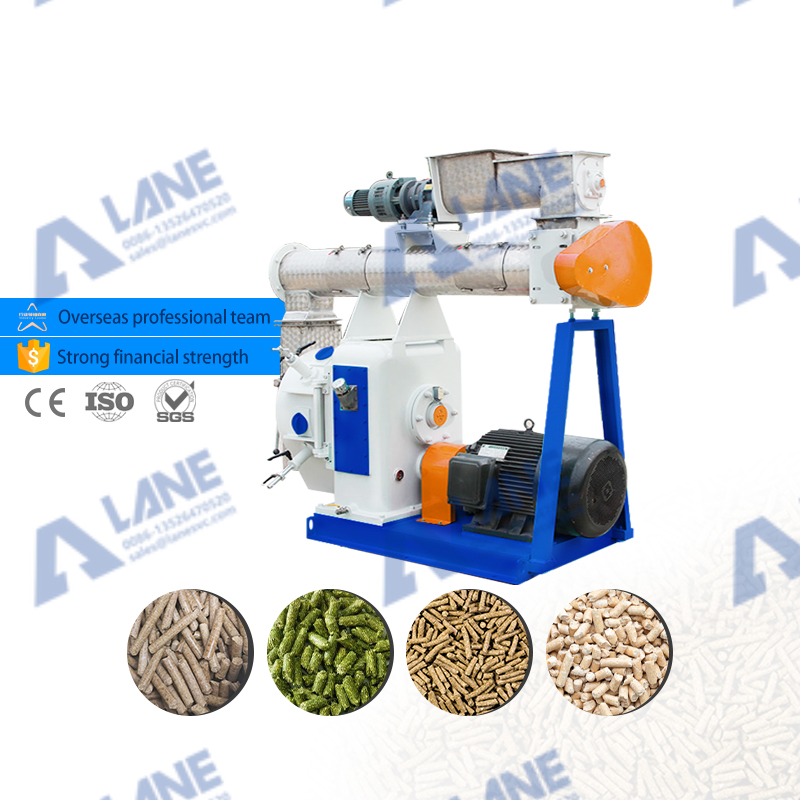
A pellet machine used in tofu cat litter production is responsible for transforming mixed, moisture-sensitive raw materials into uniform, mechanically stable pellets that can survive drying, screening, packaging, transportation, and end use. If this step is unstable, downstream processes cannot compensate for the defects created here. In practice, the pellet machine used in tofu cat litter production determines whether pellets can maintain their shape and strength throughout drying, screening, and final packaging stages.
Many manufacturers focus heavily on raw material sourcing or drying efficiency, yet overlook the fact that pelletizing is the structural forming stage. Poor pelletizing decisions often lead to issues such as soft pellets, excessive fines, cracked pellets after drying, or frequent production stoppages. These problems are rarely isolated—they propagate throughout the entire production line.
LANE Heavy Industry Technology Co., Ltd. has been dedicated to fertilizer and cat litter equipment for over twenty years. It has continuously innovated and developed, providing customers with high-quality products, first-class services, diverse designs and efficient after-sales support, which have been highly praised.
Material Characteristics That Influence Pellet Machine Performance
Tofu cat litter is typically produced from plant-based materials such as soybean residue, starch blends, or other organic fibers. These materials behave very differently from mineral-based cat litter raw materials.
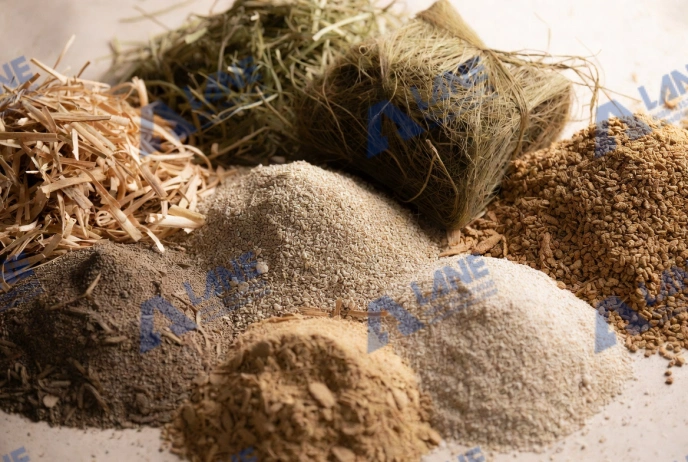
Key characteristics that directly affect how a pellet machine used in tofu cat litter production performs include:
-
High initial moisture variability, especially when soybean residue is involved
-
Fibrous structure, which influences compression and bonding behavior
-
Thermal sensitivity, meaning excessive friction can degrade pellet integrity
-
Elastic rebound after compression, leading to shape instability if not properly controlled
Because of these characteristics, tofu cat litter materials place higher demands on pelletizing consistency and pressure control. A pellet machine that performs well in fertilizer or feed processing may not automatically deliver stable results in tofu cat litter production without proper process matching.
This is why pellet machine selection should always start from material behavior, not from machine size or output alone. Because of these material behaviors, the pellet machine used in tofu cat litter production must provide stable compression and controlled extrusion rather than relying on high mechanical force alone.
Types of Pellet Machines Used in Tofu Cat Litter Production
Several pelletizing technologies are commonly used in tofu cat litter production, each with different strengths and limitations. Rather than focusing on mechanical design details, it is more practical to evaluate how each type interacts with tofu-based materials.
Common pellet machine types include:
-
Extrusion-based pellet machines, which offer controlled shaping and are suitable for moisture-sensitive formulations
-
Ring-die pellet machines, often selected for higher-capacity tofu cat litter production lines
-
Flat-die pellet machines, typically used in smaller-scale or pilot production
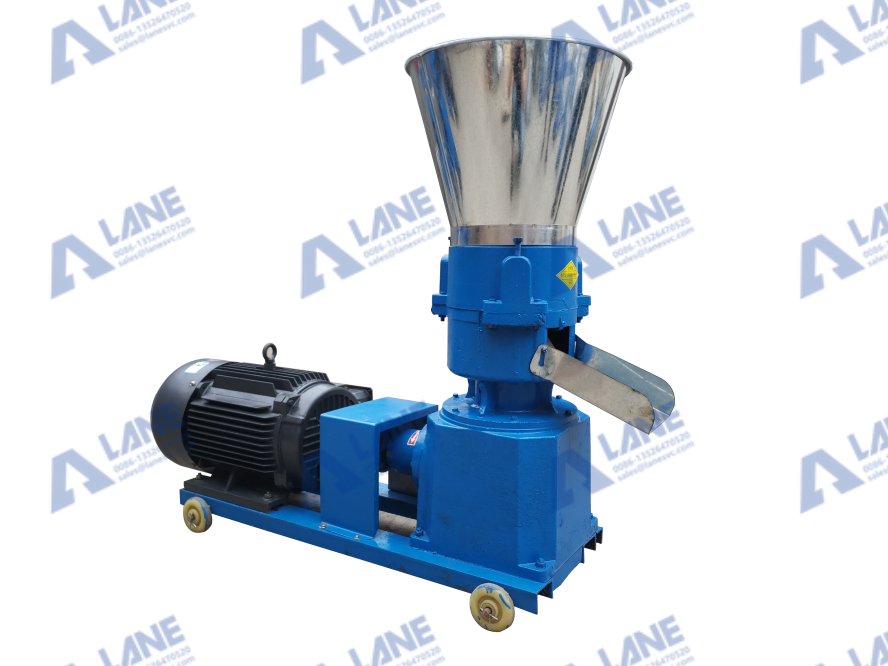
The key point is not which type is “better” in absolute terms, but which pellet machine used in tofu cat litter production aligns with your target pellet hardness, throughput, and material stability.
Selecting an incompatible pelletizing principle often results in recurring quality issues that are mistakenly attributed to raw materials or drying conditions.
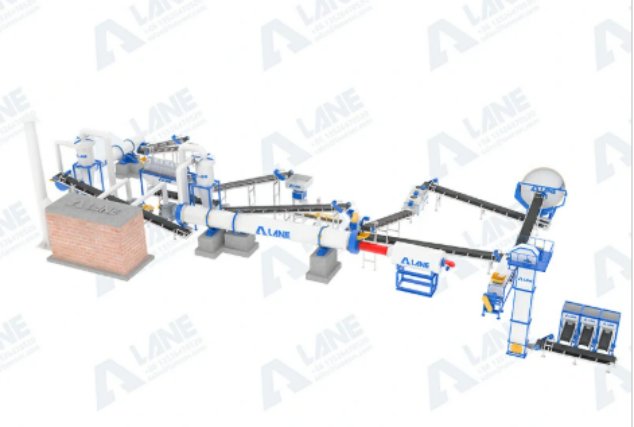
How Pellet Machines Fit Into the Full Tofu Cat Litter Production Line
A pellet machine never operates in isolation. Its performance is directly influenced by upstream preparation and directly impacts downstream processing.
In a typical tofu cat litter production line, the pellet machine sits between:
-
Mixing and conditioning systems (upstream)
-
Drying and screening systems (downstream)
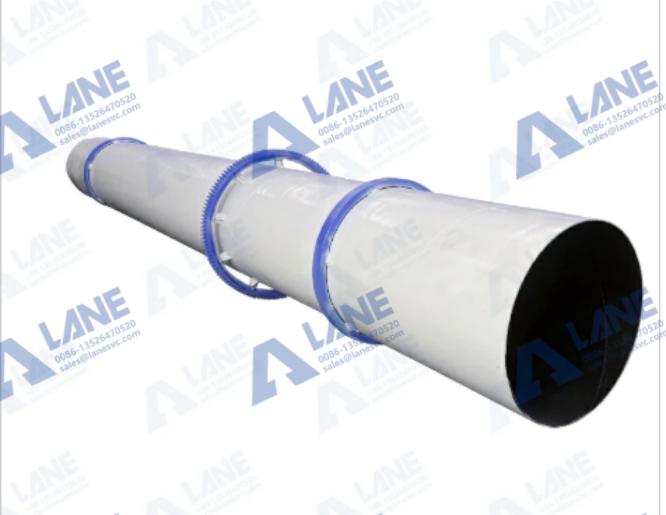
If mixing produces uneven moisture distribution, pellet formation becomes unstable. If drying capacity is mismatched with pellet density, cracking or deformation may occur. Therefore, a pellet machine used in tofu cat litter production must be selected and configured as part of an integrated system.
This is also where many production lines encounter bottlenecks—not because individual machines fail, but because their process logic is misaligned.
Common Pelletizing Issues in Tofu Cat Litter Production
When the pellet machine is not properly matched to the material or process, several common issues tend to appear repeatedly across different factories:
-
Pellets that are too soft and deform during drying
-
Pellet surfaces cracking after moisture removal
-
Inconsistent pellet length or diameter
-
Excessive fines generation during screening
-
Frequent blockage or unstable pellet discharge
While these problems are often addressed by adjusting formulations or drying temperatures, the root cause is frequently related to the pellet machine used in tofu cat litter production and its interaction with the material.
Understanding this relationship helps manufacturers avoid endless trial-and-error adjustments and instead focus on structural process optimization.
Selecting a Pellet Machine Based on Production Goals
There is no universal pellet machine suitable for every tofu cat litter project. Selection criteria should be driven by production goals rather than by equipment popularity. When evaluating equipment options, manufacturers should always assess how the pellet machine used in tofu cat litter production aligns with their raw material system, capacity planning, and long-term production stability.
Key decision factors include:
-
Production scale: small-scale testing versus industrial continuous operation
-
Product positioning: premium low-dust pellets versus cost-focused mass production
-
Raw material flexibility: ability to handle variations in soybean residue quality
-
Future scalability: expansion without replacing core pelletizing equipment
A pellet machine used in tofu cat litter production should support long-term operational stability, not just short-term output targets.
Choosing the Right Pellet Machine for Stable Tofu Cat Litter Production
The pellet machine used in tofu cat litter production plays a decisive role in determining product quality, line efficiency, and operational reliability. Rather than treating pelletizing as a standalone step, manufacturers should view it as the structural core of the entire production process.
By selecting a pellet machine based on material behavior, process integration, and production objectives, tofu cat litter manufacturers can significantly reduce downstream issues and build a more resilient, scalable production line.
If you are planning a new tofu cat litter project or optimizing an existing line, evaluating pellet machine selection within the full process context is one of the most effective steps toward consistent, high-quality output.
For more details, please feel free to contact us.
Henan Lane Heavy Industry Machinery Technology Co., Ltd.
Email: sales@lanesvc.com
Contact number: +86 13526470520
Whatsapp: +86 13526470520