

Low Dust Clay Cat Litter Manufacturing Process Optimization Strategies for Industrial Production
Low Dust Clay Cat Litter Manufacturing Process Optimization Strategies for Industrial Production
In today’s competitive pet care market, delivering high-quality clay cat litter with minimal dust has become a priority for manufacturers and consumers alike. The combination of performance, safety, and cleanliness makes low dust clay cat litter manufacturing process optimization strategies a critical topic in modern cat litter production. Dust not only affects the working environment and operator health, but also determines end-user satisfaction and product perception. With cat litter lines increasingly automated and scaled for industrial output, refining manufacturing practices to minimize dust generation is both a technical challenge and a strategic advantage.
This article presents proven strategies to optimize clay cat litter manufacturing processes, focusing on dust control at every critical stage — from raw material handling to final packaging — while highlighting how modern production equipment and solutions improve consistency and reduce particulate emissions.
Understanding Dust in Clay Cat Litter Production
Clay cat litter production typically begins with mined bentonite clay, which offers excellent absorbency and clumping performance. However, clay particles naturally tend to generate dust when processed — especially during crushing, grinding, and material handling stages. Clay dust, if not properly managed, can spread throughout the manufacturing environment and reduce product quality.
Dust arises primarily from:
-
Fine particles created during crushing and milling.
-
Processing of loose powder before granulation.
-
Material agitation during mixing, screening, and conveying.
-
Breakage during drying, cooling, and packaging.
Understanding these sources is the first step in developing low dust clay cat litter manufacturing process optimization strategies that deliver healthier workplaces and cleaner final products.
1. Raw Material Preparation: Minimize Dust at the Source
Low dust clay cat litter manufacturing process optimization strategies begin with handling raw bentonite material in ways that reduce dust liberation at the earliest stages.
The quality of bentonite clay influences dust generation; high levels of fines and an excessively broad particle size distribution lead to airborne dust when moved or processed. By implementing careful pre-screening and controlled crushing, manufacturers can preemptively decrease ultra-fine dust production.
-
Begin with closed-system crushers that limit dust escape during primary size reduction.
-
Use magnetic separators and cleaning screens to remove impurities that cause friction and additional dust generation.
Effective raw material preparation not only improves flowability and consistency into downstream operations, but also supports the overall low dust clay cat litter manufacturing process optimization strategies by reducing the volume of airborne particulates from the outset.
2. Crushing & Grinding Optimization: Tight Control on Particle Size
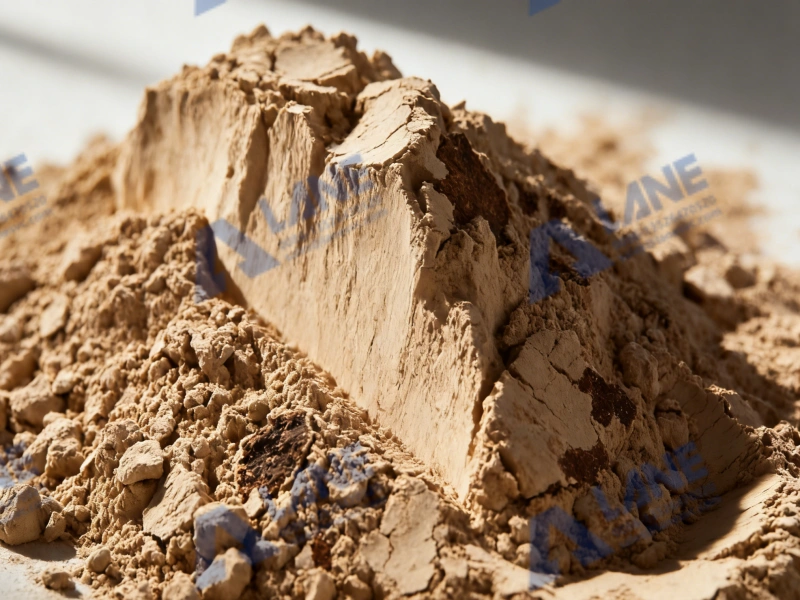
Crushing and milling are among the most dust-intensive phases in the clay cat litter production line. Fines produced during grinding directly correlate with the level of dust generated throughout the subsequent stages.
To mitigate this:
-
Employ variable speed crushing systems to avoid over-grinding.
-
Use enclosed grinding units equipped with integral dust collection.
-
Optimize mill feed rates to balance throughput and dust suppression.
Advanced milling technologies — including controlled vertical mills or precision grinders — reduce fines while preserving the clay’s desirable absorption characteristics, a cornerstone in low dust clay cat litter manufacturing process optimization strategies.
High-efficiency separators integrated into grinding systems can further capture ultra-fine dust and return it to the process as usable material, minimizing waste and environmental impact.
3. Mixing & Moisture Conditioning: Enclosure and Wet Handling
Even after crushing and grinding, clay materials still contain free fines that can become airborne during agitation. The low dust clay cat litter manufacturing process optimization strategies recommend:
-
Using enclosed mixing systems, which localize dust generation.
-
Adding moisture conditioners during blending to agglomerate dust into larger, heavier particles that settle quickly rather than suspend in air.
Moisture control must be precise: excess water creates sticky material that clogs equipment, while insufficient moisture fails to capture dust effectively. A measured approach helps ensure even distribution of moisture and additives, directly reducing dust release in mixing zones.
Reduced dust at the mixing stage also prevents equipment wear and improves automation reliability, foundational outcomes of smart process optimization.
4. Pelletizing & Granulation: Reduce Dust Through Controlled Formation
Granulation converts prepared clay powder into uniform pellets — a stage that can significantly influence the final dust profile of your product. Poorly formed pellets tend to break easily, shedding fine particles that contribute to dust.
Key tactics in low dust clay cat litter manufacturing process optimization strategies include:
-
Ensuring the right moisture balance through conditioners before granulation.
-
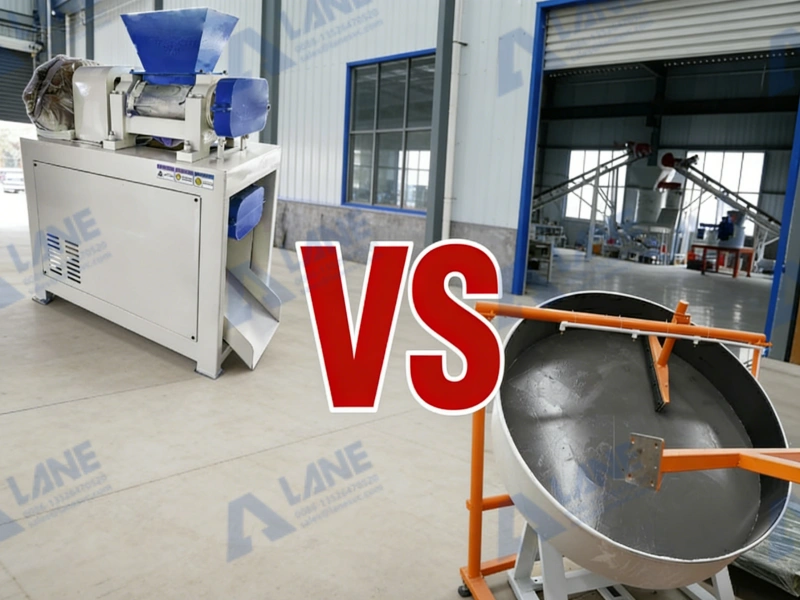
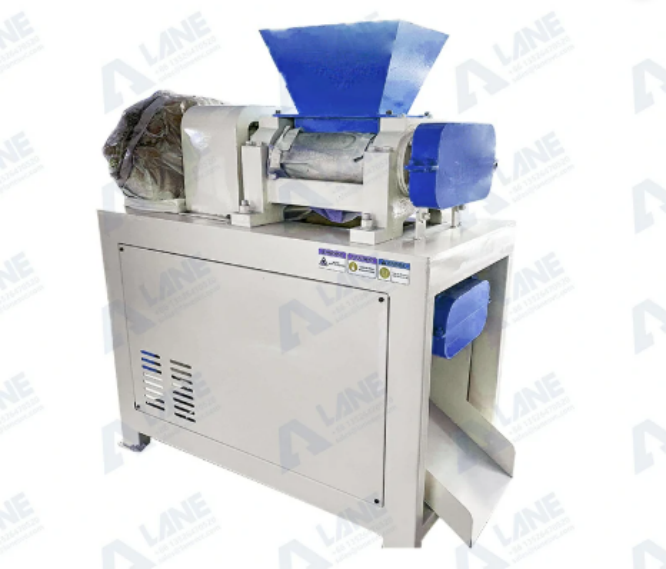
Using precision double roller granulaors that compress clay into robust pellet structures.
-
Maintaining stable operating conditions to reduce fluctuation in pellet strength.
Well-formed pellets are less prone to breakage during drying, cooling, and handling, meaning less dust overall throughout the production line. Granulation parameters should be tuned to the specific bentonite feedstock to achieve optimal pellet integrity.
5. Drying & Cooling: Gentle Handling Reduces Particle Breakage
Even after granulation, clay pellets may undergo further stress during drying and cooling, potentially creating dust through abrasion or fragmentation. Maintaining optimal thermal and airflow profiles reduces unnecessary mechanical degradation of granules.
Modern rotary dryers and coolers with:
-
Soft airflow modes,
-
Temperature zoning,
-
Closed-circuit aeration,
can support dust reduction in these stages as part of low dust clay cat litter manufacturing process optimization strategies.
Reduced pellet damage during thermal processing also ensures better final product performance — particularly in absorbency and clumping — which directly correlates with customer satisfaction.
6. Screening, Separation & Dust Extraction Systems
Particle size uniformity is vital not only for product quality, but also for controlling dust in downstream processes. Inconsistent screening can allow fines back into the product stream, elevating dust levels in packaging and after distribution.
Effective strategies here include:
-
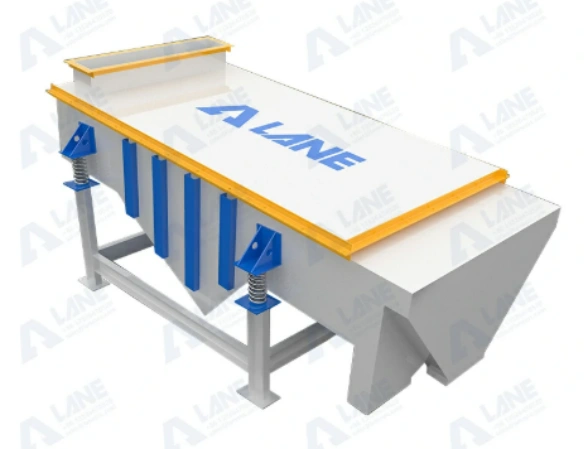
Multi-stage vibrating screens to segregate fines.
-
Integrated negative-pressure dust extraction connected to screen cabinets.
-
Cyclonic collection to minimize fines reentry.
These systems are central to low dust clay cat litter manufacturing process optimization strategies because they stop dust where it forms, closing the loop between production and environmental control.
7. Packaging & Post-Production Handling
A production line that excels in dust minimization must extend these principles into packaging. Though packaging is a late-stage step, improper handling can reintroduce dust — especially when bags rub or granules shift during transfer.
Best practices include:
-
Closed bulk bagging systems.
-
Nitrogen or filtered airflow filling to prevent dust escape.
-
Protective liners for palletized goods.
A secure packaging approach effectively captures residual dust and completes your low dust clay cat litter manufacturing process optimization strategies, yielding final products that reach customers with minimal particulate residue.
8. Integrated Solutions & Service Support from LANE
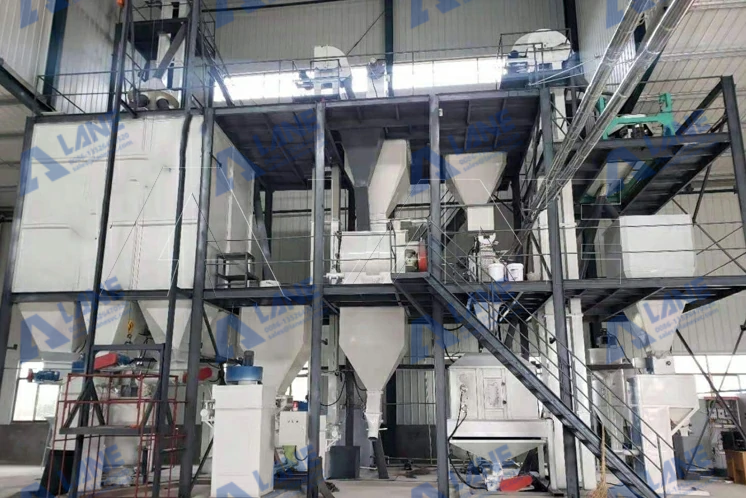
Implementing low dust clay cat litter manufacturing process optimization strategies is most effective when paired with an integrated production line that anticipates dust control at every stage. LANE’s Bentonite Cat Litter Production Line brings together automated crushing, screening, granulation, drying, dust capture, and packaging in a smart, modular platform. The system is engineered with environmental protection in mind, offering up to 99.9 % dust capture and energy-efficient operation, helping you meet both regulatory and market expectations.
Some key advantages of LANE’s turnkey approach include:
-
Full-process automation from raw material to finished product.
-
Modular equipment designed to minimize dust emissions throughout production.
-
Comprehensive after-sales service with global support and parameter optimization.
By aligning smart equipment with proven low dust clay cat litter manufacturing process optimization strategies, you can achieve cleaner production conditions, higher product quality, and better market competitiveness.
Conclusion
Optimizing cat litter production processes to reduce dust is no longer optional — it’s essential for maintaining workplace safety, ensuring product quality, and meeting consumer expectations. From raw material management to packaging, every stage affects the dust profile of your product. Adopting low dust clay cat litter manufacturing process optimization strategies enables manufacturers to systematically reduce airborne particulates, improve automation reliability, and deliver a competitive product with exceptional performance.
For more details, please feel free to contact us.
Henan Lane Heavy Industry Machinery Technology Co., Ltd.
Email: sales@lanesvc.com
Contact number: +86 13526470520
Whatsapp: +86 13526470520