

Disc Granulator vs Drum Granulator for Cat Litter: Choosing the Right Granulation Solution
Disc Granulator vs Drum Granulator for Cat Litter: Choosing the Right Granulation Solution
In modern cat litter manufacturing, granulation is far more than a shaping step. It directly affects particle consistency, dust control, downstream drying efficiency, and even final packaging stability. As production lines become more automated and output targets increase, manufacturers face a recurring question: disc granulator vs drum granulator for cat litter— which solution fits their process best?
From an equipment manufacturer’s perspective, the answer is never universal. The right granulation system depends on raw material behavior, production scale, formulation flexibility, and long-term expansion plans. Understanding the structural and operational differences between disc and drum granulators is the first step toward a stable and scalable cat litter line.
Cat Litter Granulation Requirements in Modern Production
Cat litter granulation places unique demands on equipment compared to fertilizer or mineral processing. Raw materials such as tofu-based blends, bentonite, or mixed formulas behave differently under rotation, moisture adjustment, and pressure.
In a typical cat litter production line, the granulator must:
-
Form uniform granules with controlled size distribution
-
Maintain sufficient particle strength to withstand drying, cooling, and packaging
-
Minimize fines and dust generation
-
Operate stably under continuous production conditions
This is why discussions around disc granulator vs drum granulator for cat litter are so common among manufacturers upgrading or designing new lines. The granulator must integrate smoothly with mixers, dryers, screeners, and packaging systems, rather than acting as an isolated machine.
Disc Granulator for Cat Litter: Structure and Working Principle
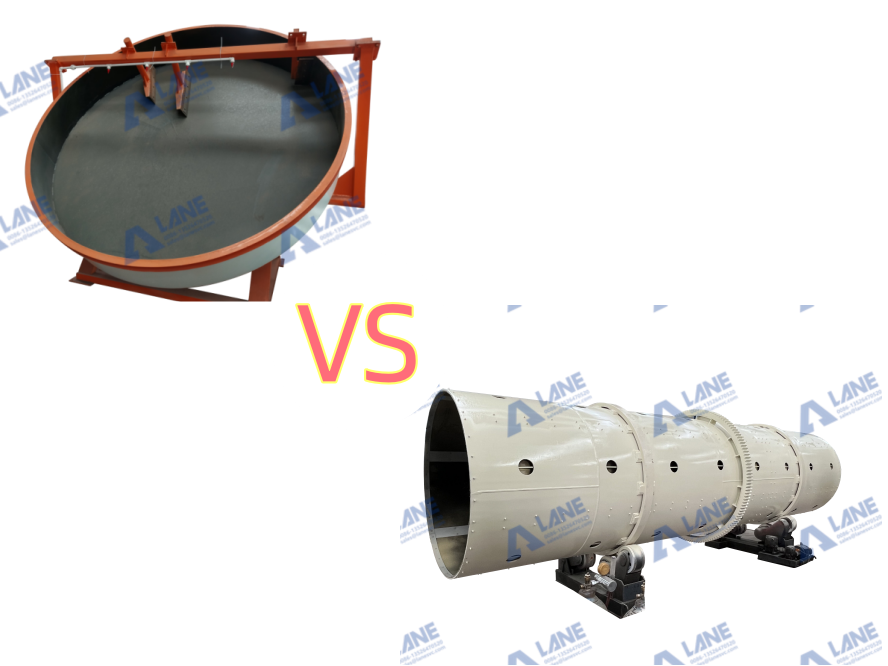
A disc granulator forms particles through controlled rolling motion on a tilted rotating pan. Material is fed continuously, while moisture and binder levels guide the formation of granules as particles collide and grow layer by layer.
For cat litter applications, disc granulators are often favored when:
-
Flexible granule size adjustment is required
-
Multiple formulas or frequent product switching is involved
-
Operators need visual control of the granulation process
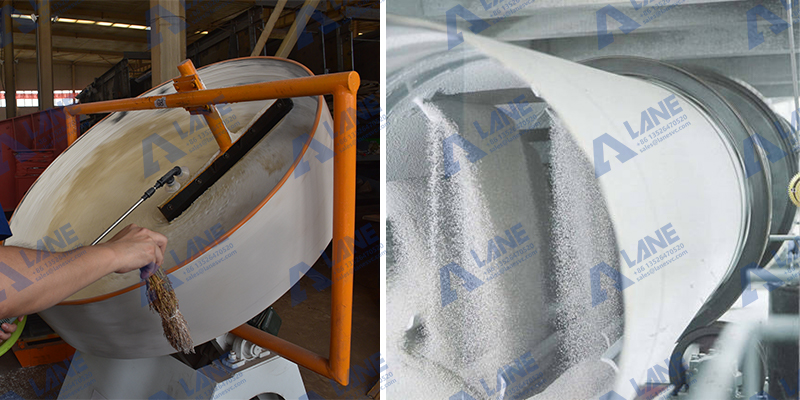
The adjustable inclination angle and rotational speed allow fine-tuning of particle size. This makes disc granulators suitable for small to medium-scale cat litter production or facilities producing specialty litter products with varying specifications.
However, because granule growth relies heavily on surface rolling, disc granulators can be sensitive to raw material moisture fluctuations. This sensitivity becomes a key comparison point in the disc granulator vs drum granulator for cat litter discussion.
Drum Granulator for Cat Litter: Structure and Working Principle
Drum granulators use a rotating cylindrical body to tumble material continuously. Inside the drum, particles collide, agglomerate, and compact as they move forward along the rotation path.
In cat litter production, drum granulators are commonly applied when:
-
High and stable output is required
-
Formulations are relatively consistent
-
Continuous operation is prioritized over frequent adjustment
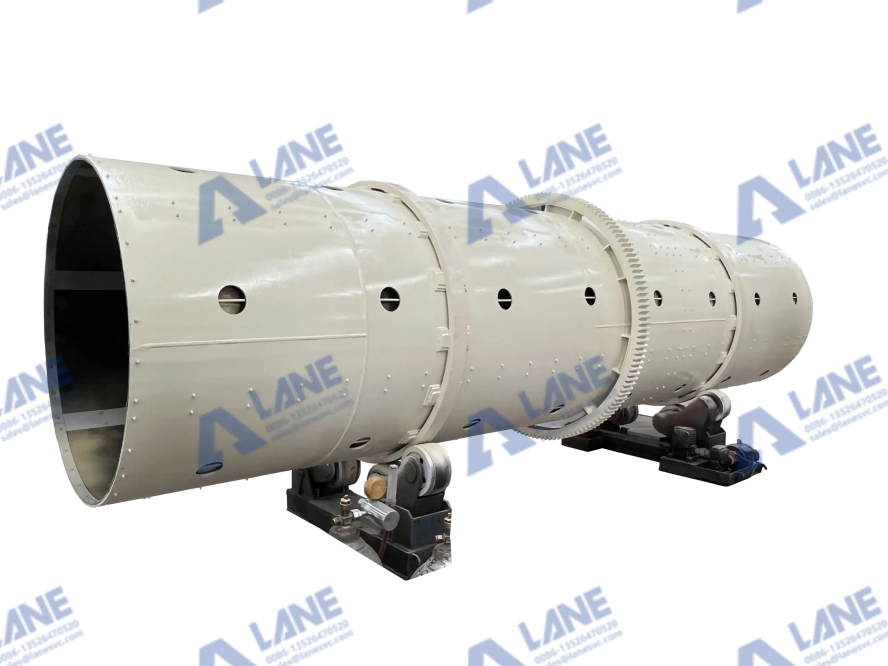
The enclosed structure allows better process stability under long operating hours. Drum granulators also integrate well with upstream continuous mixers and downstream rotary dryers, forming a smooth, uninterrupted material flow.
When comparing disc granulator vs drum granulator for cat litter, drum systems often stand out in large-scale plants focused on efficiency, consistency, and reduced manual intervention.
Disc Granulator vs Drum Granulator for Cat Litter: Key Performance Comparison
Rather than asking which machine is “better,” manufacturers benefit more from comparing performance factors that directly affect production outcomes.
1. Granule size control
Disc granulators offer more immediate size adjustment through angle and speed changes. Drum granulators rely more on internal residence time and process stability.
2.Production capacity
Drum granulators typically support higher throughput and are better suited for large, continuous lines. Disc granulators are effective for moderate output ranges.
3.Process stability
Drum granulators maintain more consistent operation over long runs, especially when paired with automated feeding and moisture control systems.
4.Maintenance and operation
Disc granulators are mechanically simpler and easier to observe during operation. Drum granulators require more robust structural design but offer lower intervention frequency during production.
These distinctions form the practical basis of any disc granulator vs drum granulator for cat litter evaluation. In practical applications, disc granulator vs drum granulator for cat litter is less about choosing a better machine and more about aligning granulation behavior with long-term production targets.
How to Choose Between Disc and Drum Granulators for Your Cat Litter Line
Choosing the right granulation equipment starts with understanding production goals, not machine labels.
Manufacturers producing multiple cat litter formulas in smaller batches may lean toward disc granulators for their flexibility. In contrast, operations targeting long-term, high-volume output often prefer drum granulators for their continuity and stability.
Other factors include:
-
Raw material moisture tolerance
-
Integration with screening and recycling systems
-
Future automation and expansion plans
At this stage, granulation should not be viewed as a standalone decision. In many cases, the most effective solution comes from aligning the granulator with the entire production line layout. When evaluating disc granulator vs drum granulator for cat litter, manufacturers should consider not only current capacity needs but also future automation and expansion plans.
LANE’s Granulation Solutions for Cat Litter Manufacturers
As an equipment manufacturer specializing in cat litter, fertilizer, and bulk material processing, LANE does not promote a single “universal” granulator. Instead, we design and supply both disc granulator and drum granulator systems based on real production conditions.
For clients evaluating disc granulator vs drum granulator for cat litter, our role is to:
-
Analyze raw material behavior and target granule properties
-
Match granulation equipment with mixers, dryers, screeners, and coolers
-
Ensure stable integration into automated or semi-automated production lines
LANE’s granulation solutions are built with scalability in mind. Whether upgrading an existing line or planning a new facility, our equipment is designed to support long-term production stability rather than short-term output gains.
Conclusion: Matching the Right Granulator to Long-Term Production Goals
In the debate over disc granulator vs drum granulator for cat litter, the most costly mistake is treating granulation as a one-size-fits-all decision. Each system offers clear advantages when matched with the right production context.
By focusing on material characteristics, output targets, and line integration, manufacturers can choose a granulation solution that supports consistent quality and sustainable growth. Working with an experienced equipment supplier ensures that this decision strengthens the entire production line—not just one machine.
LANE Company, your reliable partner, is always here ready to assist you with your inquiries. We can customize the products according to your needs, do our best to meet all your requirements, and offer efficient after-sales service and consultation to ensure your peace of mind and convenience.
For more details, please feel free to contact us.
Henan Lane Heavy Industry Machinery Technology Co., Ltd.
Email: sales@lanesvc.com
Contact number: +86 13526470520
Whatsapp: +86 13526470520