

Corn Cat Litter Production Process and Equipment Configuration: A Complete Practical Guide
Corn Cat Litter Production Process and Equipment Configuration: A Complete Practical Guide
Introduction: Why Corn Cat Litter Is Gaining Global Demand
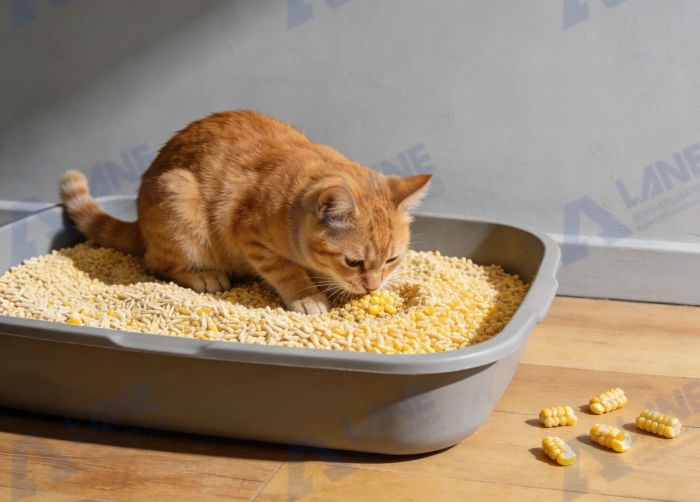
In recent years, biodegradable and eco-friendly pet products have seen rapid growth, and corn-based cat litter has become one of the most promising alternatives to traditional clay litter. Understanding the corn cat litter production process and equipment configuration is essential for manufacturers aiming to enter this fast-growing market.
To better understand the Corn Cat Litter Production Process and Equipment Configuration, manufacturers need a systematic view of raw material handling, granulation technology, and intelligent control systems to ensure stable product quality and efficiency.
Corn cat litter offers several advantages:
- Biodegradable and flushable
- Low dust and environmentally friendly
- Lightweight and easy to transport
However, many investors face challenges such as unstable granulation, high drying costs, and inconsistent product quality. A well-designed corn cat litter production process and equipment configuration can effectively solve these issues and ensure stable production.
At LANE, we focus on providing customized solutions that align with raw material characteristics and market positioning, helping clients reduce risk while maximizing return on investment.
🌽 1. Overview of Corn Cat Litter Production Process
The corn cat litter production process and equipment configuration involves a series of interconnected steps that convert plant-based raw materials into uniform, high-performance litter pellets.
A typical production workflow includes:
- Raw material preparation
- Mixing and conditioning
- Extrusion or granulation
- Drying and cooling
- Screening and packaging
These steps must be precisely coordinated to ensure product consistency and efficiency.
⚙️ 2. Key Process Steps Explained
A well-designed Corn Cat Litter Production Process and Equipment Configuration integrates mixing, extrusion, drying, and screening into a continuous and automated workflow, helping reduce manual errors and improve consistency.
✦ 🧩 2.1 Raw Material Preparation (Critical for Stability)
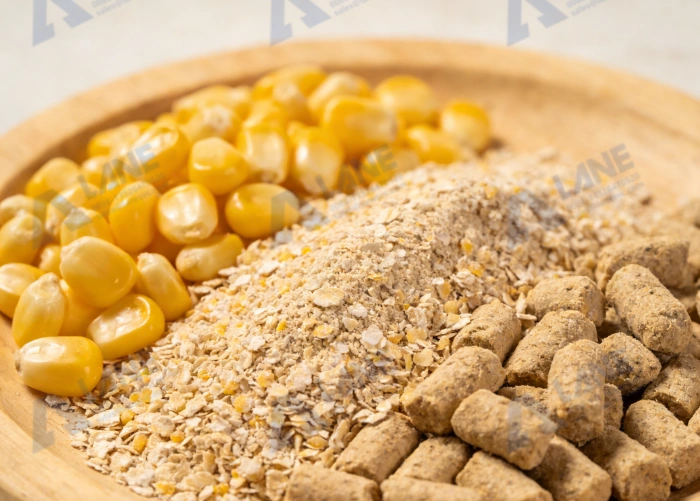
Corn-based cat litter typically uses:
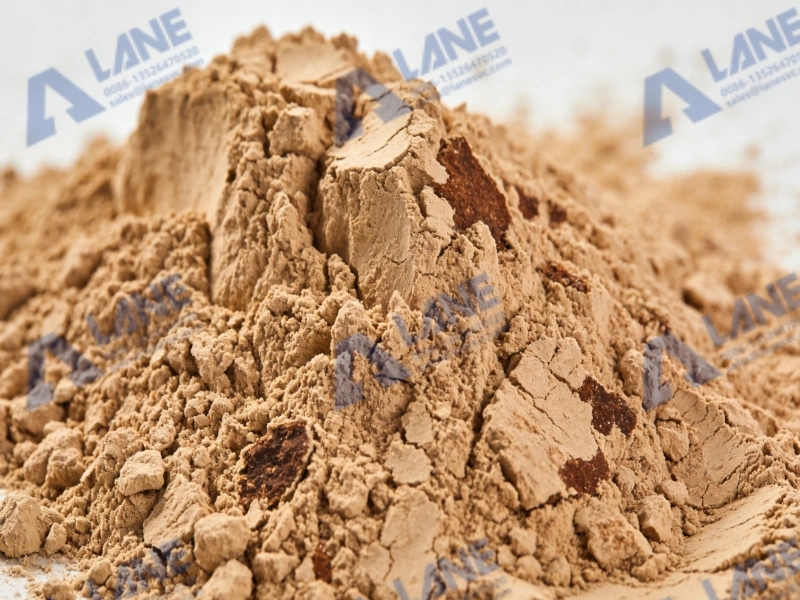
- Corn starch
- Corn cob powder
- Plant fiber
- Additives (binder, deodorizer)
Before entering production, raw materials must be:
- Crushed to uniform size
- Moisture-adjusted
- Free of impurities
Stable raw material quality is the first step toward consistent pellet formation.
✦ 🔄 2.2 Mixing and Conditioning (Uniformity Control)
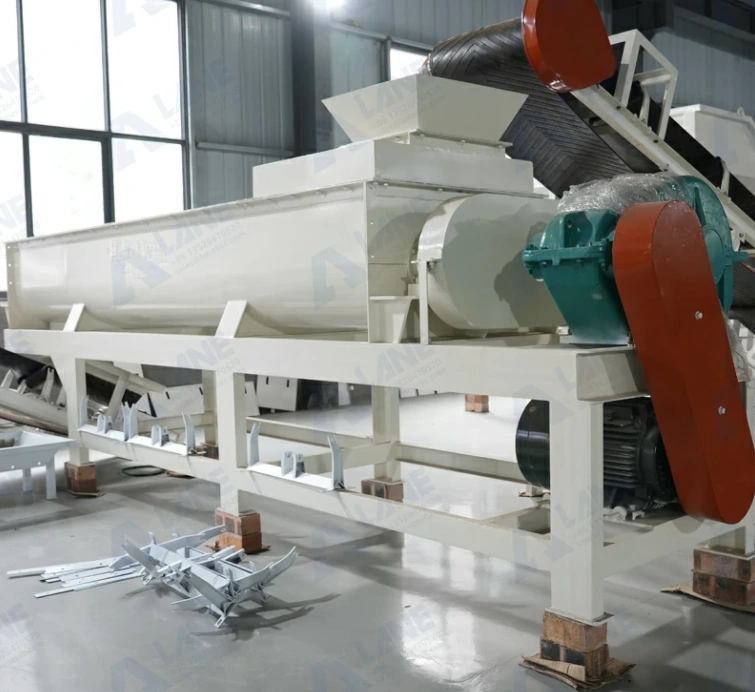
Mixing determines whether the final product will have consistent absorption and clumping performance.
A high-efficiency mixer ensures:
- Even distribution of additives
- Proper moisture balance
- Stable feed for granulation
LANE’s dual-shaft mixers are designed to reduce mixing dead zones and improve uniformity.
✦ 🔥 2.3 Extrusion / Granulation (Core Step)
This is the most critical stage in the corn cat litter production process and equipment configuration.
Two common methods:
- Twin-screw extrusion (for tofu/corn litter)
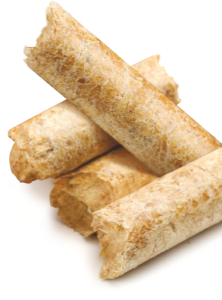
- Pelletizing systems
Extrusion technology forms uniform rods, which are then cut into pellets, ensuring consistent size and density.
Key advantages:
- High forming rate
- Strong particle structure
- Flexible size control
✦ 🌡️ 2.4 Drying and Cooling (Cost Control Focus)
Drying is one of the most energy-consuming steps.
A well-optimized drying system can:
- Reduce energy consumption
- Prevent particle deformation
- Improve product durability
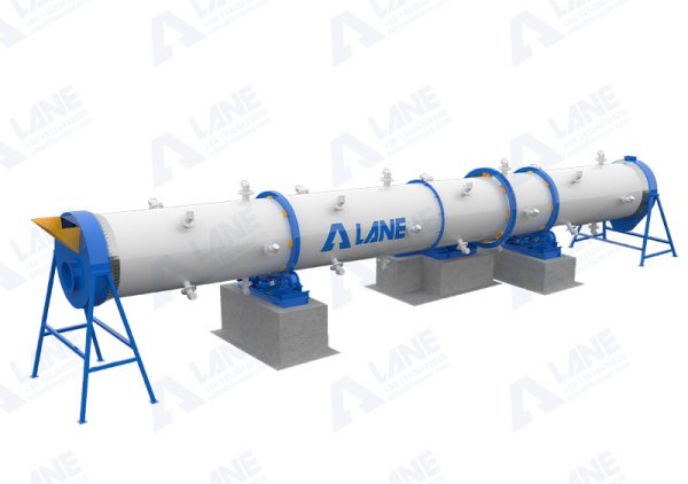
LANE uses multi-layer belt dryers with precise temperature control to ensure uniform drying while minimizing energy loss.
Cooling systems further stabilize the pellets and prevent breakage.
✦ 🔍 2.5 Screening and Recycling System
After drying, particles are screened to ensure uniform size.
- Qualified products → packaging
- Unqualified particles → reprocessing
This closed-loop system reduces waste and improves yield rate.
✦ 📦 2.6 Automatic Packaging System
Packaging plays a key role in efficiency and product quality.
Modern automatic packaging systems provide:
- Accurate weighing
- High-speed filling
- Reduced dust leakage
They also improve overall workflow and reduce labor dependency.
💡 3. Equipment Configuration Strategy (What Customers Care Most About)
A practical corn cat litter production process and equipment configuration must be tailored to real production needs.
✦ 📊 3.1 Capacity Planning
- Small scale: 1–3 t/h
- Medium scale: 3–10 t/h
- Large scale: 10+ t/h
Choosing the right capacity avoids overinvestment or bottlenecks.
✦ 💰 3.2 Cost Optimization
Key cost factors:
- Energy consumption (drying system)
- Labor cost
- Raw material utilization
LANE solutions focus on reducing long-term operational costs rather than just initial investment.
✦ 🌍 3.3 Environmental Compliance
Corn cat litter is eco-friendly, but production must also meet environmental standards.
LANE integrates:
- Dust removal systems
- Closed conveying
- Energy-efficient drying
✦ ⚙️ 3.4 Automation Level Selection
- Semi-automatic → lower investment
- Fully automatic → higher efficiency
PLC-based systems allow centralized control and real-time monitoring of the entire production process.
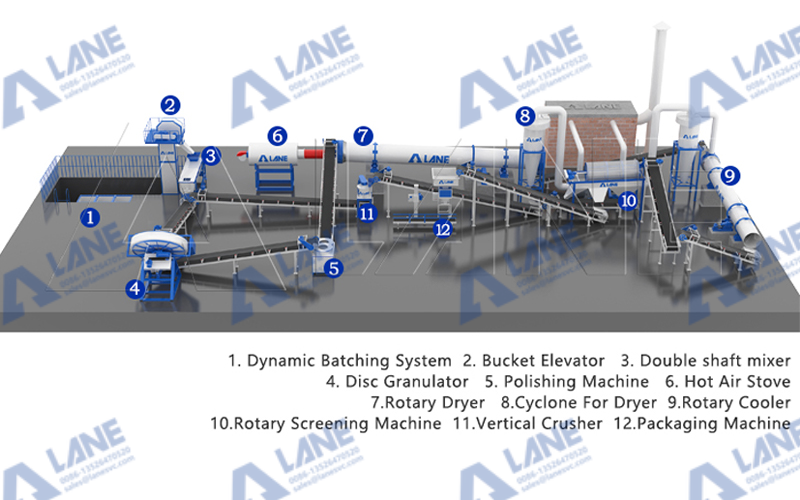
In practical applications, optimizing the Corn Cat Litter Production Process and Equipment Configuration allows enterprises to balance production capacity, energy consumption, and final product performance.
🏭 4. LANE Customized Corn Cat Litter Solutions
LANE’s approach to corn cat litter production process and equipment configuration goes beyond standard equipment supply.
✦ 🔧 4.1 Tailored Engineering Design
We design each production line based on:
- Raw material characteristics
- Factory layout
- Target market
✦ 🧠 4.2 Integrated Equipment System
Our systems include:
- Intelligent feeding
- High-efficiency mixing
- Precision extrusion
- Energy-saving drying
- Automated packaging
✦ 🌍 4.3 Proven Global Projects
LANE has successfully delivered turnkey projects in Europe and Southeast Asia, helping clients achieve:
- Stable production output
- Lower operational costs
- Faster market entry
✦ 🤝 4.4 Full Lifecycle Support
We provide:
- Installation & commissioning
- Operator training
- Long-term technical support
🚀 5. Common Problems and How to Solve Them
In real projects, customers often face:
❗ Problem 1: Pellet breakage
✔ Solution: Optimize extrusion pressure + drying parameters
❗ Problem 2: High energy consumption
✔ Solution: Upgrade to energy-efficient drying system
❗ Problem 3: Inconsistent quality
✔ Solution: Improve mixing and automation control
Conclusion: Build a Competitive Corn Cat Litter Production Line
A well-designed corn cat litter production process and equipment configuration is the key to producing high-quality, eco-friendly cat litter while maintaining cost efficiency. By optimizing the entire Corn Cat Litter Production Process and Equipment Configuration, manufacturers can achieve stable quality, reduced labor costs, and scalable production capacity for long-term market growth.
With the right system, manufacturers can:
- Improve product consistency
- Reduce production costs
- Meet environmental requirements
- Scale production efficiently
LANE is committed to delivering intelligent, customized solutions that help clients succeed in the global pet care market. Choosing the right Corn Cat Litter Production Process and Equipment Configuration is the key to achieving scalable production, cost control, and long-term competitiveness in the eco-friendly cat litter market.
For more details, please feel free to contact us.
Henan Lane Heavy Industry Machinery Technology Co., Ltd.
Email: sales@lanesvc.com
Contact number: +86 13526470520
Whatsapp: +86 13526470520