

A Complete Guide to Clay Cat Litter Production Process Steps with Advanced LANE Equipment Solutions
A Complete Guide to Clay Cat Litter Production Process Steps with Advanced LANE Equipment Solutions
In the competitive pet care industry, consistent quality and efficient manufacturing of cat litter products are essential for market success. Understanding the clay cat litter production process steps not only helps improve production efficiency, but also increases product performance and profitability. This guide outlines each major stage of the process from raw materials to finished bags, and highlights how LANE’s cat litter production machinery supports stable output and optimized production workflows.
1. Raw Materials Preparation: The Starting Point of Quality Production
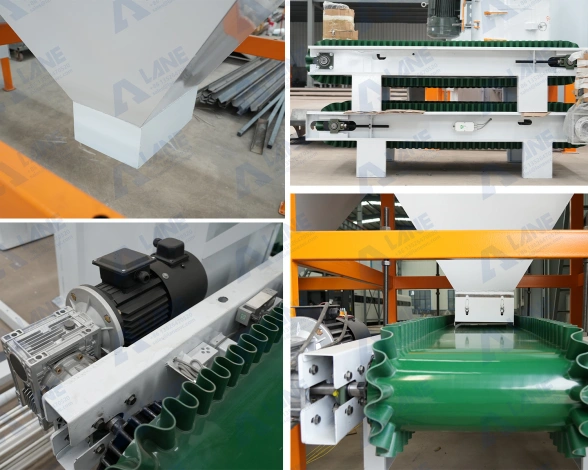
The first of the clay cat litter production process steps begins with precise raw material handling and preparation. High‑quality cat litter commonly uses bentonite clay, known for its natural clumping ability and strong absorbency. Bentonite is typically delivered in bulk, then proportioned, cleaned and prepared for further processing.
At this stage, raw bentonite is passed through initial cleaning and screening systems to remove large impurities. To achieve uniform particle performance in later process steps, consistent material quality is critical. Advanced batching and proportioning systems ensure that bentonite and any necessary additives — such as odor‑control agents or moisture‑regulating compounds — are accurately measured and ready for mixing.
2. Crushing and Mixing: Ensuring Uniform Feedstock
Once raw materials are measured and blended, they enter the crushing stage — an essential part of the clay cat litter production process steps. Bentonite clay typically arrives in large chunks after mining. These irregular pieces need to be reduced to a more manageable size. Crushers like hammer mills break the material down into fine powder, facilitating consistent mixing and downstream pellet formation.
After crushing, a horizontal mixer uniformly combines the powdered clay with any blend of additional materials. Thorough mixing ensures that each batch of cat litter has consistent performance characteristics such as clump strength, absorbency rate, and dust control.
3. Granulation: Forming Cat Litter Particles
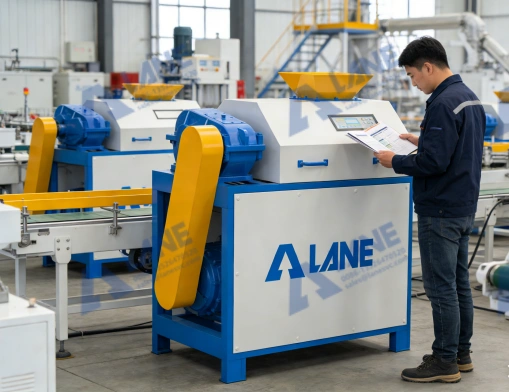
Granulation is often considered the core of the clay cat litter production process steps. During granulation, powdered clay is converted into granules of the desired physical shape and size, usually within a range such as 2–8 mm. This step directly influences product handling, clumping efficiency, and final user satisfaction.
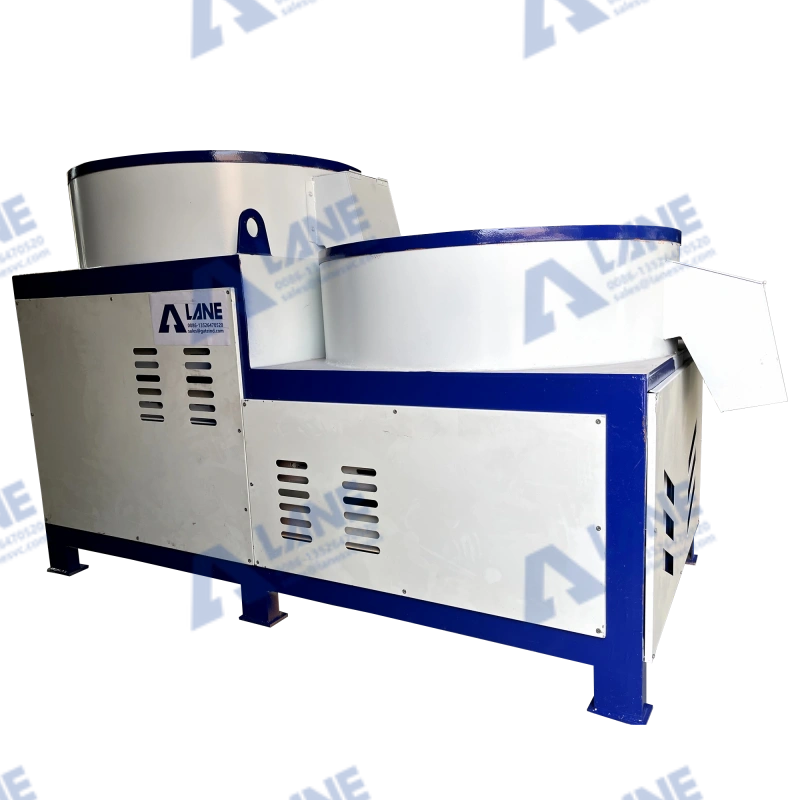
Equipment such as a disc granulator applies centrifugal force and controlled moisture addition to bind powder into pellets. The ratio of moisture, rotation speed and tilt angle are all carefully controlled to achieve high granulation rates and uniform particle distribution.
Advanced options like double‑roller granulators can also be incorporated when specific density and shape requirements are needed, delivering high consistency for specialized clay litter products.
4. Drying and Moisture Optimization
After granulation, the wet cat litter pellets still contain residual moisture that must be removed to ensure product stability and shelf life. The drying step in the clay cat litter production process steps uses controlled heat and airflow to lower moisture content to the target level.
Rotary drum dryers are commonly used, where hot air passes through continuously moving pellets to evaporate moisture uniformly. Precise control over temperature and retention time avoids over‑drying or pellet cracking.
Proper drying enhances clumping performance and reduces powdery residue, which is important for both product quality and dust control in packaging and handling.
5. Cooling and Screening: Preparing for Final Quality
Following drying, the pellets are still at elevated temperatures. Cooling equipment — such as rotary coolers — rapidly brings down pellet temperature to room level, stabilizing structure and preventing agglomeration before final screening.
Screening is another key step among the clay cat litter production process steps. Multi‑layer screening machines sort pellets based on size, removing fines and oversize fragments. Uniform particle size distribution is essential for predictable clumping behavior and customer satisfaction.
6. Packaging: Automating the Final Stage
The final stage of the clay cat litter production process steps is packaging — turning bulk pellets into ready‑for‑sale cat litter products. Automatic packaging machines handle weighing, filling, sealing and labeling, ensuring accurate bag weights and clean sealing surfaces.
Automation in packaging improves operational efficiency, reduces waste, and enhances product presentation for retail channels. Features such as PLC control and photoelectric sensors ensure consistent performance and minimal downtime during production cycles.
7. Quality Control and Dust Management
Throughout all clay cat litter production process steps, integrated quality control systems monitor performance metrics at key stages. Dust control is especially important for cat litter production — excess dust can affect worker safety and final product acceptance. Many modern cat litter lines incorporate negative‑pressure dust collectors, cyclone filters, or enclosed transfer systems to minimize airborne powders.
Ensuring consistent clumping strength, particle size uniformity, and low dust generation requires careful calibration of equipment and process parameters. Industrial automation systems help maintain these standards over extended production runs.
8. Advantages of LANE’s Cat Litter Production Line
LANE’s cat litter production systems feature robust design and flexible configurations to handle various product types — from classic bentonite clumping litter to innovative mixed formula variants combining plant‑based materials.
Highlights of LANE solutions include:
✔ Tailored equipment selection based on production capacity and product type
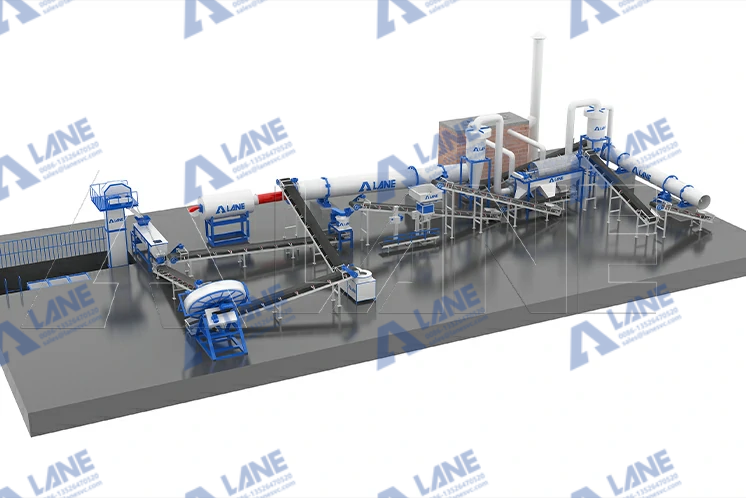
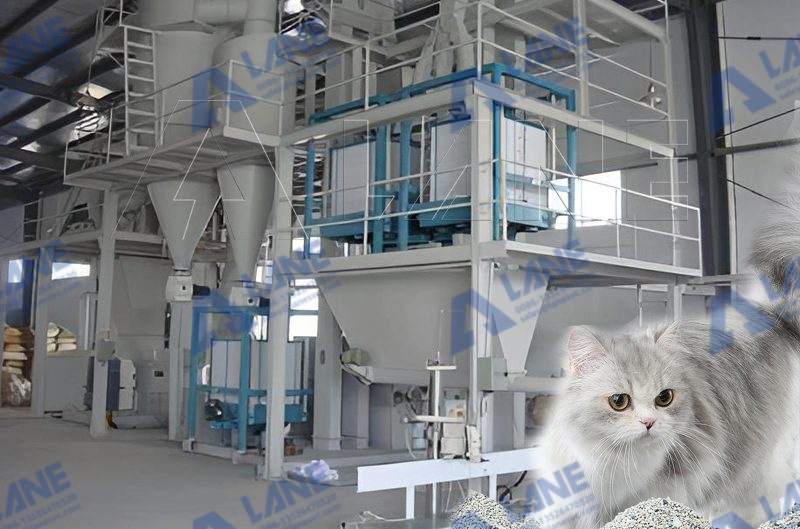
✔ Integration of batching, mixing, granulation, drying, cooling, screening and packaging in continuous workflows
✔ High‑precision machinery built for long service life and stable performance
✔ Global support infrastructure and customization options
These advantages not only streamline the clay cat litter production process steps, but also support product quality, consistency, and production scalability — key factors for brand competitiveness in pet care markets.
Conclusion
Understanding the clay cat litter production process steps is essential for manufacturers aiming to produce premium cat litter products that meet consumer expectations. From raw material preparation and granulation to drying, cooling, screening, and automated packaging, each step contributes to the final product’s performance and market potential.
By leveraging advanced equipment and comprehensive solutions from LANE, companies can build efficient, scalable cat litter production lines capable of delivering consistent product quality and operational excellence — ensuring success in the growing cat care industry. LANE is always by your side, ensuring the safety of your production.
For more details, please feel free to contact us.
Henan Lane Heavy Industry Machinery Technology Co., Ltd.
Email: sales@lanesvc.com
Contact number: +86 13526470520
Whatsapp: +86 13526470520