

Cat Litter Production Line: The Complete Guide for Manufacturers, Investors & Project Buyers
Written by LANE Machinery’s Engineering Team. We have designed and commissioned cat litter production lines in 20+ countries, across bentonite, tofu, wood, and blended-material applications. Every recommendation in this guide comes from projects we have personally installed, debugged, and optimized.
You’re standing in a factory bay, staring at a disc granulator that’s been running for three hours. The operator pulls a sample. The granules are inconsistent. Some too small, some crumbling to dust. The dryer is chewing through energy at a rate 40% higher than the spec sheet promised. And the customer’s first shipment deadline is six weeks away.
We’ve seen this exact scenario play out. Not because the equipment was bad. Because someone sold a standard cat litter production line configuration to a customer whose raw material didn’t match the machine.
This guide is built to prevent that conversation from happening in your project. Whether you’re an investor evaluating a cat litter manufacturing plant for the first time, a procurement manager sourcing equipment, or an engineer who needs to understand what separates a line that runs profitably from one that bleeds money, you’ll find answers here.
What a cat litter production line actually is
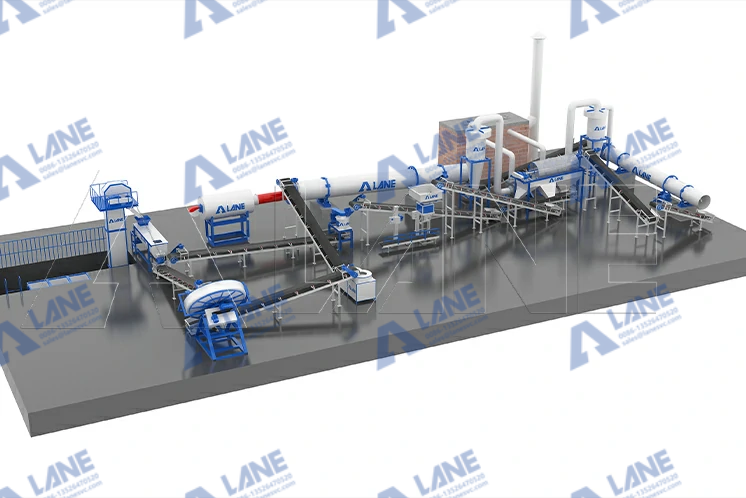
A cat litter production line is not a single machine. It’s a sequence of processing stages. Crushing, mixing, granulating, drying, cooling, screening, and packaging. Each one depends on the output quality of the previous stage. If the crusher delivers inconsistent particle sizes, the mixer has to work harder. If the granulator produces weak pellets, the dryer turns them to dust. If the screener is undersized, your packaging line spends half its shift waiting.
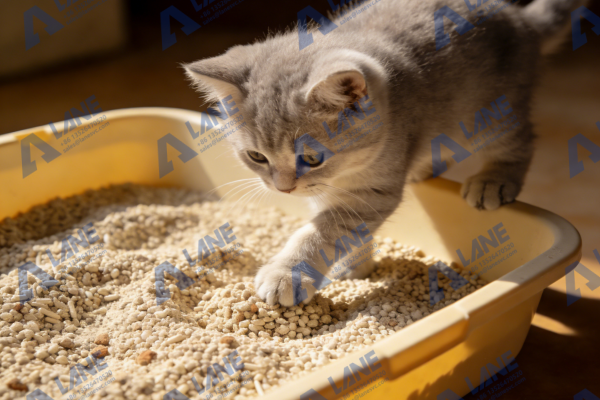
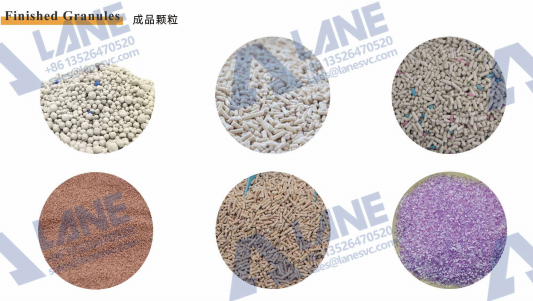
The line transforms raw materials into finished granules or pellets that meet specific standards for absorption, clumping, dust level, and particle size. Sodium bentonite. Calcium bentonite. Soybean residue (okara). Corn starch. Wood fiber. Recycled paper. Or blended formulations.
A small line might produce 0.5 to 2 metric tons per hour. A mid-scale cat litter manufacturing plant runs 3 to 10 TPH. Industrial operations push 20 to 60 TPH. The equipment configuration changes dramatically at each scale, and so does the investment.
The one mistake that costs buyers 12 to 18 months of downtime
Here’s what most buyers focus on: equipment price and rated capacity.
Here’s what they should focus on: process matching. Whether the production line design actually fits the raw material they will feed into it.
We worked with a customer in Southeast Asia who planned a 5 to 10 TPH bentonite cat litter production line. On paper, a standard configuration looked fine. Then we tested their locally sourced bentonite.
The material had higher moisture content than typical bentonite, stronger adhesion, and significant mineral variability. During transport and storage, it formed large, hard lumps. A standard crusher-plus-mixer setup would have produced energy spikes in crushing, poor material flow after mixing, uneven granule size from the disc granulator, and high breakage rates with excess dust after drying.
We scrapped the standard design. We added a pre-processing stage with upgraded crushing and screening to normalize particle size before the material ever reached the mixer. Granulation parameters were recalibrated for the material’s specific adhesion curve. Screening and recycling loops were expanded to catch off-spec granules and feed them back without wasting raw material. Because local environmental regulations were tightening, dust collection was integrated into every stage. Not bolted on at the end.
The line hit its target. First-pass granule yield stabilized at 91%, compared to an estimated mid-60s percentage with the standard configuration we had originally quoted. Energy consumption per ton settled 18% below the customer’s internal benchmark, largely because the pre-processing stage eliminated the load spikes that had plagued their previous supplier’s setup. Product consistency met local market standards. The lesson was permanent: there is no such thing as a universal cat litter production line. The raw material dictates the process. The process dictates the equipment.
Types of cat litter production lines
Bentonite, specifically sodium bentonite, is the industry workhorse for clumping cat litter. It absorbs liquid, swells, and forms a hard clump that is easy to scoop.
The process flows like this:
- Raw material receiving and pre-screening. Remove stones and debris.
- Primary crushing. Hammer mill or cage crusher breaks down large lumps.
- Grinding. Secondary mill brings material to target particle size. Premium products typically require below 200 mesh.
- Sodium modification (optional). Some calcium bentonite needs sodium carbonate activation. This is typically dosed during the grinding or early mixing stage, not as a standalone step. Allow 24 to 48 hours of curing time after treatment for full cation exchange.
- Mixing. Double-shaft paddle mixer blends bentonite with additives like activated carbon, baking soda, or fragrance.
- Disc granulation. Pan granulator (disc pelletizer) forms spherical granules, typically 1.5 to 4.0 mm.
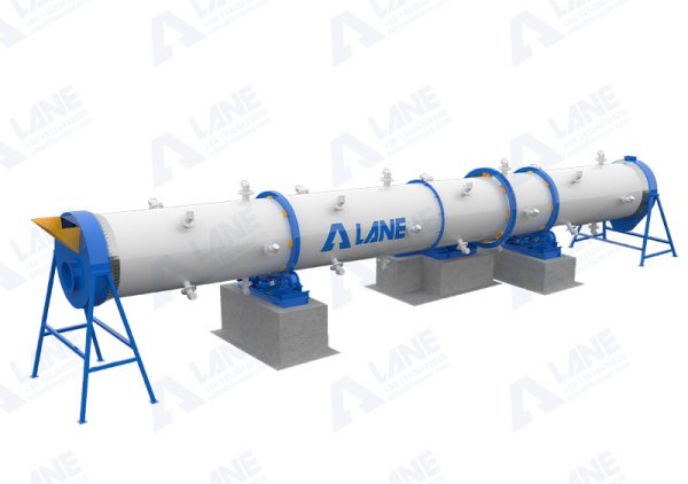
- Rotary drying. Drum dryer reduces moisture to about 6 to 10%.
- Cooling. Counterflow cooler stabilizes granule structure.
- Screening. Vibrating screen classifies granules. Oversize returns to crusher, undersize returns to granulator.
- Coating (optional). Applies anti-dust agent or deodorizing additive.
- Automatic packaging. Fills bags at 6 to 12 bags per minute.
The disc granulator angle is adjustable, usually between 35° and 65°. This single setting has a huge effect on granule size distribution. Get it wrong and your screening rejection rate jumps from 5% to 25%.
Tofu cat litter has taken off, especially in Asia and Europe. It is made from soybean residue (okara), corn starch, guar gum, and plant fibers. Flushable. Biodegradable. Low dust. Those attributes matter enormously in markets with strict environmental regulations.
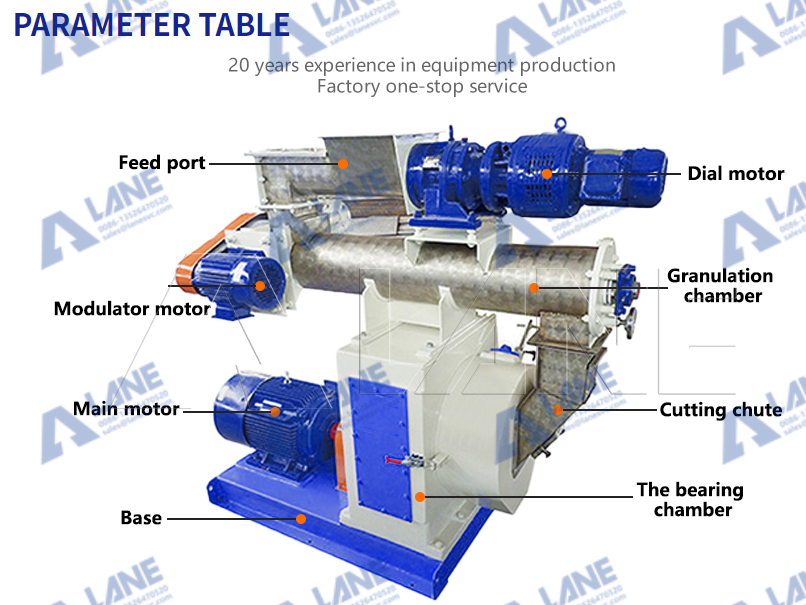
A tofu cat litter making machine line uses a ring die pellet mill rather than a disc granulator. The material is conditioned with steam and extruded through a die to form cylindrical pellets.
Typical process:
- Raw material receiving and impurity removal
- Grinding. Bean waste grinder reduces okara to uniform meal.
- Batching and mixing. Ribbon mixer blends multiple ingredients plus water to reach 25 to 30% moisture.
- Pelleting. Ring die pellet mill compresses the mixture through die holes, 2 to 5 mm diameter.
- Drying. Belt dryer or microwave dryer reduces moisture to below 10%.
- Cooling. Counterflow cooler.
- Screening. Separates fines and broken pellets.
- Packaging.
Three variables determine pellet quality: die hole diameter, compression ratio, and moisture content at the conditioner. A 4 mm die with the wrong compression ratio produces pellets that crumble during packaging. And that problem will not show up until the bag reaches a retail shelf.
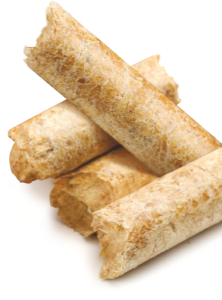
- Wood pellet cat litter production line
Pine and mixed softwood litters use a dry pellet process. No conditioner. Just compression heat from the die to bind lignin.
Process: Wood chipper, hammer mill, sawdust dryer, ring die pellet mill, cooler, screener, packaging.
The challenge here is die wear. Wood fiber is abrasive. Budget to replace die and rollers every 800 to 1,200 operating hours, depending on wood species. Factor this into your OpEx calculation from day one.
- Paper and recycled cat litter lines
Waste paper, cardboard, and cellulose fiber are pulped, dewatered, extruded, dried, and screened. These lines are smaller scale by nature, typically 0.3 to 2 TPH, and need specialized dewatering extruders that most general equipment manufacturers do not stock.
- Composite and hybrid lines
More manufacturers are blending materials. Tofu with bentonite. Coffee grounds with cassava starch. Bamboo fiber with corn flour. These lines need flexible batching systems and mixers that handle multiple ingredient types with different densities, moisture levels, and flow characteristics. The complexity goes up. So does the margin on the finished product.
Complete equipment breakdown for a cat litter manufacturing plant
Here is every component in a typical 3 to 5 TPH line, what it does, and what to watch for.
| Equipment | Function | What to Watch For |
|---|---|---|
| Feed hopper with agitator | Receives and meters raw material | Stainless steel for wet materials; agitator prevents bridging |
| Hammer mill / crusher | Reduces particle size | Screen size determines output uniformity. Replace screens every 400 to 600 hours |
| Batching system | Weighs ingredients to formula | Load cell accuracy matters more than speed |
| Double-shaft paddle mixer | Blends all components | Paddle clearance affects mix uniformity. Check weekly |
| Disc granulator or ring die pellet mill | Forms granules/pellets | The core machine. Disc angle and die compression ratio must match material |
| Rotary drum dryer | Reduces moisture | Hot air temperature, drum speed, and residence time are interdependent |
| Counterflow cooler | Stabilizes granules | Undersized coolers are the most common bottleneck. Size for 20% above rated capacity |
| Vibrating screen | Classifies by size | Two-deck configuration handles both oversize and undersize in one pass |
| Coating machine (optional) | Applies anti-dust or deodorant | Rotary drum coater with spray nozzles |
| Automatic packaging scale | Fills and seals bags | Supports 5 to 25 kg bags and ton bags for bulk |
| Pulse-jet dust collector | Captures airborne dust | Baghouse design; filter bag material depends on dust type |
| Bucket elevators and conveyors | Material transfer between stages | Enclosed design for dust control |
| PLC control panel | Centralized automation | Touchscreen with remote monitoring capability |
Investing in a quality cat litter making machine at the core matters. A disc granulator or ring die pellet mill that is well built and correctly configured is essential. But what matters more is integration between machines. A perfectly good granulator fed by an undersized mixer will never produce consistent output. The line is only as strong as its weakest link.
Quality control: what to test and how to set up a lab
Most new manufacturers underestimate QC. They buy the equipment, get production running, and assume the product is saleable because it looks right. Cat litter buyers, especially retail chains and distributors, test every batch. If you cannot match their numbers, you cannot ship.
A basic cat litter QC lab needs this equipment, and here is what each test actually measures:
Sieve shaker with ASTM mesh screens. This measures particle size distribution (PSD). Weigh a 100 g sample, run it through a stack of sieves (typically 0.5 mm to 8 mm openings), weigh each fraction. A good bentonite litter should have 80%+ of material in the 1.5 to 4.0 mm range. Outside that, clumping performance starts to degrade.
Clumping test rig. Pour 50 mL of 1% saline solution (simulates cat urine) onto a standardized bed of litter. Wait 10 seconds. Scoop the clump. Weigh it. A good clump is firm, compact, and weighs 30 to 50 g, with minimal loose material stuck to it. Clump strength testing is not standardized globally yet, but major buyers have internal specs. Ask for them before you ship.
Moisture analyzer (halogen). Measures free moisture content. Target: below 10% for bentonite, below 8% for tofu and wood pellets. Higher moisture means clumping problems and potential mold growth in the bag.
Dust content tester (sieve method or optical). The simplest method: place a 100 g sample on a 200-mesh screen, apply mechanical vibration for 5 minutes, weigh the material that passes through. Premium brands target below 0.5% dust. A standard line without integrated dust removal at every transfer point typically produces 2 to 5% dust. For reference, the European Pet Food Industry Federation (FEDIAF) and individual retail chains have increasingly tight dust specifications.
Absorption rate test. Drop 1 mL of water onto a compacted litter surface. Time how long it takes to absorb fully. For premium clumping bentonite, under 5 seconds is good. Over 15 seconds and the cat tracks wet litter across the floor, which is the primary consumer complaint.
Crush strength tester (for pellets). Applies to tofu and wood pellets. Measure the force required to crush a single pellet. Target depends on pellet diameter, but as a rule, a 4 mm pellet should withstand at least 15 N before fracturing. Lower than that and pellets disintegrate during transport.
Set up the lab near the packaging line. Test every production batch before bags leave the factory. Retain samples for 6 months. If a customer disputes a shipment, having the retained sample from that batch is the difference between a credit note and a lost account.
Investment and cost breakdown (2026 numbers)
Equipment costs for a cat litter production line scale more or less linearly with capacity. The step changes happen at process complexity, not tonnage.
| Scale | Capacity | Equipment Cost (USD) | Total Project Cost (USD) |
|---|---|---|---|
| Pilot / Entry | 0.5 to 1 TPH | $20,000 to $60,000 | $80,000 to $130,000 |
| Small Commercial | 1 to 3 TPH | $60,000 to $180,000 | $130,000 to $280,000 |
| Mid-Scale | 3 to 10 TPH | $180,000 to $450,000 | $280,000 to $750,000 |
| Industrial | 10 to 20 TPH | $450,000 to $800,000 | $750,000 to $1,500,000 |
| Large Industrial | 20 to 60 TPH | $800,000 to $2,500,000 | Custom quote |
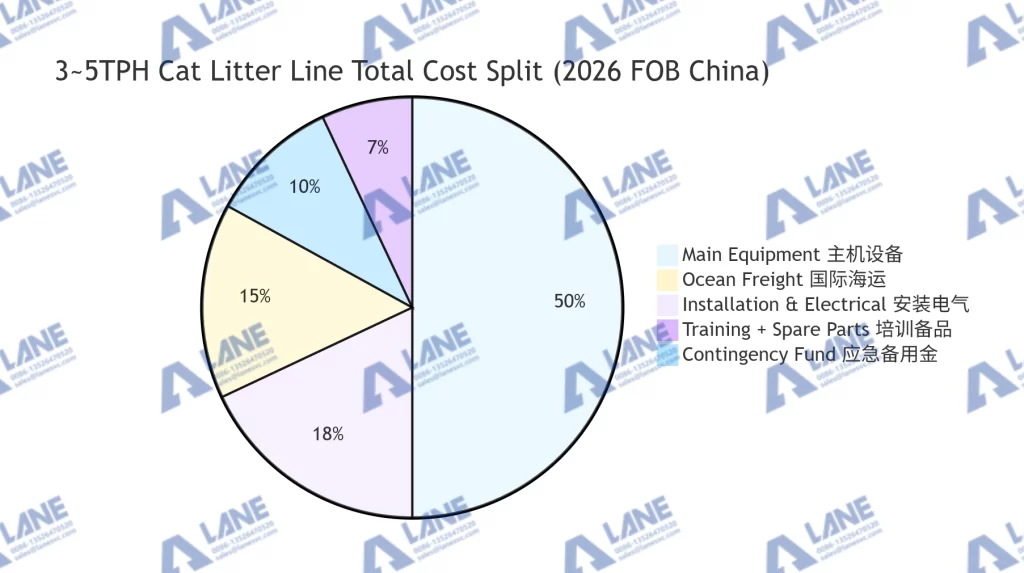
These numbers come from actual project data across Asia, Europe, and the Americas. Cost ranges reflect FOB China port pricing for standard-configuration lines as of Q1 2026. Total project cost includes equipment (ex-works), international freight to major ports, customs clearance, on-site mechanical installation, electrical integration, operator training, and a 90-day spare parts kit. Does not include civil works, building construction, or local permitting. Actual costs vary with raw material type, automation level, destination country, and local labor rates.
How to choose a cat litter making machine manufacturer
The market is dominated by Chinese manufacturers (RICHI Machinery, Zhengzhou Gofine, Liyang Iklay, and several others). Choosing between them is less about spec sheets, since most publish similar numbers, and more about a few signals that separate serious industrial suppliers from trading companies.
1. Will they test your raw material?
If a manufacturer quotes you a price without seeing your raw material, walk away. A real manufacturer runs material tests, sometimes with you watching via video call, and adjusts the process based on results. The Chinese term for this is daxing ceshi . Any supplier who skips it is guessing.
2. Have they built a complete line, or just sold individual machines?
A cat litter production line is a system. Someone who has only sold standalone pellet mills or dryers has never debugged the interface points between machines. The chute that clogs. The conveyor that runs too fast. The screener that cannot keep up.
3. What does their installation and commissioning support actually look like?
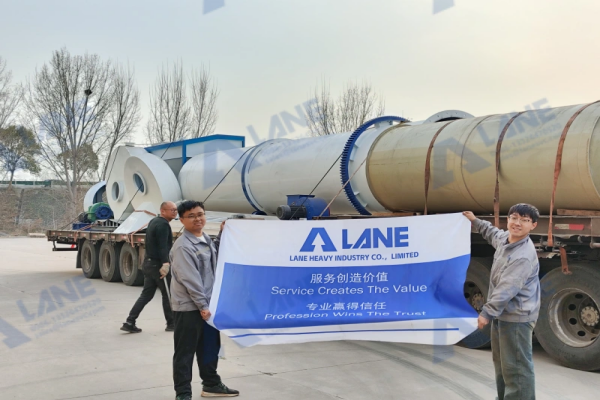
Most manufacturers offer “installation guidance.” The question is whether that means a WhatsApp video call, or two engineers on your factory floor for three weeks. Clarify this before signing.
4. Can they provide documented project references?
Ask for specific references: country, capacity, raw material, date of commissioning. A manufacturer with global experience will have them ready. One that hesitates or gives vague answers probably cannot deliver.
Plant layout and infrastructure requirements
A 3 to 5 TPH cat litter manufacturing plant needs about 600 to 1,200 square meters of covered space. Layout typically follows a U-shape or linear flow:
Raw material storage → Crushing/Milling → Mixing/Batching → Granulation → Drying → Cooling → Screening → Packaging → Finished goods warehouse
Key infrastructure considerations:
Power — 150 to 400 kW total connected load for a mid-scale line. Three-phase power is non-negotiable.
Water — Minimal process water. You need cooling water for the pellet mill (if water-cooled) and general facility use.
Compressed air — Required for pneumatic valves, dust collector pulse-jet cleaning, and packaging machine actuation.
Dust control — Not optional. Local regulations increasingly require baghouse dust collectors with 99%+ efficiency. Designing this in from the start costs far less than retrofitting after commissioning.
Fire safety — Wood-based and paper-based lines carry dust explosion risk. Explosion vents, spark detection, and proper grounding are essential. Check your local ATEX or NFPA requirements.
Market trends driving cat litter production (2025–2026)
The global cat litter market is shifting on several fronts.
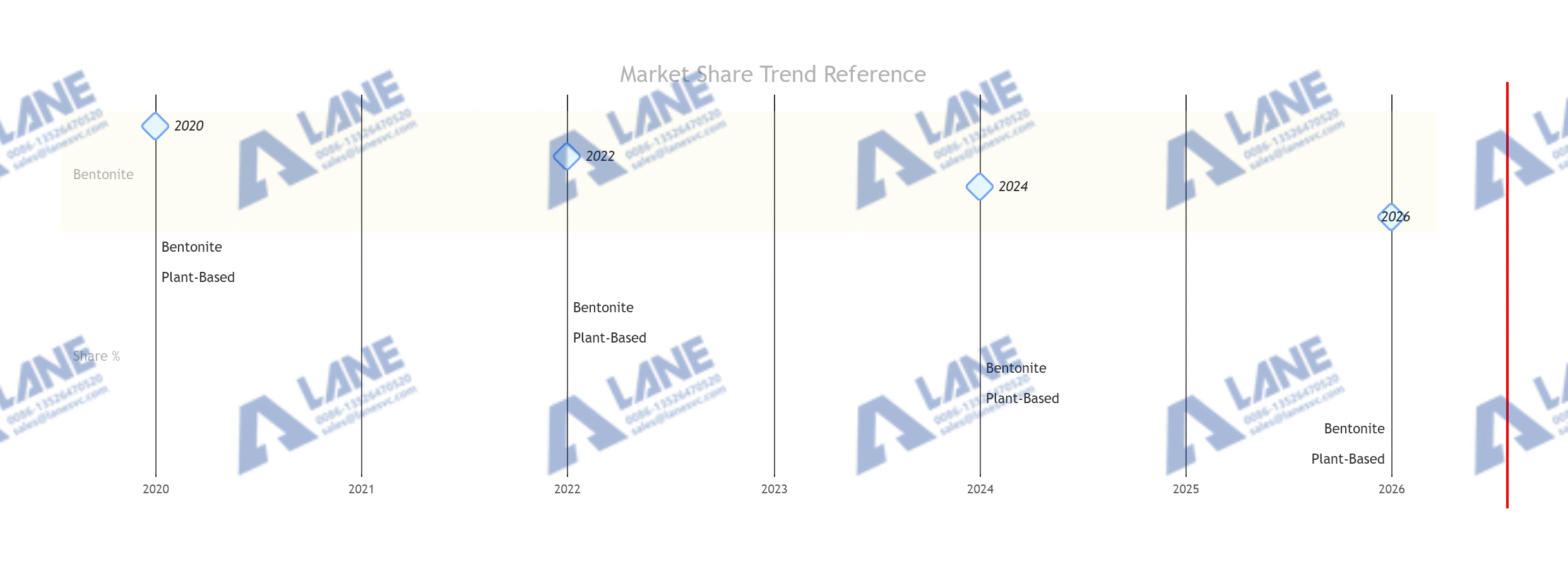
Plant-based is eating bentonite’s share. The EU’s Single-Use Plastics Directive and growing consumer preference for biodegradable, flushable litter are pushing tofu, corn, and wood-based products. Poland’s cat-owning households grew 18% from 2019 to 2023, according to the Polish Pet Industry Association. New local manufacturing plants are replacing imports from China. But they still buy the production equipment from China.
Premium dust free is the new baseline. A product labeled “low-dust” five years ago is considered unacceptable today. Lines that lack integrated dust removal at every material transfer point produce product that cannot compete in retail channels.
Custom formulations are the margin driver. The mass-market litter segment is a race to the bottom on price. The money is in proprietary blends: tofu plus bamboo fiber, bentonite plus activated carbon, coffee grounds plus cassava starch. These require flexible batching and mixing systems, which adds upfront cost but multiplies per-ton margin.
Regionalization of production. Finished cat litter is heavy with low value per kilogram. Shipping it across oceans makes less economic sense every year. More local manufacturing plants are being built closer to consumer markets. This creates demand for smaller, flexible lines: 1 to 3 TPH plants that serve a regional market profitably without the overhead of a mega-factory.
Frequently asked questions
What is the difference between a disc granulator and a ring die pellet mill for cat litter?
Disc granulators (pan pelletizers) produce spherical granules by rotating wet material on an inclined disc. They work best for bentonite and clay-based litters. Ring die pellet mills extrude material through a die under high pressure, producing cylindrical pellets. They are used for tofu, wood, and plant-fiber litters. The choice depends entirely on your raw material and target product shape.
How long does it take to install and commission a cat litter manufacturing plant?
From equipment delivery to first production: 4 to 12 weeks for a small to mid-scale line, assuming the building and utilities are ready. Large turnkey projects run 4 to 6 months. The biggest variable is site readiness. If your concrete pads, power, and water are not in place when the equipment arrives, add weeks.
What raw materials can be used in a cat litter production line?
Sodium bentonite, calcium bentonite, soybean residue (okara), corn starch, pea fiber, pine sawdust, recycled paper, bamboo powder, guar gum, cassava starch, activated carbon, zeolite, and coffee grounds. Most modern lines handle multiple materials with the right configuration.
Can one production line produce different types of cat litter?
Yes, with a flexible batching and mixing system, adjustable granulation or pelleting parameters, and a control system that stores multiple recipes. Switching between bentonite and tofu on the same line is possible but requires thorough cleaning between runs to prevent cross-contamination.
What capacity should I choose for a new cat litter production line?
Start with your market demand, not the equipment catalog. A 1 to 3 TPH line (2,000 to 7,000 tons per year) is the sweet spot for regional market entry. You can always add a second line later. Buying a 10 TPH line and running it at 40% capacity burns through working capital fast.
What are the power requirements for a cat litter manufacturing plant?
A 3 to 5 TPH line needs about 150 to 250 kW total connected load. A 10 TPH line requires 350 to 500 kW. Three-phase power is required. Factor power costs into your OpEx model carefully. Drying is the biggest energy consumer by a wide margin.
Is it profitable to start a cat litter manufacturing business?
With an 8 to 18 month payback at current wholesale prices ($250 to $680 per ton depending on product type and market), cat litter manufacturing can be highly profitable. The condition: the line must be properly matched to the raw material and target market. Failures happen when buyers choose the wrong equipment configuration for their material or underestimate local competition.
How do I export cat litter to European or North American markets?
Your production line needs CE certification for Europe. Your product must meet local standards for dust, biodegradability (for plant-based litter), and packaging labeling. European buyers increasingly require documentation on raw material sourcing and manufacturing sustainability. Factor compliance costs into your business plan from the start.
What is the most common production quality problem?
Inconsistent granule size. It almost always traces back to one of three causes: inconsistent raw material particle size entering the granulator, incorrect moisture content at the granulation stage, or a granulator running at the wrong disc angle or die compression ratio. The fix starts upstream. Fix the material preparation, and the granulation quality follows.
For more details, please feel free to contact us.