

Cat Litter Production Process Explained: Equipment, Materials, and Plant Setup

There’s a reason more investors are paying attention to cat litter manufacturing right now. Global pet ownership has surged, and with it, demand for both conventional and specialty litter products. But here’s what most newcomers don’t realize: the cat litter production process is far more equipment-intensive and material-sensitive than it looks from the outside. Get the setup wrong, and you’ll spend months troubleshooting quality issues that should never have happened in the first place. Understanding this process end-to-end is the single most important step any serious investor can take.
This article provides a detailed overview of raw materials, key machinery, plant configuration, and practical considerations that experienced producers actually value.
What Raw Materials Go Into Cat Litter?
The starting point of any cat litter production process is material selection, and it shapes every downstream decision you make.
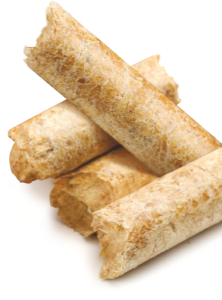
Bentonite clay remains a key raw material globally. In particular, sodium bentonite provides the cohesive properties that consumers expect. however, silica gel, zeolite, silicate soil, recycled paper, wood fiber, and corn-derived materials are also becoming increasingly dominant choices for target markets. In the high-end segments of Europe and North America, the shift towards plant-based substrates is well underway. In emerging markets, dependence on clay remains high.
From what I’ve seen in the field, producers who underestimate the moisture content variability in their raw bentonite end up fighting particle size inconsistencies all the way down the line. That problem doesn’t start at the granulator — it starts at the quarry. Choosing the wrong input material is the fastest way to destabilize an otherwise well-designed cat litter production process.
Core Equipment in the Cat Litter Production Process
This is where the real engineering conversation begins. The cat litter production process requires a clearly sequenced set of machines, and each one has a direct impact on your final product’s absorbency, granule hardness, and dust control performance.
Here’s a breakdown of the key single-unit equipment involved:
- Hammer Crusher— Reduces raw clay or mineral blocks to a workable particle size before further processing. Throughput capacity here sets your ceiling.
- Raymond Mill— Grinds crushed material to fine powder. Mesh fineness directly influences granule formation and clumping performance downstream.
- Double Shaft Mixer— Blends powdered material with binders, moisture, and any functional additives. Homogeneity here is non-negotiable.
- Rotary Drum Granulator— Transforms the blended mixture into rounded granules. This machine is critical to achieving consistent granule size distribution and density. A well-calibrated rotary drum granulator can make or break your product’s market performance.
- Rotary Drum Dryer Cooler — Removes moisture and cools granules before screening, helping prevent cracking and excessive fines.
- Vibrating Screen— Separates granules by size, allowing on-spec product to advance and oversized or undersized particles to re-enter the process loop.
- Belt Conveyor System— Connects each processing stage. Layout efficiency here has a real impact on labor costs and contamination risk.
- Automatic Packing Machine— Captures airborne particles across crushing, grinding, and drying stages. Non-negotiable from both a regulatory and product quality standpoint.
In my experience, manufacturers overinvest in granulation capabilities while neglecting drying and… Investments in cooling equipment are often neglected. Bottle necks almost always occur behind the granulator, and rarely occur in front of it.
Plant Layout and Setup Considerations
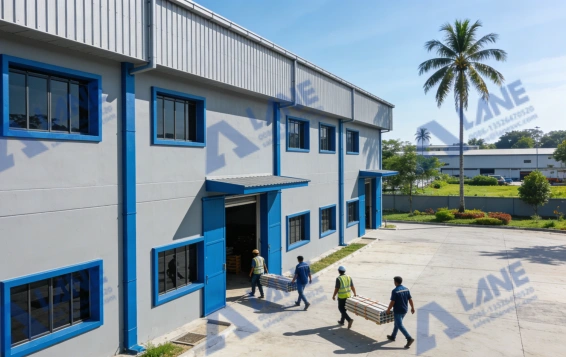
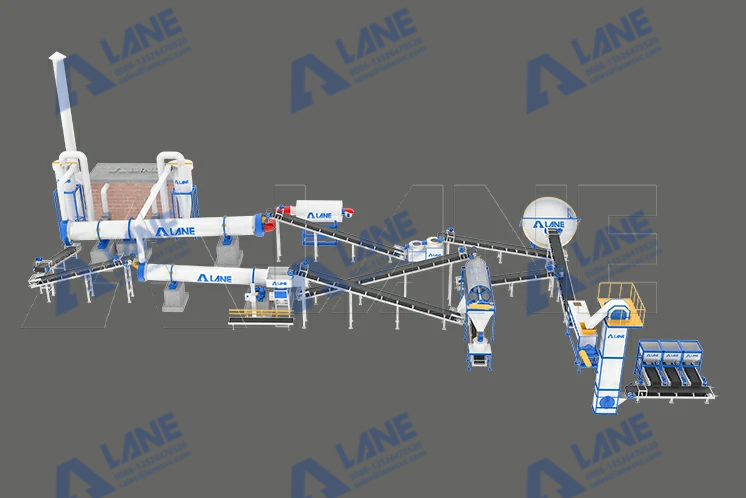
A functional cat litter production setup isn’t just about having the right machines — it’s about sequencing them intelligently within your facility footprint. Every stage of the cat litter production process must be mapped against your floor plan before a single bolt is tightened.
Most medium-sized plants involve the input of raw materials followed by crushing and The process operates in a linear sequence: crushing → mixing → granulation → drying → cooling → sieving → packaging. it may seem simple at first glance, but in reality, the physical distance between the dryer’s exhaust and the bag filter location, or the angle of inclination of the conveyor, can cause operational problems that you don’t notice until the line is up and running.
The load-bearing capacity of the floor is crucial. Rotary drum-type drying machines and cooling devices are quite heavy. Even a vibrating screen that is in operation can be quite heavy when it is fully loaded. If one takes the long-term reliability of a plant seriously, then approval of the structural design for the production site is essential.
Even in the case of public utilities, early planning is essential. drying systems consume a lot of energy and lack of power supply infrastructure is a common problem for new plant operators in the first year.
What Industry Experience Actually Teaches You
Let me tell you that this item is not listed in most equipment catalogs. the quality of cat sand products depends not only on the machine itself, but also on the control of process parameters. these variables influence each other, such as the moisture content of the mixer inlet, the rotation speed of the granulating drum, and the temperature of the dryer outlet. When one of these variables changes, it affects all the others as well.
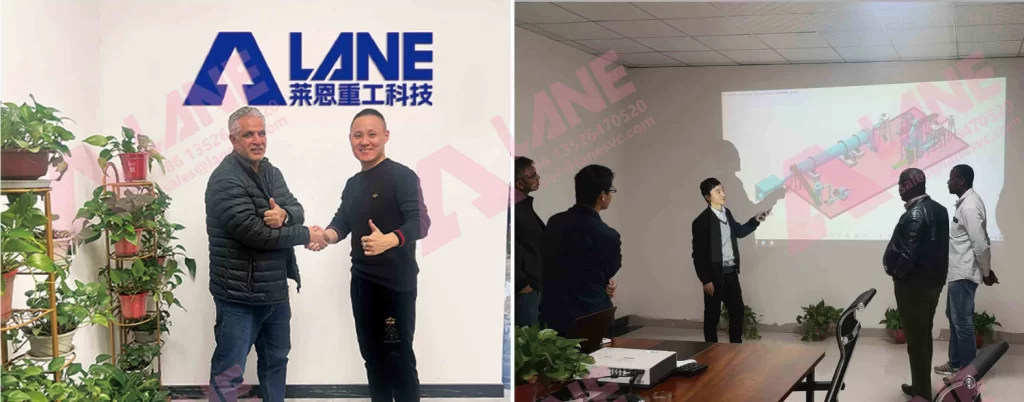
Suppliers like LANE, which builds large-scale industrial processing equipment across mineral and organic material lines, have documented this kind of interdependency in real production environments. The value of working with an experienced equipment partner is precisely this: they’ve seen how the cat litter production process behaves under real operating conditions, not just ideal ones.
Summary and Final Takeaway
The cat litter production process rewards systematic thinking and honest planning. Raw material quality, equipment sequencing, plant infrastructure, and process parameter management all connect. Weakness in any one area propagates through the entire line.
If you’re evaluating a new plant setup or expanding existing cat litter production capacity, start with a clear material specification, map your equipment sequence before you commit to facility dimensions, and work with suppliers who can speak to full-line performance — not just individual machine specs.
FAQ: Cat Litter Production Process
Q1: What is the most common raw material used in cat litter production?
Sodium bentonite clay is the most widely used raw material globally due to its natural clumping and absorption properties. Other materials such as silica gel, zeolite, wood fiber, and corn starch are used in specialty or eco-friendly product lines.
Q2: How long does it take to set up a cat litter production line?
Setup timelines vary by scale, but most mid-capacity lines take between four and eight months from equipment order to full production — factoring in civil works, installation, commissioning, and operator training.
Q3: What granule size is standard for cat litter products?
Granule size in cat litter production typically targets a range of 0.5mm to 2.5mm for commercial clumping products. Exact specifications depend on product type and target market, and are controlled primarily through vibrating screen mesh selection.
Q4: How is dust controlled in the cat litter production process?
Bag filters and cyclone dust collectors are installed at critical dust-generation points — particularly at crushing, grinding, and drying stages. Proper enclosure of transfer points on belt conveyor systems also significantly reduces airborne particulate.
Q5: Can the same production line handle multiple raw materials?
With appropriate design flexibility, yes — particularly at the mixing and granulation stages. However, switching between materials with significantly different moisture content or particle density typically requires process parameter adjustments and sometimes equipment modifications.
Q6: What are the biggest operational challenges new producers face?
Moisture control and granule consistency are the two most cited challenges in cat litter production. Both trace back to raw material variability and insufficient process monitoring during the drying and granulation stages. Investing in inline moisture measurement equipment early pays dividends quickly.
For more details, please feel free to contact us.
Henan Lane Heavy Industry Machinery Technology Co., Ltd.
Email: sales@lanesvc.com
Contact number: +86 13526470520
Whatsapp: +86 13526470520