

How to Set Up a Cat Litter Plant in Russia: Costs, Equipment & ROI Breakdown
How to Set Up a Cat Litter Plant in Russia: Costs, Equipment & ROI Breakdown
Let’s be honest — establishing a cat litter plant in Russia is a far more complex undertaking than most investors initially expect. Pet ownership in Russia ranks among the highest in Europe, and over the past decade, consumer demand for premium cat litter has closely mirrored this growth. The manufacturing side, however, has lagged. Building locally means facing tough questions about capital investment, equipment suitability, and the timeline before profitability.
This guide covers what anyone seriously evaluating a cat litter plant in Russia needs to understand — from upfront investment to equipment selection to realistic return timelines.
Understanding the Russian Cat Litter Market
Russia’s pet care sector has shown surprising resilience, even during periods of broader economic strain. Domestically produced cat litter — bentonite-based clumping varieties in particular, but silica gel too — still falls well short of satisfying existing market demand. That supply gap is precisely what makes a locally operated cat litter plant in Russia worth a serious look.
Government policy has leaned into this. Import substitution across consumer goods has been a stated priority, and pet care products sit squarely within that scope. For anyone scoping out a cat litter plant in Russia, the fundamentals are genuinely favorable: raw material access, lower labor costs, and logistics that no importer can fully replicate.
The best cat litter Russia brands have made this case in practice already — domestic producers are consistently undercutting landed import costs at retail.
Core Equipment You’ll Need
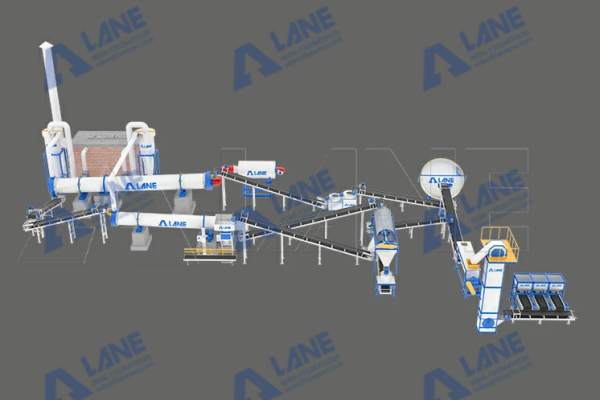
This is where specifics matter, and where many first-time investors miscalculate the demands. Product type—bentonite, silica gel, or plant-fiber—determines some equipment choices, but the core production structure remains consistent. After reviewing plants in several markets, building a cat litter plant in Russia does not present fundamentally different technical requirements.
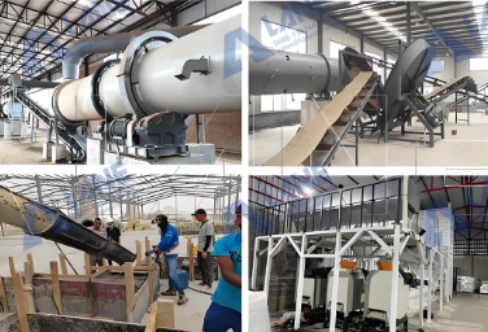
For a standard bentonite line, the essential equipment runs as follows:
- Crusher — Breaks raw bentonite ore down to workable particle sizes ahead of further processing.
- Rotary Dryer — Drives moisture content to spec, which has a direct bearing on clumping performance and product shelf life.
- Raymond Mill — Grinds the dried material to the precise mesh fineness your product requires.
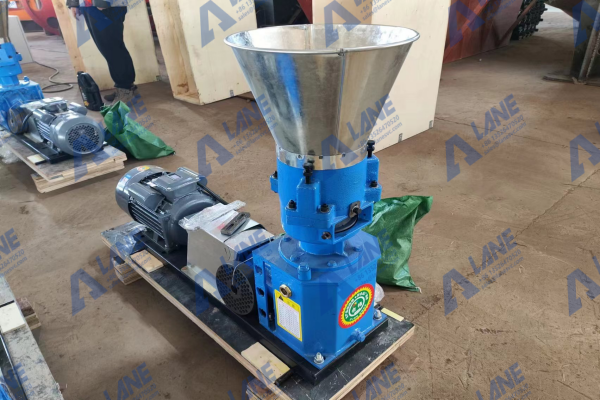
- Rotary Granulator — Forms the processed material into uniform granules. Consistency here matters more than most people expect.
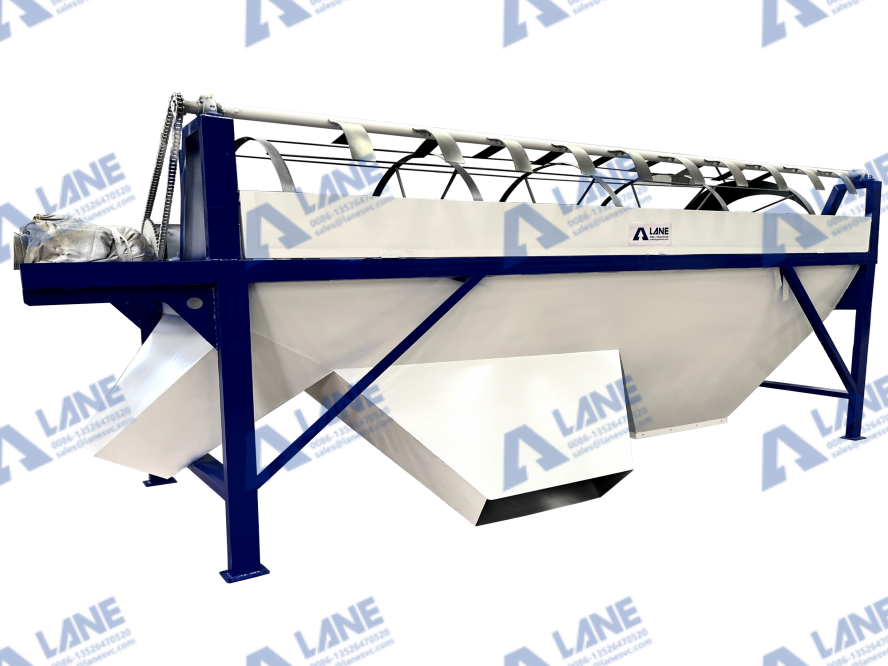
- Vibrating Screen — Sorts granules by size, separating out both fines and oversized particles to hold quality to standard.
- Dust Collector — Controls airborne particulate through the production process. Non-negotiable from a worker safety and compliance standpoint.
- Packaging Machine—Handles end-of-line bagging across retail pack sizes and bulk formats.
- Belt Conveyor System — Ties the line together, moving material between stages without constant manual intervention.
Silica gel lines diverge at the drying and forming stages, but screening, dust management, and packaging equipment carry across without major changes.
One thing worth saying plainly: supplier selection matters more than people realize until something goes wrong. An established equipment manufacturer — LANE has built a track record supplying processing lines across multiple industries and markets — will meaningfully reduce both commissioning friction and the headaches that follow. That credibility is worth paying for.
Startup Cost Breakdown
Cost ranges for a cat litter plant in Russia shift considerably depending on throughput targets. A 5–10 tonne-per-day entry-level line and a 30–50 tonne-per-day mid-scale operation are essentially different investment conversations.
For a mid-scale cat litter plant in Russia, the rough numbers look like this:
Equipment procurement: $180,000–$350,000 USD
Factory lease and site preparation: $30,000–$60,000 USD (annual, region-dependent)
Installation and commissioning: $20,000–$40,000 USD
Raw material inventory, first 3 months: $25,000–$50,000 USD
Licensing, compliance, and working capital reserve: $15,000–$30,000 USD
All in, a properly equipped mid-scale operation typically lands somewhere between $270,000 and $530,000. Smaller lines can come in below $150,000 — though the unit economics at that scale are tighter, and the margin for error is smaller too.
ROI Timeline and Margin Expectations
The return case is real, but it needs to be looked at honestly. Domestically produced bentonite cat litter carries a cost-of-production advantage of roughly 30–45% against comparable imported product, once you properly account for logistics and sourcing. That’s a meaningful structural edge.
At current Russian retail pricing — somewhere in the 80–120 RUB per liter range, depending on grade and channel — and production costs running 35–55 RUB per liter at operating scale, the gross margin picture is workable. Volume is the variable. Distribution agreements with established pet retail chains like Zoomarket, Petshop, and VetCity can accelerate that considerably.
A mid-scale plant running at 70–80% capacity should realistically target a 24–36 month payback period. That holds if the raw material supply is stable, production runs consistently, and the sales channel is actively managed. None of those are givens — which is worth saying upfront.
Regulatory Considerations
Operating in Russia means navigating a specific compliance stack. Rospotrebnadzor requirements for consumer goods, GOST certification for the cat litter product itself, and standard industrial licensing for the facility. GOST certification for a new line typically runs 3–6 months — it needs to be sequenced into your pre-launch planning, not left as an afterthought.
Environmental requirements are tightening, particularly around dust emission and wastewater in industrial zones. The Dust Collector (Pulse Jet Type) and wastewater management components in your equipment spec aren’t performance extras — they’re the baseline for operating legally.
Operators aiming to compete with the best cat litter Russia brands understand this. GOST compliance built into the production workflow from the beginning saves far more time and money than trying to retrofit it. LANE and comparable equipment manufacturers typically supply the technical documentation that supports certification filings — another practical reason supplier choice carries weight.
Evaluating Long-Term Competitiveness
A well-configured cat litter plant in Russia — grounded in solid equipment, dependable raw material supply, and a real retail channel — can run profitably for well over a decade with standard maintenance cycles. The domestic market has the volume to support serious production capacity, and regional scale-up within Russia is a realistic path once the base operation is proven.
What actually separates plants that work from those that struggle? In my experience watching this sector, it’s rarely the initial capital. It’s what happens operationally in months six through eighteen. Moisture consistency, granule sizing discipline, packaging line uptime — that’s where the margin lives, and where it bleeds away if operations aren’t tight.
If a cat litter plant in Russia is on your serious investment list, the case is there. But the economics reward operators who come prepared. Get the equipment configuration right before you commit. Map the certification timeline early. Build retail relationships while the facility is still being commissioned. The investors who treat those three things as parallel tracks — not sequential ones — tend to be the ones who hit that 24-month payback window.
FAQ
Q: What raw materials are available locally in Russia for cat litter production?
Russia holds significant bentonite reserves, concentrated particularly in the Chelyabinsk and Khakassia regions. The silica gel supply chain looks different and still involves some import dependency, and certain specialty additives aren’t locally sourced — but the core clumping material for bentonite litter is available domestically at competitive cost.
Q: How long does it take to set up a cat litter plant in Russia from decision to production?
Realistically, budget 8–14 months. Equipment sourcing and shipping typically accounts for 3–5 months; site preparation, installation, and commissioning add another 2–4 months, and regulatory certification runs 3–6 months and should be pursued in parallel rather than in sequence.
Q: Is the Russian market open to new domestic cat litter brands?
Yes — and the current policy environment actively supports it. Import substitution has opened genuine shelf space for domestic manufacturers. Private label arrangements with major pet retailers are also on the table for suppliers who can demonstrate supply reliability and consistent quality. The best cat litter Russia producers are expanding quickly. There’s room for well-positioned new entrants.
Q: What production capacity is recommended for a first plant?
For a first-time operator, 10–20 tonnes per day is the sensible entry point. Enough throughput to make the unit economics work; manageable enough that operational complexity doesn’t become overwhelming. Building from a stable, proven base is considerably less risky than overbuilding on day one.
For more details, please feel free to contact us.
Henan Lane Heavy Industry Machinery Technology Co., Ltd.
Email: sales@lanesvc.com
Contact number: +86 13526470520
Whatsapp: +86 13526470520