

Cat Litter Particle Uniformity Control: Engineering Consistent Granules for Premium Litter Quality
Cat Litter Particle Uniformity Control: Engineering Consistent Granules for Premium Litter Quality
In competitive pet care markets, product consistency has become a decisive factor influencing both brand reputation and user satisfaction. Among all quality indicators, cat litter particle size distribution stands out as a key determinant of clumping strength, dust level, absorption efficiency, and overall user experience. This is why cat litter particle uniformity control is no longer a secondary adjustment but a core engineering objective in modern litter manufacturing.
Uniform granules improve packing density, reduce breakage during transport, and maintain stable airflow during drying and cooling. They also ensure predictable performance in automated litter boxes and packaging systems. Industrial practice shows that screening and size control after granulation are essential to ensure finished litter uniformity and remove oversized or undersized particles.
For manufacturers aiming at premium or export-grade products, precise control of particle uniformity directly translates into higher market acceptance and reduced waste recycling rates. This article explores the full process logic behind cat litter particle uniformity control and how optimized equipment design from LANE supports stable, scalable production.
Particle Uniformity and Its Impact on Cat Litter Performance
Particle uniformity influences nearly every functional property of cat litter:
-
Clumping behavior: similar granule size promotes even liquid distribution
-
Dust control: fewer fines reduce airborne particles
-
Flowability: uniform pellets move smoothly in packaging lines
-
User comfort: consistent texture improves paw feel and scooping
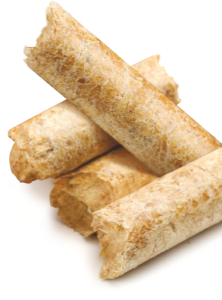
Typical premium bentonite litter targets granule sizes around 2–4 mm to balance clumping and tracking performance.
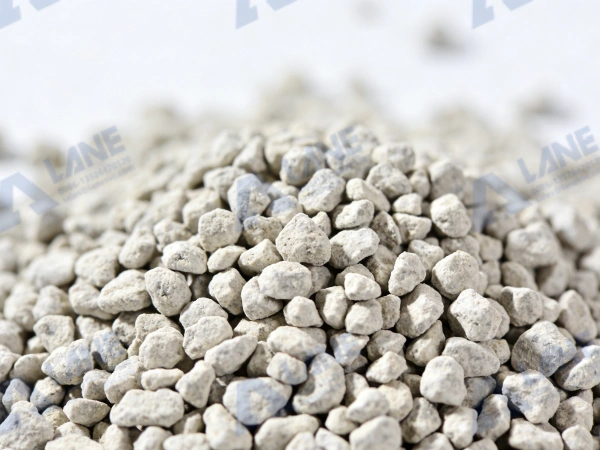
Research also shows that different particle size fractions significantly affect absorption and odor control properties in bio-based litter formulations, confirming the importance of tight size distribution.
Therefore, cat litter particle uniformity control must begin at formulation and extend through every stage of processing.
Raw Material Preparation for Stable Granule Formation
Uniform particles cannot be achieved if raw powders vary widely in size or moisture. Raw material preparation is the first stage of cat litter particle uniformity control.
Key preparation measures include:
- 👉 Grinding raw materials to the right particle size
- 👉 Removing very fine dust particles
- 👉 Controlling moisture before mixing
- 👉 Making sure additives are evenly mixed
For bentonite litter, particle distribution of 20–80 mesh (≈180–850 µm) is recommended before granulation to ensure consistent pellet formation.
In biomass or tofu litter, high-efficiency mixers can achieve uniformity above 97 %, providing a stable base for pellet growth.
LANE’s pre-processing systems integrate crushing, drying, and mixing modules to standardize feedstock characteristics before granulation, reducing downstream variability.
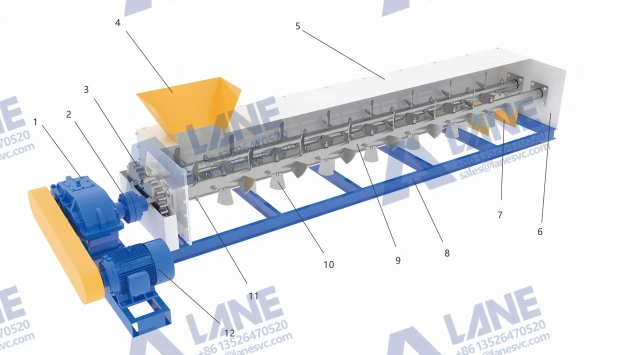
Granulation Engineering: Core Stage of cat litter particle uniformity control
Granulation determines the initial size, shape, and density of litter pellets. Different technologies provide different levels of uniformity:
-
Disc granulation: adjustable size, spherical particles
-
Extrusion granulation: high density and narrow distribution
-
Ring-die pelletizing: elongated uniform pellets
Disc granulators produce consistent spherical granules due to rolling growth under controlled wetting and rotation, resulting in tight size distribution and reduced dust.
Extrusion granulators offer even higher uniformity for continuous large-scale lines.
Critical parameters for cat litter particle uniformity control at this stage include:
-
moisture addition rate
-
rotation speed or pressure
-
residence time
-
feed particle size
LANE granulation systems are engineered with adjustable angle, speed, and spraying control to maintain stable pellet growth across different litter formulations.
Drying and Cooling Effects on Particle Size Stability
Even if the particles are uniformly prepared into a certain size in the granulation machine, improper drying treatment may still cause the particles to shrink, crack or agglomerate. Thus drying and cooling are integral to cat litter particle uniformity control.
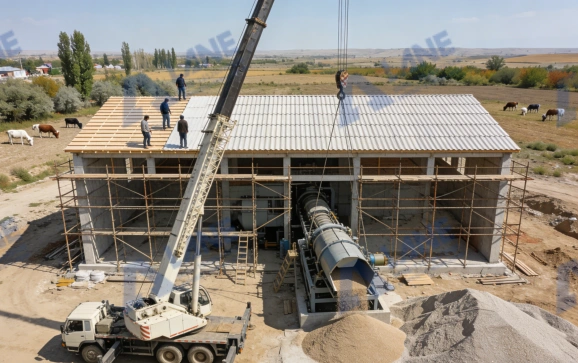
Rotary dryers are commonly used to reduce pellet moisture evenly and prevent deformation.
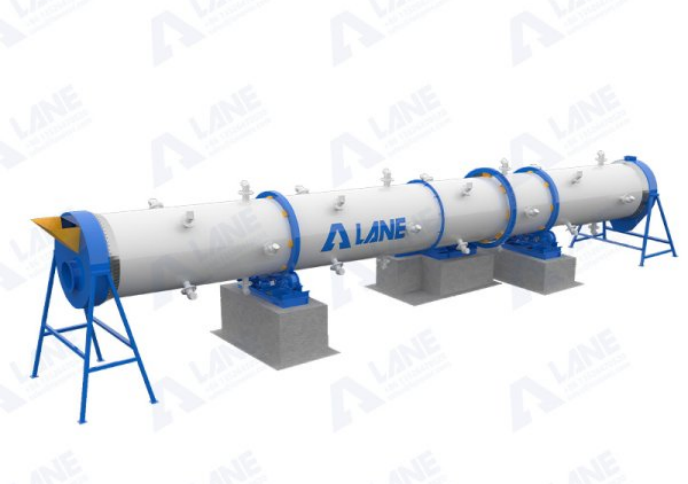
Uniform drying ensures:
-
stable granule hardness
-
minimal breakage
-
consistent shrinkage
-
preserved size distribution
Cooling afterward stabilizes structure and prevents moisture reabsorption that could alter particle size.
LANE drying systems combine controlled airflow, residence time adjustment, and gentle material handling to preserve granule geometry through thermal processing.
Screening and Recycling: Final Control of Particle Distribution
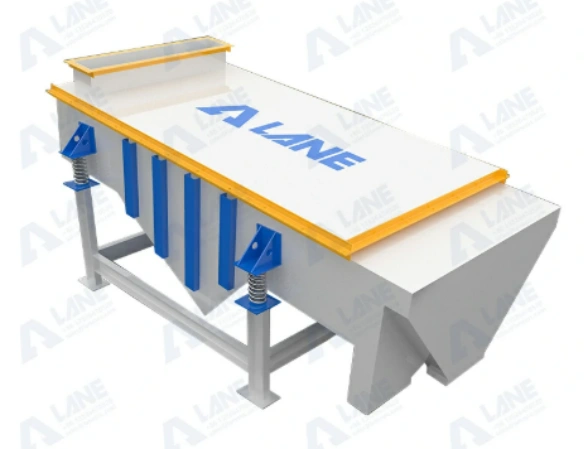
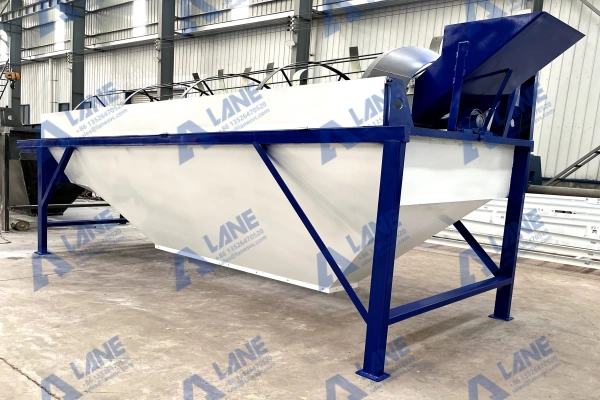
Screening is the decisive step that defines finished particle uniformity. After drying, pellets pass through multi-layer screens to separate:
-
undersized fines
-
qualified granules
-
oversized lumps
Undersized powder is returned to granulation, and oversized particles are crushed and recycled, ensuring consistent final distribution.
Industrial litter lines typically aim for ≥95 % qualified particle proportion after screening.
Effective screening design for cat litter particle uniformity control includes:
-
multi-deck rotary or vibrating screens
-
optimized mesh sequence
-
low-breakage transport
-
closed dust removal
LANE screening modules integrate size classification with recycling loops, maintaining high yield while preserving uniformity.
Process Integration: Achieving Continuous cat litter particle uniformity control
Uniformity is not achieved by a single machine but by coordinated process control across the entire production line. Integrated cat litter particle uniformity control requires:
-
consistent feed particle size
-
stable granulation parameters
-
uniform drying conditions
-
precise screening classification
-
controlled recycling ratio
Closed-loop recycling is especially important. Reintroduced fines act as seed nuclei in granulation, stabilizing pellet growth and narrowing size distribution.
LANE production lines are designed with automated material flow, synchronized equipment speeds, and balanced capacity across stages to maintain steady particle distribution under continuous operation.
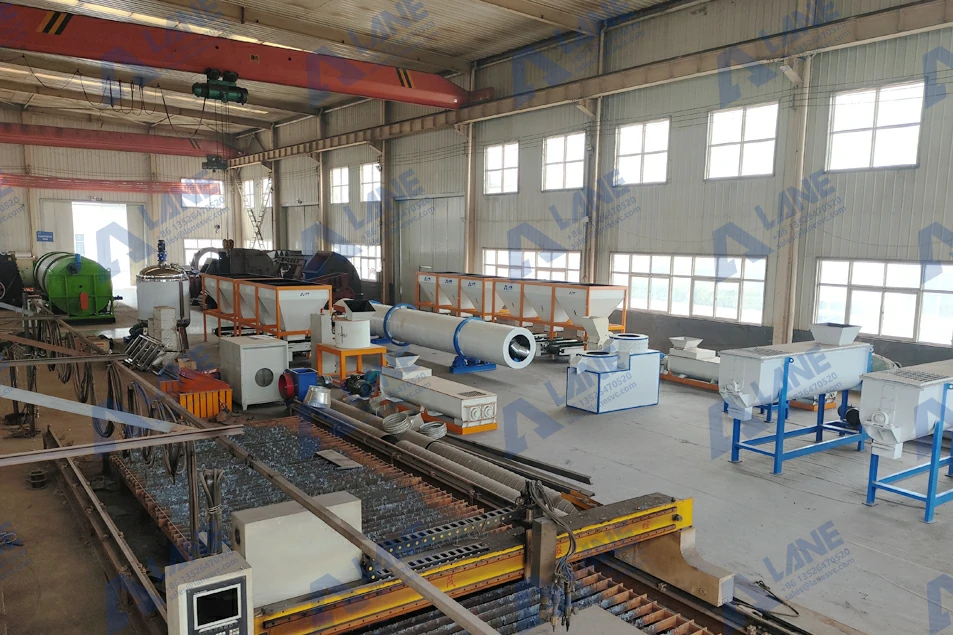
LANE Advantages in Particle Uniformity Engineering
LANE applies fertilizer granulation engineering experience to cat litter manufacturing, providing several advantages in cat litter particle uniformity control:
1. Cross-material adaptability
Supports bentonite, tofu, silica, and biomass litter with parameter tuning.
2. Precision granulation design
Adjustable disc angle, extrusion pressure, and moisture control.
3. Low-breakage thermal systems
Gentle drying and cooling preserve pellet integrity.
4. High-efficiency screening loops
Stable size classification and recycling.
5. Scalable production lines
From pilot scale to industrial capacity with consistent particle distribution.
These capabilities allow manufacturers to produce uniform, premium litter granules with reduced dust and higher process yield.
Conclusion: Uniform Particles as the Foundation of Premium Cat Litter
Cat litter particle uniformity control defines the physical consistency, usability, and market value of modern litter products. From raw material preparation to granulation, drying, and screening, every stage contributes to the final particle distribution.
Manufacturers seeking stable quality and strong brand positioning must treat particle uniformity as a core engineering target rather than a downstream adjustment. Integrated production lines with optimized granulation and classification systems provide the most reliable solution.
With advanced granulation expertise and complete process integration, LANE enables producers to achieve consistent cat litter particle uniformity control, ensuring premium product performance and competitive manufacturing efficiency.
For more details, please feel free to contact us.
Henan Lane Heavy Industry Machinery Technology Co., Ltd.
Email: sales@lanesvc.com
Contact number: +86 13526470520
Whatsapp: +86 13526470520