

Cat Litter Manufacturing Troubleshooting Guide: How to Diagnose & Resolve Common Production Issues
Cat Litter Manufacturing Troubleshooting Guide: How to Diagnose & Resolve Common Production Issues
Introduction
In any industrial cat litter production environment, unexpected issues can arise — halting processes, lowering product quality, or driving up operational expense. A well-crafted cat litter manufacturing troubleshooting guide helps plant operators and production engineers quickly identify root causes, apply targeted fixes, and restore smooth, consistent manufacturing flow. Quite simply, when equipment hiccups or process variations occur, knowing where to look and how to respond can mean the difference between costly downtime and optimized throughput.
This guide unpacks the most frequent bottlenecks and failure points in cat litter production, from raw material handling to final packaging, and provides practical, actionable solutions. Whether you’re tackling material feed problems, granulator challenges, moisture inconsistencies, dust control dilemmas, or packaging bottlenecks, this article lays out systematic troubleshooting strategies that help you maintain both productivity and product quality.
1. Production Process Overview and Key Failure Zones
To troubleshoot effectively, it’s vital first to grasp the full cat litter manufacturing workflow at a high level: raw material preparation → mixing → granulation → drying → cooling → screening → packaging. This sequence is common to most automatic and semi-automatic lines, and each stage can generate specific issues if parameters or equipment function deviate from their intended design.
For instance, materials that are too moist during granulation can cause poor pellet formation, whereas inadequate drying can leave finished particles with unstable moisture content — both conditions that compromise clumping performance and shelf life. Recognizing which stage is symptomatic of a problem is half the battle in any cat litter manufacturing troubleshooting guide.
2. Raw Material Handling Issues & Fixes
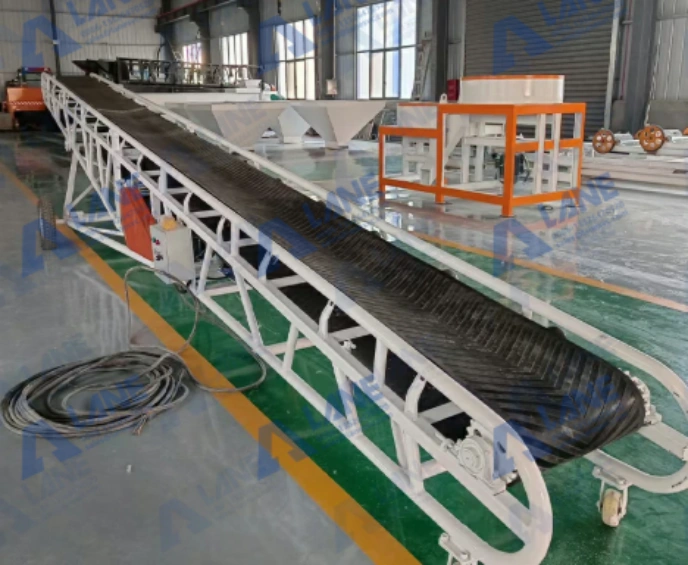
A. Uneven Feeding or Blockages
Problem: Inconsistent feed rates or material blockages in the hopper, feeder, or conveyor often result in surges or gaps in downstream processes.
Cause: Feeders not adjusted for material density; raw feeds with variable moisture or particle size; poorly configured screw/conveyor pitch.
Solution:
-
Adjust feed screw pitch and speed to match bulk density of the raw material.
-
Install level sensors to provide real-time feedback and adjust feeding automatically.
-
Pre-condition raw materials through sieving or pre-mixing to reduce lumps.
Inconsistent raw material feed is one of the earliest symptoms addressed in any cat litter manufacturing troubleshooting guide, and adjusting the feeder system often immediately improves downstream stability.
3. Granulation & Pelletizing Troubleshooting
A. Poor Pellet Formation
Symptom: Granules are misshapen, too brittle, or fail to form consistent pellets.
Potential Causes:
-
Incorrect moisture content at granulation entry.
-
Worn or improper granulator dies/rollers.
-
Insufficient binding or conditioning.
Fixes:
-
Monitor and adjust moisture content before feeding into the granulator. Excessively dry feed will not agglomerate; overly wet feed will clog.
-
Inspect die and roller condition regularly — wear changes compression dynamics, which directly affects pellet quality.
-
Fine-tune conditioning parameters, including blending speed and residence time, to enable uniform binding of particles.
Troubles such as these are central to a thorough cat litter manufacturing troubleshooting guide, because granulation largely determines bulk density, clumping ability, and final aesthetic quality — all key product performance metrics.
4. Dryer & Cooling Section Problems
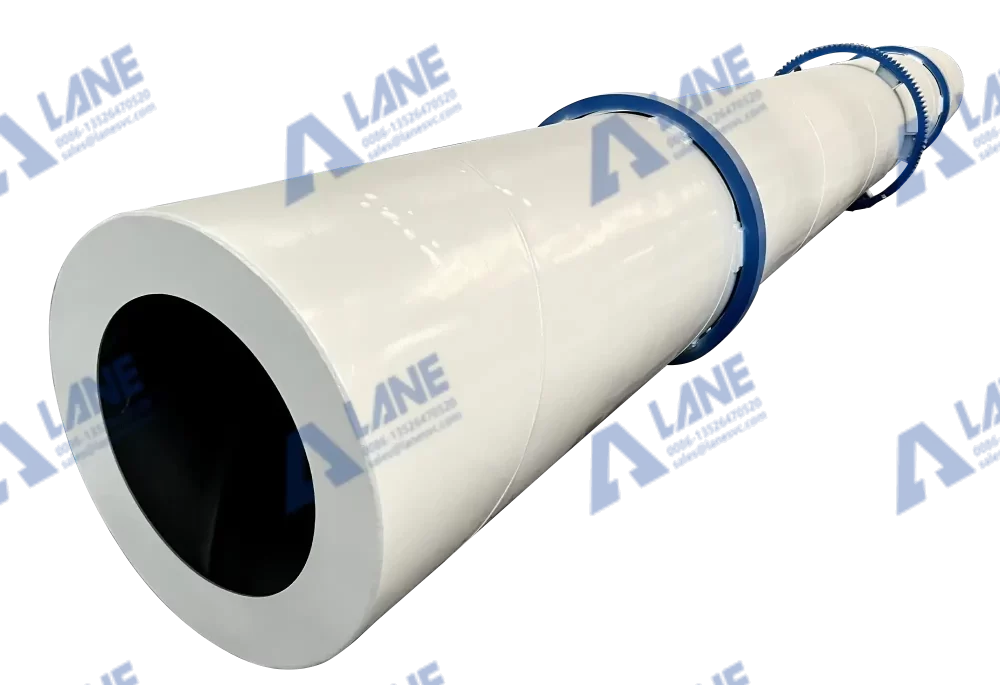
A. Uneven Moisture Distribution After Drying
Problem: Finished litter has spots that are too dry or simultaneously too moist — leading to dust or spoilage.
Causes:
-
Uneven thermal distribution within the dryer.
-
Belt speed or airflow inconsistencies.
-
Incorrect temperature settings relative to the raw material’s thermal profile.
Solutions:
-
Use multi-zone drying with independent heating controls to equalize moisture removal.
-
Regularly clean and inspect airflow channels to avoid hot or cold spots.
-
Adjust dryer throughput speed to match moisture reduction targets without overheating.
B. Pellet Breakage During Cooling
Symptom: Pellets fracture instead of gently solidifying.
Cause: Cooling airflow too aggressive, or belt cooling speed too fast relative to pellet strength.
Solve It By:
-
Implementing staged cooling zones where airflow is gradually increased.
-
Slowing conveyor speed to give particles time to firm.
If unresolved, these drying and cooling anomalies will surface as dusty product and inconsistent clumping — frequent entries in every advanced cat litter manufacturing troubleshooting guide.
5. Screening & Dust Control Challenges
A. Poor Sift Yield or Blockage
Issue: Significant material remains on screens, reducing throughput and raising operational costs.
Likely Causes:
-
Screen mesh inappropriate for target particle size.
-
Build-up of sticky fines on the screen surface.
Resolve With:
-
Choosing screen meshes matched to your target granulometry.
-
Employing vibrating screeners with reverse-pulse or self-cleaning mechanisms.
-
Periodic screen wash or blow-off cycles to prevent material adhesion.
B. Excess Dust Generation
Problem: Airborne dust affects worker safety, clogs sensors, raises fire/explosion risk.
Causes:
-
Inadequate dust capture near high-shear zones.
-
Raw material with high fine content.
Solutions:
-
Deploy localized dust extraction at critical points with high negative pressure.
-
Add cyclones or bag filters to trap particulates before they disseminate.
Smart dust control is a key section in any cat litter manufacturing troubleshooting guide because fine particulate is not just a quality issue — it’s a compliance and safety concern.
6. Packaging & Handling Defects
A. Inaccurate Weighing or Bag Filling
Issue: Inconsistent bag weights or improper seals.
Underlying Reasons:
-
Calibration drift in load cells.
-
Packaging machine speed and material feed rate mismatch.
Action Steps:
-
Recalibrate weighing systems at regular intervals.
-
Verify bag material and sealing temperature compatibility.
-
Synchronize feed rate to packaging speed to avoid bag under- or over-fill.
B. Torn Bags or Seal Failures
If bags consistently tear or seals fail, review bag grade and sealing head performance. A weak seal will let moisture or contaminants penetrate, undermining product integrity.
7. Process Control & Parameter Optimization
Beyond individual equipment fixes, many systemic problems originate in suboptimal process control:
-
Unstable mixer RPM causes heterogenous blend quality.
-
Improper sequence timing between granulation and drying induces moisture spikes.
-
Lack of real-time monitoring masks early warning signs.
Implementing smart PLC systems with real-time feedback loops — for moisture, temperature, belt speed, and dust levels — enhances consistency and provides early alerts before a small deviation becomes a production halt. These contemporary controls sit at the heart of a refined cat litter manufacturing troubleshooting guide. A robust cat litter manufacturing troubleshooting guide should not only address individual machine faults but also recommend standardized procedures for cross-department communication when anomalies occur. Updating your production team’s reference sheets to include insights from a detailed cat litter manufacturing troubleshooting guide can shorten diagnostic time when unexpected faults emerge.
8. Quality Issue Scenarios & Their Remedies
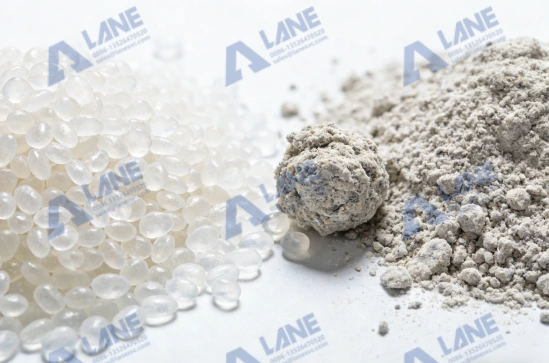
A. Low Absorbency or Weak Clumping
Often caused by improper binder distribution or incorrect particle size. Remedies include:
-
Rebalancing binder addition in the mixer.
-
Adjusting granulator pressure to produce a more uniform granule distribution.
-
Ensuring drying doesn’t overly harden particles before they reach desired moisture content.
Operators who regularly review their cat litter manufacturing troubleshooting guide alongside historical production data are better positioned to predict and preempt recurring issues before they impact output.
B. Changes in Color, Texture or Odor
These often point to raw material inconsistencies or contamination. Maintain rigorous raw material QC, and document all incoming feed profiles to quickly isolate out-of-spec batches.
In many production environments, these quality scenarios are the most visible symptoms, and they often serve as the first entries in a practical cat litter manufacturing troubleshooting guide.
9. Preventive Measures & Maintenance Regimen
Proactive maintenance significantly reduces the frequency and severity of issues:
✔ Scheduled preventive maintenance — cleaning, lubrication, tension checks on belts and screws
✔ Routine calibration — especially for feeders, scales, and sensors
✔ Operator training — standard operating procedures for common adjustments and minor fixes
✔ Raw material screening — before any feed ever enters the line
Prevention isn’t glamorous, but it’s arguably the most cost-effective component of any serious cat litter manufacturing troubleshooting guide. When following a good cat litter manufacturing troubleshooting guide, producers can avoid repeating the same errors and improve overall process reliability over time. A well-structured cat litter manufacturing troubleshooting guide evolves over time, incorporating lessons learned from past incidents to prevent similar outages in future production cycles.
10. When to Engage Professional Assistance
Not all problems can be resolved in-house. Certain situations warrant escalation:
-
Persistent faults with PLC control logic
-
Major mechanical failures in extruders or dryers
-
Chronic alignment or vibration issues across multiple machines
In these cases, collaborating with experienced OEM service teams ensures rapid diagnosis and high-confidence solutions, protecting both uptime and output quality. Updating a cat litter manufacturing troubleshooting guide to reflect new equipment upgrades, material changes, or revised safety standards helps keep production teams aligned with current best practices.
Conclusion
Effective troubleshooting in cat litter production is both an art and a science. This cat litter manufacturing troubleshooting guide has covered the most common fault domains — from material feed and granulation inconsistencies to dryer imbalance, dust control failures, packaging defects, and systemic process control issues — and provided practical remedies grounded in operational reality.
Troubleshooting empowers manufacturers to quickly isolate problems and restore stability, but the deeper value lies in preventing repeat occurrences through ongoing monitoring, preventive maintenance, and refined process control strategies.
If you wish to further enhance the reliability of your production line and reduce downtime due to malfunctions, please feel free to learn about our customized production line optimization solutions and professional technical support.
For more details, please feel free to contact us.
Henan Lane Heavy Industry Machinery Technology Co., Ltd.
Email: sales@lanesvc.com
Contact number: +86 13526470520
Whatsapp: +86 13526470520