

Cat Litter Manufacturing Plant Cost: Complete Investment Guide
The global pet care sector is expanding rapidly, making commercial cat litter production a highly attractive venture for heavy industry investors and agricultural processing firms alike. Whether you are expanding an existing organic fertilizer facility or launching a standalone pet product brand, entering this market requires a clear, data-driven financial roadmap. Calculating the total cat litter manufacturing plant cost involves far more than simply procuring machinery; it demands a thorough evaluation of raw materials, facility infrastructure, regulatory compliance, and localized operating capital.
From small-scale regional operations to highly automated international factories, your initial capital allocation determines both your long-term manufacturing margins and your product quality. Having a comprehensive understanding of the complete cat litter production line cost upfront prevents unexpected budget overruns and ensures smooth commissioning.
Breaking Down the Initial Capital Allocation
Setting up a modern manufacturing plant requires balancing fixed capital investments with fluid operational reserves. Total setup expenses depend heavily on your target raw material profile—whether you focus on premium sodium bentonite clay, eco-friendly tofu (bean dregs), wood shavings, or synthetic silica gel. For a low-capacity, semi-automated plant processing one to two tons per hour, initial setup fees generally sit between $50,000 and $90,000. Conversely, establishing a fully automated, high-output industrial facility capable of handling over ten tons per hour can easily scale beyond $450,000.
When analyzing the baseline cat litter manufacturing plant cost, smart operators categorize their budget into distinct allocations: land lease or acquisition, structural building modifications, civil engineering, environmental filtration permits, and utility scaling. To be honest, compliance with local industrial environmental standards is often the most overlooked expense, yet it can delay your launch by months if mismanaged. Allocating sufficient capital to these preparatory phases guarantees your plant operates legally and safely from day one.
Essential Machinery Driving the Production Infrastructure
The technical configuration of your machinery fundamentally dictates your day-to-day operational efficiency and directly affects the overall cat litter production line cost. Skimping on the core mechanical systems to save a few dollars upfront inevitably results in inflated labor expenses, excessive raw material waste, and frequent unscheduled downtime.
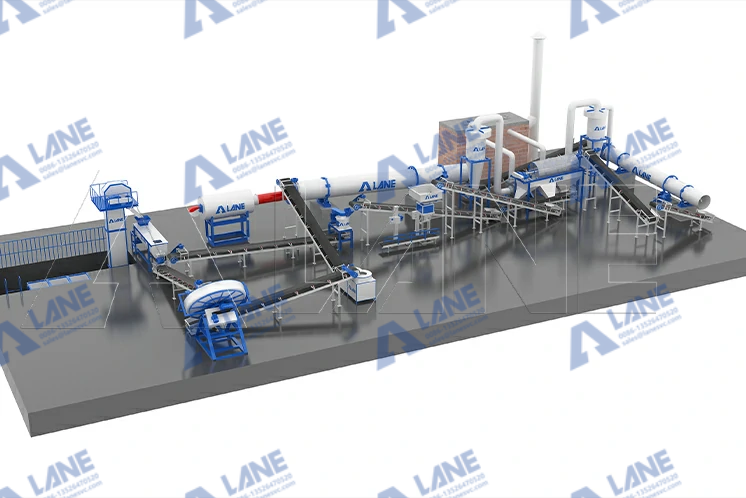
Depending on whether you choose to produce heavy clay aggregates or lightweight biodegradable pellets, your processing framework will require specific industrial machinery. A standard, high-performance configuration includes the following core equipment:
Automated Batching & Mixing System: Delivers precise measurement of raw powders, binders, and moisture levels.
Industrial Crushing Machine: Pulverizes raw inputs into a uniform, ultra-fine mesh required for consistent pelletizing.
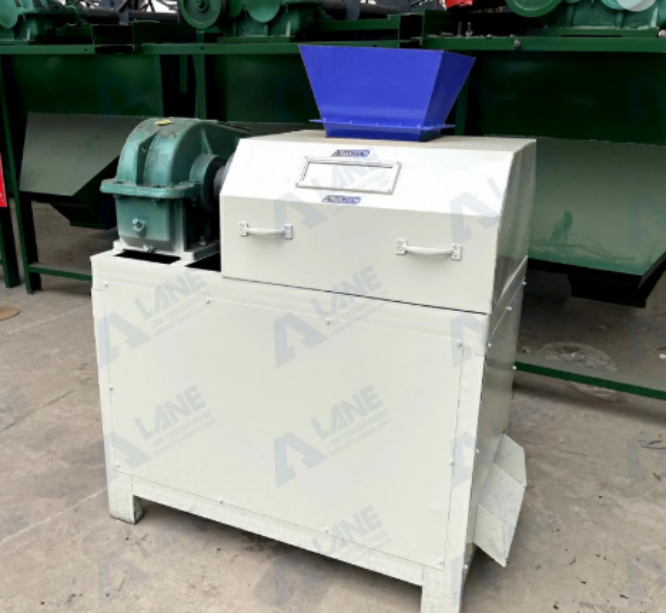
Rotary Drum Granulator: The industry standard for high-volume pelletization, ensuring high balling rates and robust particle integrity.
Disc Granulator: Provides excellent operational flexibility for smaller batches or variable clay formulations.
Rotary Dryer: Removes deep internal moisture from green pellets without compromising their structural shape.
Rotary Cooler: Rapidly stabilizes pellet temperature before final screening to prevent thermal cracking.
Screening Machine: Accurately classifies particles to eliminate dust and oversized clusters.
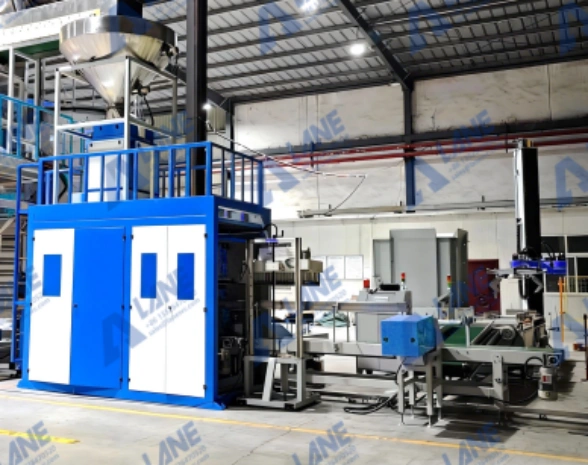
Automated Packaging Machine: Packs finished litters into retail bags with high speed and zero leakage.
For instance, leading industrial equipment manufacturers like LANE provide heavy-duty rotary drum granulators and drying systems originally engineered for demanding chemical and fertilizer processing. These rugged systems adapt beautifully to high-capacity cat litter lines, providing the mechanical reliability needed for continuous shifts. Ultimately, choosing an established equipment vendor determines whether your cat litter production line cost turns into a profitable long-term asset or a constant operational bottleneck.
Real-World Insights: 12 Years of Factory Floor Reality
Let me tell you something from my 12 plus years of hands-on experience designing and optimizing industrial production facilities. Most newcomers spend almost all their energy worrying about the upfront cat litter manufacturing plant cost but completely ignore the small operational variables that can quickly tank their monthly profitability.
Actually, the single biggest pitfall I see in the field is inadequate moisture management during the early granulation phase. If your blend contains even 2% too much water, your drying fuel expenses will skyrocket, instantly eroding your product margins. If the blend is too dry, the pellets will disintegrate into useless powder during bulk transport. Another insider insight: never compromise on your dust collection and screening setup.
Modern pet owners are incredibly picky about dust levels. If you try to lower your initial cat litter production line cost by omitting a secondary screening deck or purchasing substandard dust extraction units, your brand will face immediate customer backlash. I once worked on a project that integrated a LANE heavy-duty rotary screener into a problematic line; the product reject rate dropped instantly to less than 1%. That is the exact kind of engineering precision that separates market leaders from failing operations.
Maximizing Return on Investment
Entering the commercial pet care space is exceptionally lucrative if you treat the engineering phase with proper respect. By systematically analyzing every single facet of the cat litter manufacturing plant cost, you place your firm in an optimal position for rapid capital recovery. Avoid the temptation to buy cheap, unbranded machinery; high-grade systems pay for themselves through minimal maintenance overhead and superior energy metrics.
Are you ready to design a custom, high-efficiency manufacturing layout built to scale? Get in touch with our technical consultation team today for an accurate project estimate and a transparent breakdown of your projected cat litter production line cost.
Frequently Asked Questions
What is the average cat litter manufacturing plant cost for a small business?
For a modest setup operating at one to two tons per hour, the initial machinery and installation investment ranges between $50,000 and $90,000. This baseline assumes the use of standard processing equipment but excludes land purchase, major structural construction, and localized licensing fees.
How can I minimize my total cat litter production line cost?
The most effective strategy is to secure your raw ingredients from local suppliers to drastically reduce incoming logistics fees. Additionally, investing in scalable, modular equipment allows you to expand capacity gradually without replacing your entire original processing line.
Which granulator is best for reducing the cat litter manufacturing plant cost?
If minimizing initial capital layout is your primary objective, a disc granulator offers a lower upfront cost. However, for industrial facilities aiming for maximum automation and continuous production, a rotary drum unit provides far better long-term financial efficiency.
What hidden expenses often catch new investors by surprise?
New producers frequently overlook the cost of heavy-duty industrial dust collection hoods, environmental emission scrubbers, and high-capacity electrical transformers. These regulatory and infrastructure necessities can add substantial amounts to your project budget.
Is tofu cat litter manufacturing more expensive than bentonite production?
Yes, the raw inputs like pea fiber or bean dregs combined with specialized starch binders generally carry a higher material cost. The drying phase also requires precise temperature controls, resulting in slightly higher utility consumption per ton compared to traditional clay processing.
What is the typical payback period for an industrial litter plant?
With an optimized supply chain and solid commercial distribution agreements, most well-managed manufacturing facilities achieve complete return on investment within 18 to 24 months of active commercial production.
For more details, please feel free to contact us.
Henan Lane Heavy Industry Machinery Technology Co., Ltd.
Email: sales@lanesvc.com
Contact number: +86 13526470520
Whatsapp: +86 13526470520