

Cat Litter Granulation Process: Step-by-Step Guide to Industrial-Scale Production
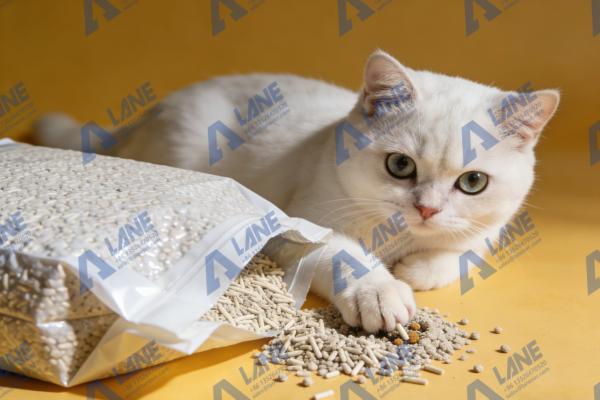
There’s a reason more manufacturers are investing in dedicated cat litter granulation lines. The global pet care market keeps expanding, and buyers increasingly demand consistent pellet quality — uniform size, low dust, good absorption. Getting that consistently, at industrial scale, isn’t just about having the right raw materials. It comes down to understanding every stage of the cat litter granulation process, and selecting the right cat litter granulator — the kind that actually delivers results in a real production environment, not just on a spec sheet.
Let me walk you through how this works from the ground up.
What Makes Cat Litter Granulation Different
Cat litter isn’t fertilizer. It isn’t ceramic. It sits in its own category — and that matters when you’re specifying equipment for this application. The end product needs to be dense enough to clump reliably, yet porous enough to absorb moisture fast. Getting that balance right means your granulation parameters have to be dialed in precisely.
Most industrial producers work with bentonite clay, silica, or a blend that may include recycled paper or wood pulp. Each feedstock behaves differently under compression and heat. From what I’ve seen in the field, producers who underestimate raw material variability end up with inconsistent pellet hardness and high reject rates — both of which eat into margins.
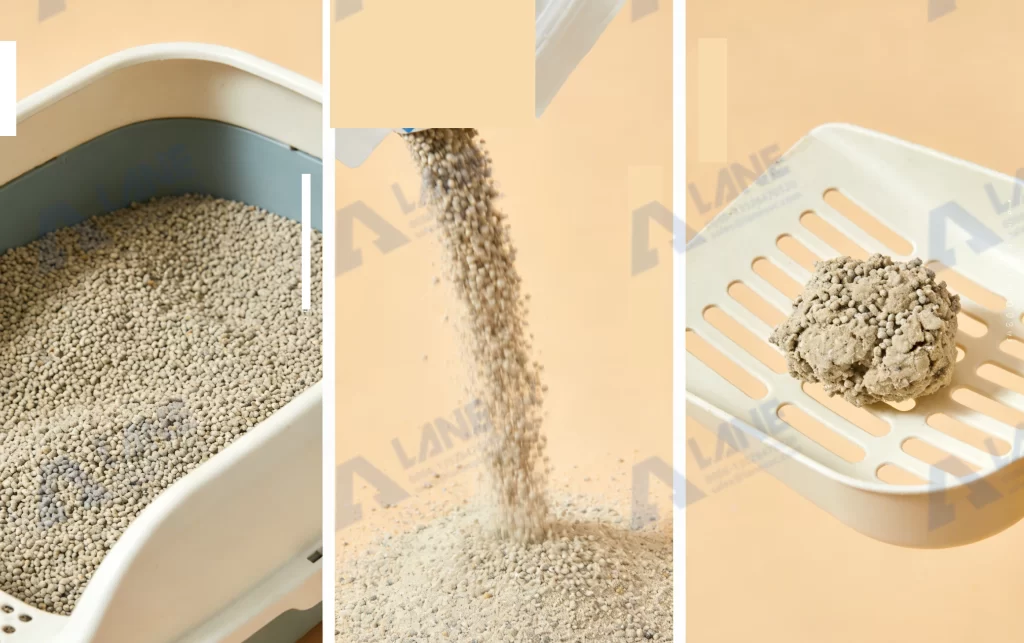
The Core Stages of the Cat Litter Granulation Process
Stage 1 — Raw Material Preparation
Before anything goes into a cat litter granulator, the feedstock needs to be properly conditioned. That means:
- Crushing oversized lumps down to a workable particle size
- Adjusting moisture content to the optimal range (typically 18–25% for bentonite-based materials)
- Blending any additives — fragrance agents, clumping enhancers, color indicators
Skipping thorough preparation is, honestly, one of the most common mistakes I see at greenfield facilities. The granulator downstream can only work with what it receives. Garbage in, garbage out — and in this industry, that phrase is very literal.
Stage 2 — Granulation
This is the heart of the cat litter granulation process. Two equipment types dominate industrial-scale operations:
- Disc Granulator :Produces rounded pellets through a rolling agglomeration mechanism. Good for lower-capacity lines and operations that need flexible pellet sizing.
- Rotary Drum Granulator: The workhorse for high-volume continuous production. Handles large throughput volumes with consistent pellet formation, particularly suited to bentonite and mixed-material blends.
Both have legitimate roles depending on output targets and feedstock type. For lines running above 5 t/h, the Rotary Drum Granulator is typically the more practical cat litter granulator choice.
Stage 3 — Drying
Fresh granules contain excess moisture. Left unaddressed, they’ll clump together in packaging or degrade during storage. A Rotary Drum Dryer removes moisture efficiently without cracking or fracturing the pellets — which matters a lot for final product appearance and structural integrity.
Temperature control during drying is not something to improvise. Too aggressive, and you get surface cracking. Too gentle, and throughput suffers.
Stage 4 — Cooling
Straight from the dryer, granules are too hot for immediate bagging. A Rotary Drum Cooler brings product temperature down to near-ambient conditions before the screening and packaging stages. Cooling also helps stabilize pellet hardness.
Stage 5 — Screening and Grading
Not every granule that exits the dryer meets spec. A Vibrating Screen separates oversized and undersized particles from the on-spec product stream. Oversized material gets crushed and recycled back into the process. Fines get reconditioned and re-granulated. You lose very little material in a well-designed loop.
Stage 6 — Dust Collection and Environmental Control
Industrial granulation generates dust — there’s no avoiding it. Proper Bag Filter or Cyclone Separator systems are essential, both for worker safety and regulatory compliance. In my experience, facilities that cut corners on dust collection end up with maintenance headaches and, eventually, compliance problems that cost far more than the filtration system would have.
Stage 7 — Packaging
Final product moves to an Automatic Packaging Machine, which handles everything from weighing to bag sealing at rates that keep pace with upstream production. Accurate portion control at this stage directly affects product consistency from the customer’s perspective.
Equipment That Defines the Line
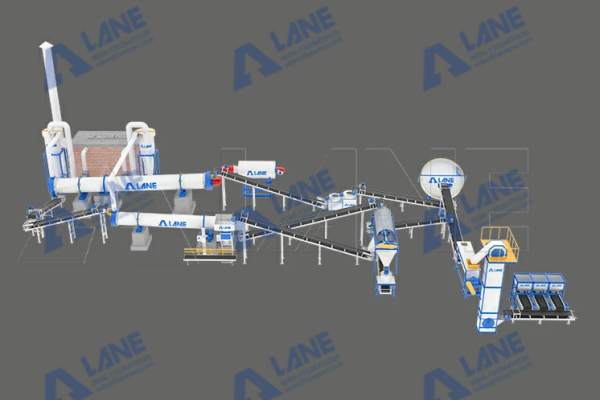
To summarize the core single-unit machines required in a complete cat litter granulation process:
- Disc Granulator— flexible small-to-mid-scale cat litter granulator for agglomeration-based pellet formation
- Rotary Drum Granulator— high-volume continuous cat litter granulator for industrial throughput
- Rotary Drum Dryer— post-granulation moisture removal
- Rotary Drum Cooler— temperature stabilization before packaging
- Vibrating Screen— particle size classification and material recycling
- Bag Filter / Cyclone Separator— dust control and emissions management
- Automatic Packaging Machine— precision final packaging
Manufacturers like LANE, which specializes in large-scale industrial granulation systems, configure these machines into integrated production lines — meaning conveyor connections, control systems, and capacity matching are handled as a unified package rather than a collection of independent units.
Common Production Challenges (And How to Avoid Them)
Pellet size inconsistency is usually a cat litter granulator feed issue — uneven moisture or variable feed rate into the drum or disc. High dust generation during the cat litter granulation process typically points to underfed moisture or worn disc/drum liners. Slow drying performance often traces back to drum loading that exceeds design capacity. You know, most of these issues are avoidable — they show up when the cat litter granulation process isn’t mapped out carefully before equipment selection begins.
These aren’t exotic problems. They’re entirely predictable with proper line design and operator training.
Final Thoughts
The cat litter granulation process, when properly engineered, is a highly repeatable industrial operation. The key variables — moisture, particle size, retention time, temperature — are all controllable. What separates profitable lines from struggling ones is usually attention to detail at each stage, and honest investment in cat litter granulator quality upfront.
If you’re evaluating a new production line or retrofitting an existing facility, the place to start is a proper process audit. Know your feedstock, know your target output, and then design the line around those realities.
Frequently Asked Questions
Q1: What raw materials are most commonly used in industrial cat litter granulation?
Bentonite clay remains the most widely used feedstock, valued for its natural clumping properties. Silica gel, recycled paper pulp, wood fiber, and corn-based materials are also used, often in blended formulations targeting premium or eco-conscious market segments. Raw material selection directly affects cat litter granulator type, drying parameters, and final pellet performance.
Q2: What is the optimal moisture content for cat litter granulation?
For bentonite-based formulations, inlet moisture of 18–25% is generally the working range for rotary drum granulation. Exact targets vary by feedstock blend and granulator design. Moisture that’s too low produces poor pellet formation; too high results in excessive drying load and potential sticking inside the drum.
Q3: How does a Rotary Drum Granulator differ from a Disc Granulator as a cat litter granulator?
A Rotary Drum Granulator handles higher throughput volumes and provides more consistent pellet output for continuous industrial-scale operations. A Disc Granulator offers more flexibility in pellet sizing and is better suited to smaller-capacity or batch-style lines. Both produce rounded pellets, but drum-type machines generally deliver better size uniformity at volumes above 3–5 t/h.
Q4: How long does the full cat litter granulation process take from raw material to packaged product?
In a well-configured continuous production line, total processing time from conditioned feedstock to packaged product typically ranges from 45 minutes to 2 hours, depending on drying requirements and line throughput design. Batch operations take longer. Continuous lines are standard for industrial-scale output targets.
Q5: What capacity levels are achievable in industrial cat litter granulation lines?
Modern industrial lines range from small-scale operations at 1–2 t/h up to large-scale continuous systems exceeding 20 t/h. Capacity is determined by cat litter granulator drum diameter and length, dryer size, and downstream equipment matching. Most mid-scale producers operate in the 5–10 t/h range.
Q6: What environmental and safety considerations apply to cat litter granulation facilities?
Dust generation is the primary environmental concern, particularly with clay-based feedstocks. Bag Filter systems and Cyclone Separators are standard requirements. Dryer exhaust management is also subject to local air quality regulations in many jurisdictions. Proper ventilation, personal protective equipment protocols, and regular equipment maintenance are baseline operational requirements for compliant facilities.
For more details, please feel free to contact us.
Henan Lane Heavy Industry Machinery Technology Co., Ltd.
Email: sales@lanesvc.com
Contact number: +86 13526470520
Whatsapp: +86 13526470520