

Cat Litter Granulation Equipment: Full Buyer’s Guide to Capacity, Cost & ROI
Cat Litter Granulation Equipment: Full Buyer’s Guide to Capacity, Cost & ROI
If you’ve toured a mid-scale cat litter plant and watched raw bentonite or wood fiber transform into uniform, dust-free pellets, you understand immediately why selecting the right cat litter granulation equipment makes or breaks the entire operation. It’s not just shaping material. It’s about throughput consistency, yield efficiency, and whether your line can scale without doubling your headcount.
This guide is for plant managers, procurement officers, and investors seriously evaluating cat litter granulation equipment for a new production line or an existing upgrade. I’ll walk you through machine types, realistic cost ranges, and the ROI math you actually need.
What Does Cat Litter Granulation Equipment Actually Cover?
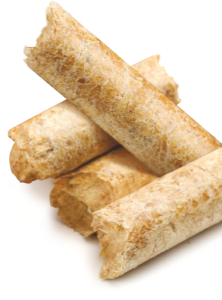
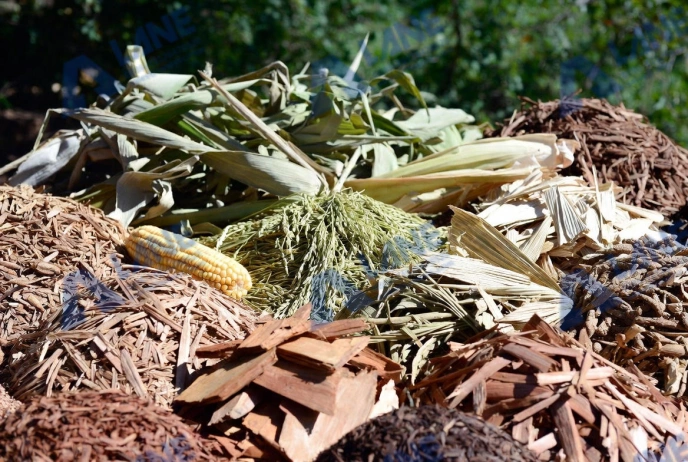
The term cat litter granulation equipment refers to the complete set of industrial machinery used to process raw substrates — bentonite clay, tofu fiber, wood pulp, silica gel — into consistently sized granules suited for commercial cat litter products.
The choice of granulation method depends on everything in the post-process, such as moisture management, binder selection, drying load, and final pellet density. from my experience visiting factories in Southeast Asia and the Middle East, most of the quality complaints are due to inconsistencies with the characteristics of the raw materials and the method of granulation chosen at the design stage. If this is not corrected at an early stage, we will have to incur re-processing costs for many years to come.
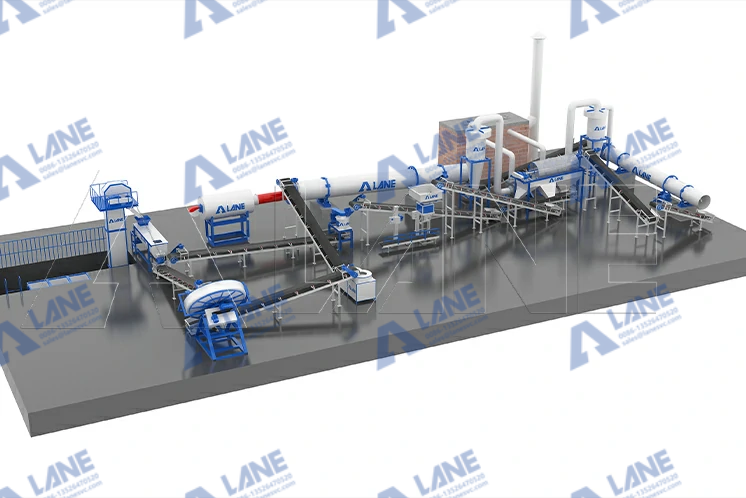
Core Machines in a Cat Litter Granulation Line
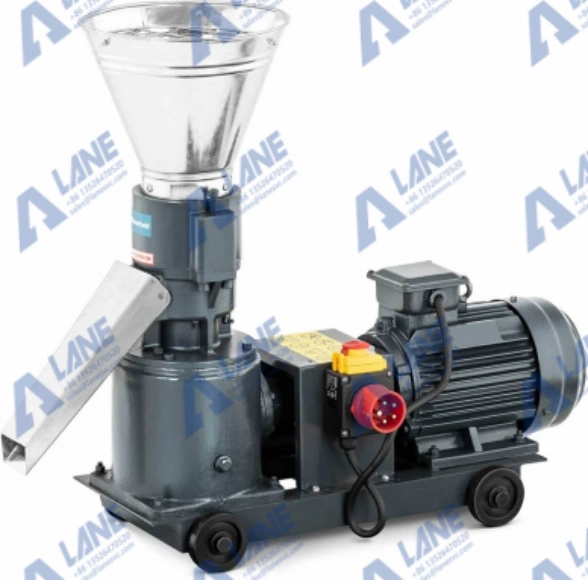
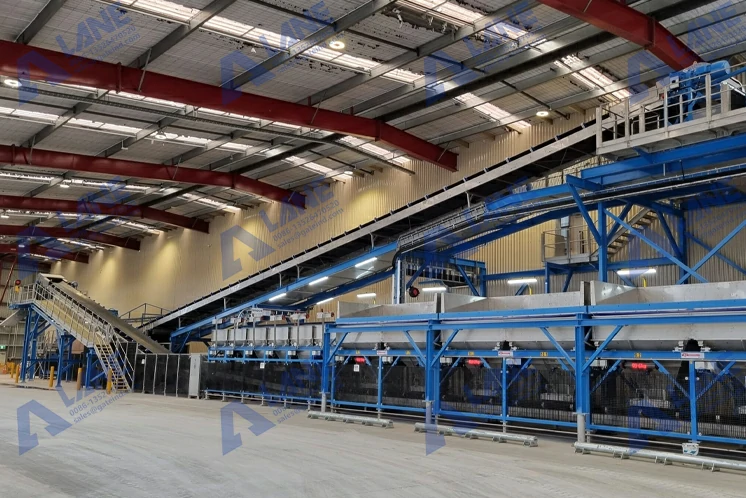
A standard cat litter granulation equipment line involves several unit operations working in sequence:
- Hammer Mill: Reduces raw bentonite or fiber blocks to a workable particle size before mixing.
- Double Shaft Gravityless Free Mixer: Blends raw material with binders and moisture to reach optimal granulation conditions.
- Rotary Drum Granulator: Often used on bentonite-based lines where tumbling action forms rounded, uniform granules with minimal fines — well-suited for high-volume throughput.
- Rotary Drum Dryer: Removes excess moisture post-granulation. Target water content for bagged product typically runs 8–12%.
- Rotary Drum Cooler: Brings pellet temperature down before packaging to prevent caking and moisture reabsorption during storage.
- Vibrating Screen: Separates on-spec pellets from oversized or undersized material. Undersized granules return to the mixer; oversized get crushed and recycled.
- Dust Collector Cyclone System: Captures airborne fines — critical for worker safety and for maintaining overall yield.
- Auto Packaging Machine: Automated weighing and bagging in 5L, 10L, or bulk pallet configurations.
Based on-site experience, it is common for production lines with insufficient investment in sorting and dust collection equipment to have a defective rate of finished products reaching 4-7% of total production volume. This defect rate increases rapidly over the entire annual production volume.
Capacity Tiers and What They Mean for Your Investment
Cat litter granulation equipment is typically grouped into three capacity bands:
Small-scale (0.5–2 t/h): It is suitable for producers who want to explore niche markets or sell private brand products. Although the initial investment is low, the operating costs per ton are significantly higher. Unless high-value-added products are sold at high retail margins, there is little chance of achieving profitability.
Mid-scale (2–8 t/h): The sweet spot for most regional producers. Enough throughput to service mid-tier retail contracts while keeping overall cat litter granulation equipment investment manageable. Established suppliers like LANE — known primarily for large-scale fertilizer production equipment — offer configurable line packages in this range, bringing relevant process knowledge from adjacent granulation categories.
Large-scale (8–20+ t/h): For exporters and OEM manufacturers supplying national retail chains. Fully automated PLC-controlled cat litter granulation equipment with real-time monitoring is standard at this scale.
Realistic Cost Benchmarks
Here’s what you should actually expect to pay:
A complete small-scale cat litter granulation equipment line (1–2 t/h, including granulator, dryer, cooler, screening, and dust collection) typically runs USD $80,000–$180,000 depending on material specifications and automation level.
Mid-scale lines (3–6 t/h) with full automation: USD $250,000–$550,000. Large-scale lines (10 t/h+): USD $700,000 and above, with turnkey projects sometimes exceeding $1.5M when civil works are included.
Budget an additional 15–22% for installation, commissioning, training, and initial spare parts inventory. Suppliers who quote equipment-only prices without flagging these costs are doing you no favors.
ROI: The Variables That Actually Drive Payback
The revenue per ton varies widely. Luxury tofu-based cat sands retail at $600 to $1200 per ton, while typical bentnite products are around $180 to $280 per ton. The operating cost of a medium-sized production line, including energy, labor, binder, and maintenance costs, is typically around $60 to $130 per ton.
For a $350,000 mid-scale cat litter granulation equipment investment producing 4 t/h at 6,000 annual operating hours and a $120/ton margin, annual contribution approaches $2.88M. Most realistic payback scenarios land at 18–36 months. Build your model on conservative throughput, not peak specs.
What to Ask Any Equipment Vendor
To be honest, the engineering support and after-sales service system behind the machinery are often the differentiators from other companies. Before entering into a contract, please ask all vendors the following questions: Can you guarantee the processing results for the actual raw materials? Are there any trial run results for lines designed to handle this particular substrate? what is the lead time of spare parts for critical wear parts such as press rollers, dilling, screen meshes? Do you provide remote PLC diagnostics and predictive maintenance support?
Conclusion
Purchasing cat litter granulation equipment is a 10–15 year asset decision, not a catalog order. Get your granulation method right for your raw material. Size the dryer generously — undersized dryers are the most common bottleneck I find on underperforming lines. Verify vendor references before committing capital. And model your ROI on realistic, not optimistic, assumptions.
The global cat litter market continues to grow, particularly across Asia and the Middle East. The infrastructure window is open. Move with intention.
FAQ
Q1: What is the difference between a disc pelletizer and a rotary drum granulator for cat litter production?
A disc pelletizer uses centrifugal force and a rotating inclined pan to form granules — well-suited for bentonite and mineral-based litters where pellet size control is critical. A rotary drum granulator uses a tumbling cylinder and handles higher throughput with good rounding consistency. The right choice depends on raw material properties, target pellet diameter, and production volume.
Q2: Can a single cat litter granulation equipment line process multiple raw materials?
Although it is technically feasible, it is operationally complex. Bentonite and tofu fiber differ significantly in terms of water content, bulk density, and required amount of binder. most medium-sized factories are investing in equipment that can operate dedicated lines for each base material or that can be switched quickly. Cleaning time and the risk of cross-contamination are actual cost factors that are often underestimated by purchasers.
Q3: How critical is the drying stage to the overall line performance?
This is of utmost importance. products that lack drying will solidify in the bag, and if they dry too much, energy costs will increase and cracks will occur on the surface of the clay pellets. the rotary drum dryer should be selected according to the actual inlet moisture content and the environmental conditions of the installation site, not the general plate data. in projects with limited budgets, this process is often the most design-deficient.
Q4: What are typical maintenance intervals for a cat litter pelletizer?
In a roller press cat litter pelletizer processing abrasive bentonite, roller replacement intervals typically run 800–1,500 operating hours depending on material hardness. Classifier screen meshes need inspection every 200–400 hours. Proactive spare parts inventory planning is non-negotiable for sustained uptime.
Q5: How long does commissioning take for a new cat litter granulation equipment line?
For medium-scale production lines (with a capacity of 3 to 6 tons per hour), the acceptance tests at the factory typically take between 5 and 10 days. Transport and on-site installation typically take between 4 and 8 weeks. The trial operation and pilot production will take a further two to four weeks. Please allow a period of 3 to 5 months between placing the order and the commencement of stable commercial production.
Q6: What certifications matter when sourcing cat litter granulation equipment?
The minimum required requirements are CE marking for exports to the EU, ISO 9001 certification by the manufacturer, and material contact conformity for pet products for food-related markets. For products for North America or GCC countries, make sure that the motor and control panel specifications meet local power grid standards before placing an order.
For more details, please feel free to contact us.
Henan Lane Heavy Industry Machinery Technology Co., Ltd.
Email: sales@lanesvc.com
Contact number: +86 13526470520
Whatsapp: +86 13526470520