

What Is the Best Cat Litter for Odor Control and Multiple Cats? A Complete Buyer’s Guide
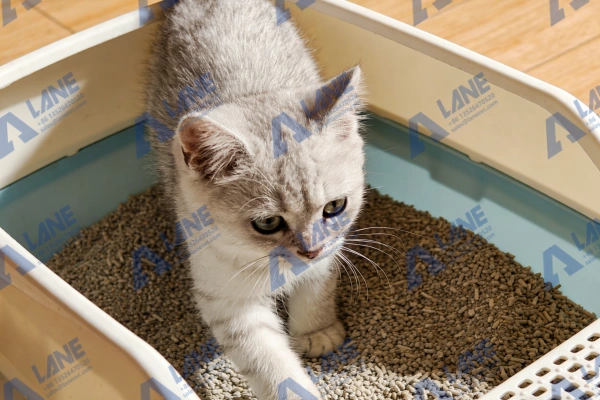
If you share your home with more than one cat, you already know the struggle. The smell hits before you even reach the litter box. You’ve tried switching brands, scooping twice a day, adding baking soda—nothing lasts. Finding the best cat litter for odor control and multiple cats isn’t about grabbing the most popular bag on the shelf. It’s about understanding what drives odor and matching your formula to the real demands of a multi-cat household.
Let me walk you through what actually works, and why most cat owners are solving the wrong problem.
Why Multi-Cat Homes Have Unique Odor Challenges
A single cat produces approximately 2 to 4 pounds of feces per week. Multiply this by three or four cats, and the volume becomes overwhelming for most types of regular cat litter. Ammonia buildup occurs rapidly. Bacterial activity accelerates. Even if the boxes have been freshly cleaned, unpleasant odors may still be noticeable within a few hours if the temperature in your home is high.
Cat urine contains urea, which bacteria convert into ammonia. Feces carry sulfur compounds and mercaptans. Standard clay litters mask these smells temporarily but don’t neutralize the chemistry at the source. That’s why choosing the right odor control cat litter matters far more than most people realize.
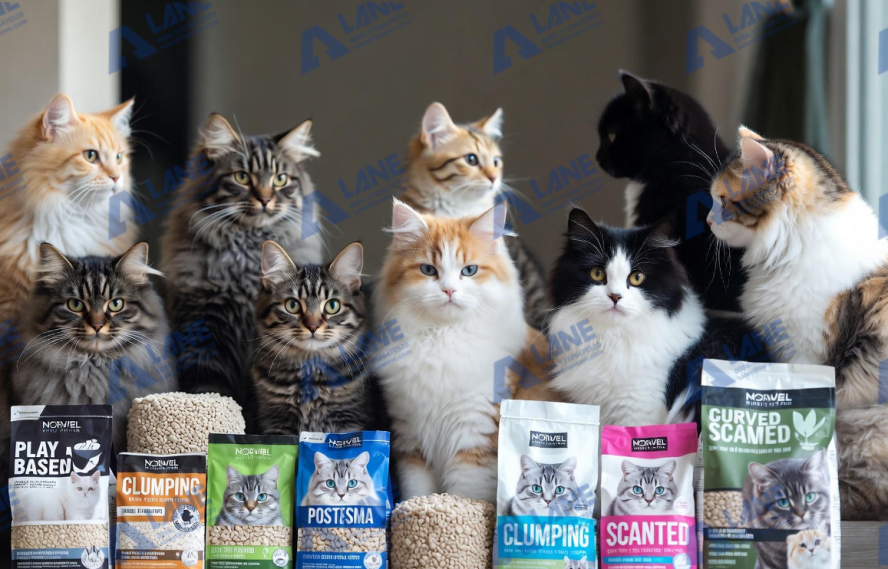
What to Look for in Odor Control Cat Litter
Not all odor control cat litter performs the same way. The market is crowded with claims, so here’s what actually matters when evaluating the best cat litter for odor control and multiple cats:
- Activated charcoal or carbon: Absorbs airborne odor molecules at the molecular level—not just masks them
- Antimicrobial agents: Slow bacterial breakdown of urea, which is where the real ammonia fight happens
- Clumping strength: Tight, hard clumps trap liquid before odor spreads; crumbling clumps release it
- Dust levels: Low-dust formulas protect respiratory health and keep boxes cleaner longer
- Absorption capacity: Higher capacity means the odor control cat litter stays effective between full changes
Clumping strength is the feature most buyers overlook. A crumbly clump is basically an odor release mechanism.
Best Cat Litter Types for Multi-Cat Households
Clumping Clay
When it comes to the best cat litter for odor control and multiple cats, modern clumping clay—especially sodium bentonite—remains the gold standard. It forms rock-hard clumps that lock in moisture and neutralize odor at the source. Cost-effective, widely available, and easy to scoop in bulk.
Silica Gel Crystal
Silica crystals trap odors within a bead-like structure rather than causing them to clump. Based on my observations in the field, they perform well in households with two to three cats, but they can be challenging to maintain with four or more cats if not frequently stirred. Carbon-based clay formulations typically last longer than silica in high-flow tanks over a two-week cycle.
Plant-Based Formulas
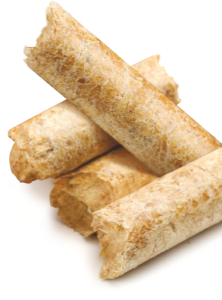
Wood pellets, corn, and walnut-shell litters neutralize odor through natural enzymes and are genuinely biodegradable. The tradeoff is cost and texture rejection from some cats. In my experience, plant-based options work best as a secondary box choice rather than the primary odor control cat litter across every box in a multi-cat home.
Multi-Cat Formula Blends
Blends combining high-density clay with activated carbon and antimicrobial additives deliver the best overall balance of performance and price. If you’re comparing options for the best cat litter for odor control and multiple cats, multi-cat formula blends deserve the top spot on your shortlist.
Key Equipment in Industrial-Scale Cat Litter Production
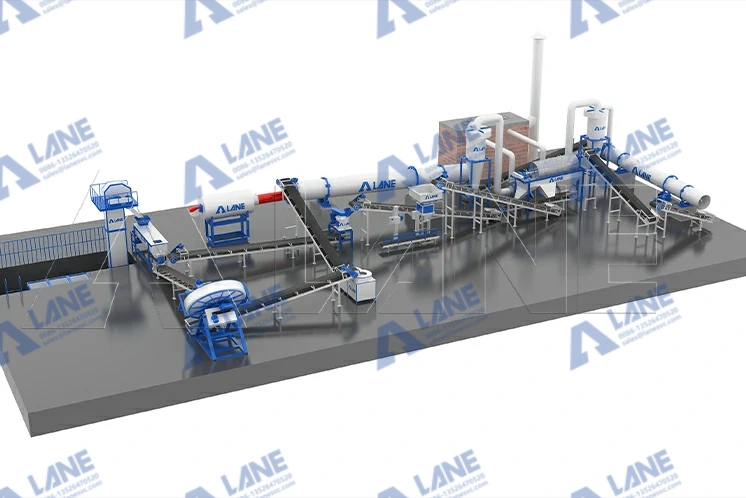
Manufacturing quality directly determines granule performance. The production process relies on specialized equipment at every stage:
- Raymond mill: Grinds raw bentonite to the precise particle size needed for optimal clumping
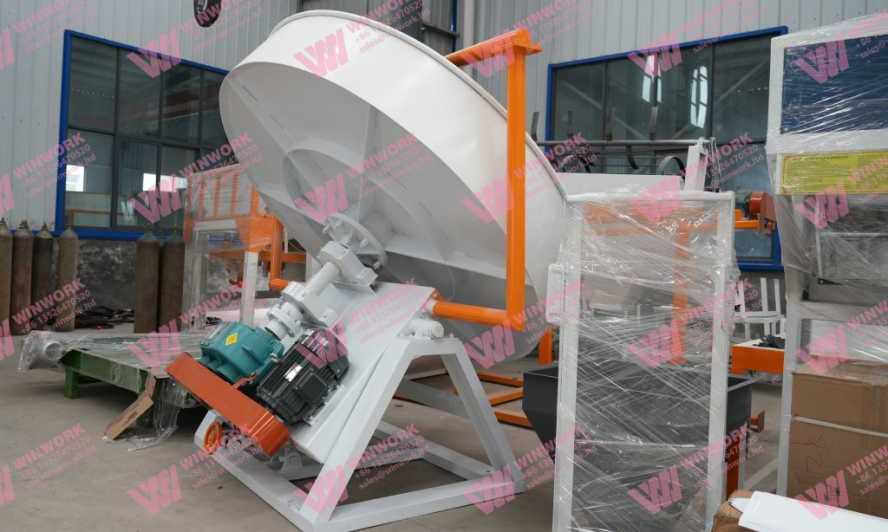
- Rotary drum granulator: Shapes material into uniform granules, affecting clump density and absorption rate
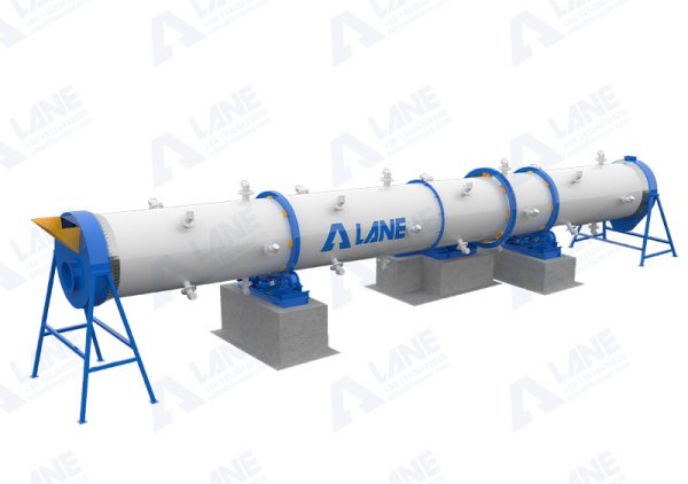
- Rotary drum dryer cooler: Achieves the target moisture content through drying and stabilizes granule temperature to prevent structural degradation.
- Vibrating screen: Sorts granules by size, eliminating fine dust from usable product
- Belt conveyor system: Moves material between stages with minimal contamination
- Bag filter: Controls dust emissions during processing
- Automatic Packaging Machine: Seals finished product to prevent moisture reabsorption before sale
Large industrial equipment manufacturers like LANE, which specialize in granulation and drying systems, provide processing machinery for the back end of production lines in the cat litter and mineral processing industries. The engineering overlap between fertilizer granulation and the production of absorbent granules is greater than most consumers might expect.
Practical Tips for Managing Odor in Multi-Cat Homes
You can have the best cat litter for odor control and multiple cats in every box and still lose the odor battle if your management habits are off.
Follow the one-box-per-cat-plus-one rule—three cats need four boxes minimum. Scoop at least once daily; twice is better. Change litter completely every one to two weeks regardless of appearance. Place boxes in ventilated areas. Don’t line boxes with plastic bags when using clumping clay—liners interfere with clump formation and reduce the effectiveness of even the strongest odor control cat litter formulas.
Summary and Final Recommendation
The best cat litter for odor control and multiple cats combines strong clumping mechanics, genuine odor neutralization chemistry, and consistent management that matches your cats’ actual output. No single product works in isolation. Match litter type to household size, scoop consistently, and run enough boxes so every cat always has a clean option.
Start with a clumping clay multi-cat formula featuring activated charcoal. The right odor control cat litter, used consistently, makes a night-and-day difference in how your home smells.
Frequently Asked Questions
Q1: How often should I completely change litter in a multi-cat home?
Every one to two weeks, even if the litter looks clean. Bacterial buildup occurs below the surface and degrades performance regardless of daily scooping. The best cat litter for odor control and multiple cats still requires this routine to stay effective.
Q2: Is clumping litter safe for all cats?
Clumping clay is generally safe for adult cats. For kittens under four months, non-clumping alternatives are recommended since young kittens may ingest litter during grooming.
Q3: How many litter boxes do I actually need for three cats?
Four boxes—one per cat plus one extra. This reduces competition, prevents outside-box soiling, and distributes waste so no single box becomes overwhelmed.
Q4: Does scented litter help with odor control?
No—it masks but doesn’t eliminate. Many cats avoid scented boxes entirely. Unscented odor control cat litter with charcoal or antimicrobial agents consistently outperforms scented options in multi-cat conditions.
Q5: Why does my litter stop working after a week even with daily scooping?
Granules saturate with urine below the surface even after clumps are removed. Once absorption capacity is exhausted, odor passes through. A full litter change is needed, not just more scooping.
Q6: Are plant-based litters effective for odor control in multi-cat homes?
Yes, with caveats. They use natural enzymatic activity—effective but slower than activated charcoal or antimicrobial clay. In high-volume households, they require more frequent full changes. Pairing a plant-based option with a high-performance clumping formula in the primary box gives the best overall results.

For more details, please feel free to contact us.
Henan Lane Heavy Industry Machinery Technology Co., Ltd.
Email: sales@lanesvc.com
Contact number: +86 13526470520
Whatsapp: +86 13526470520