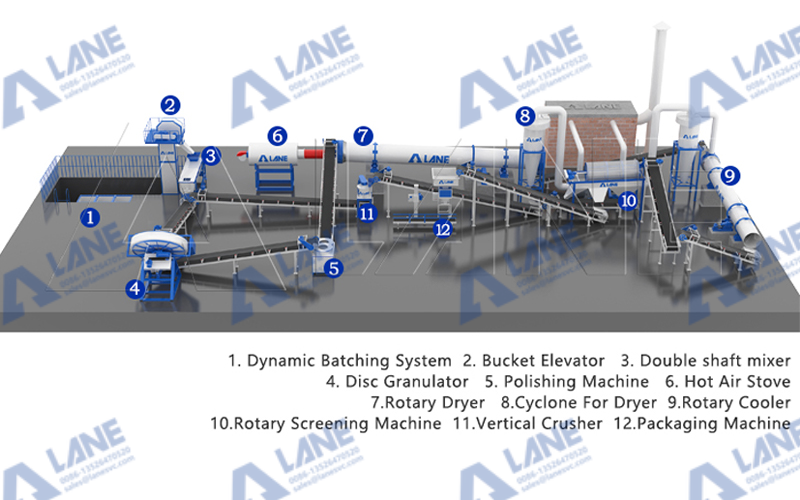


Bentonite Cat Litter Production Process Flow: From Raw Clay to High-Quality Clumping Pellets
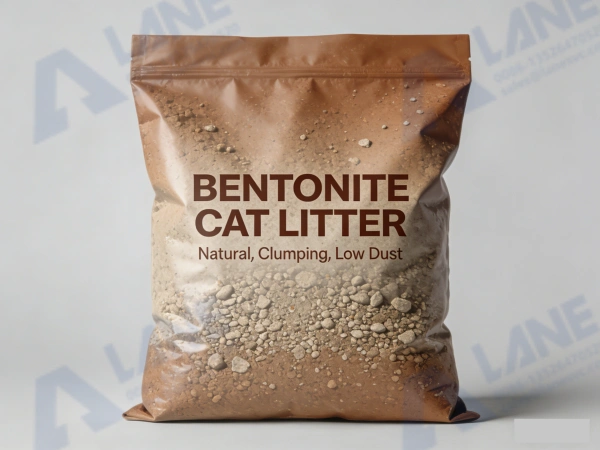
Bentonite Cat Litter Production Process Flow: From Raw Clay to High-Quality Clumping Pellets
1. From Raw Bentonite to Finished Litter: What Really Happens in Between?
Most buyers are familiar with clumping bentonite cat litter as a finished product, but far fewer understand the complex process behind its production.
In reality, the Bentonite Cat Litter Production Process Flow is not just a simple sequence of machines—it is a coordinated system where each stage directly affects the final product quality. If any step is not properly controlled, manufacturers may encounter:
✦ poor clumping performance
✦ excessive dust in finished products
✦ unstable pellet size
✦ increased production costs
Understanding the full Bentonite Cat Litter Production Process Flow allows manufacturers to identify critical control points and build a more stable, efficient production line.
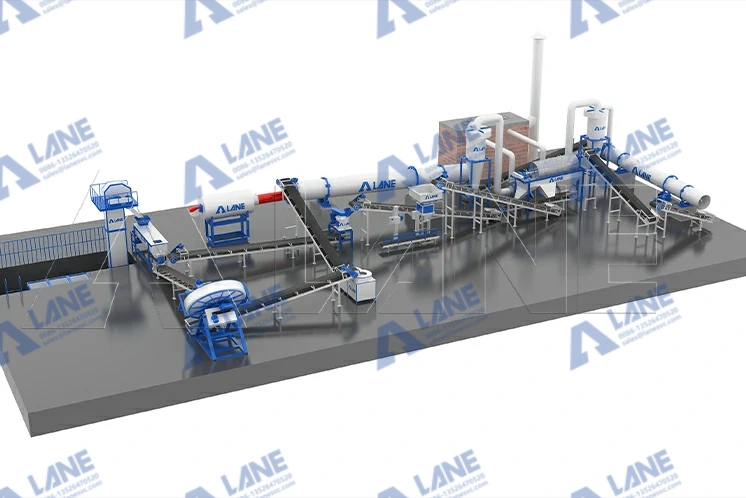
2. Raw Material Preparation: The Starting Point of Quality
The production process begins with raw bentonite clay, which must be properly prepared before entering the main processing stages.
✦ Key Preparation Steps
♡ crushing large clay blocks into smaller particles
♡ removing impurities such as stones or debris
♡ adjusting initial moisture levels
Proper preparation ensures that the material can flow smoothly into the next stage of the Bentonite Cat Litter Production Process Flow.
✦ Why This Stage Matters
If the raw material size is uneven, it can negatively affect mixing efficiency and granulation performance, leading to inconsistent pellet quality later in the process.
3. Mixing Stage: Where Consistency Is Created
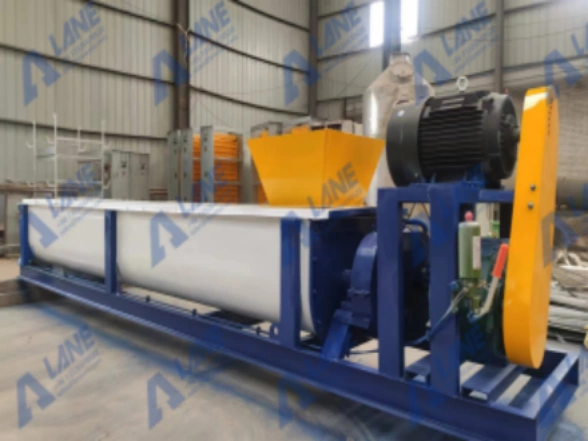
After crushing, the material enters the mixing stage, which plays a critical role in ensuring uniformity.
✦ Equipment Used
-
Horizontal Mixer
✦ What Happens Here
♡ moisture adjustment
♡ blending of additives (if required)
♡ homogenization of raw materials
Proper mixing ensures that all particles have consistent properties, which is essential for stable granulation.
In many cases, improving the mixing stage significantly enhances the overall Bentonite Cat Litter Production Process Flow, reducing downstream problems such as weak pellets or dust.
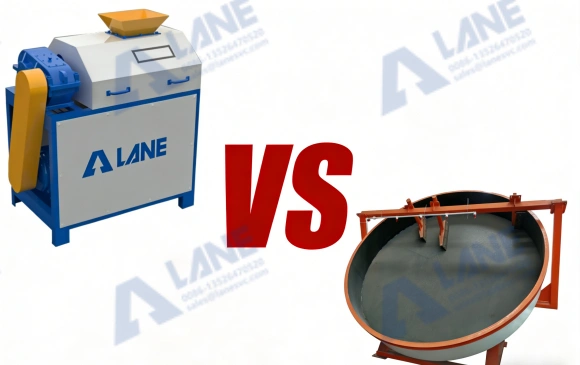
4. Granulation Stage: Turning Powder into Pellets
Granulation is the core step in the Bentonite Cat Litter Production Process Flow, where raw material is transformed into usable pellets.
✦ Equipment Used
-
Disc Granulator
✦ Working Logic
♡ materials roll inside a rotating disc
♡ particles gradually grow through layering
♡ pellets form into spherical shapes
✦ Key Control Factors
✦ moisture content
✦ disc angle and rotation speed
✦ material feeding rate
Accurate control of these parameters is essential. Even small deviations can result in uneven pellet size or poor clumping performance.
5. Drying Stage: Strengthening the Pellets
Freshly formed pellets typically contain excess moisture and must be dried to achieve proper strength.
✦ Equipment Used
-
Rotary Dryer
✦ Process Highlights
♡ reducing moisture content
♡ increasing pellet hardness
♡ stabilizing pellet structure
An optimized drying stage improves durability and reduces breakage during handling, which is a key part of an efficient Bentonite Cat Litter Production Process Flow.
6. Screening Stage: Controlling Product Quality
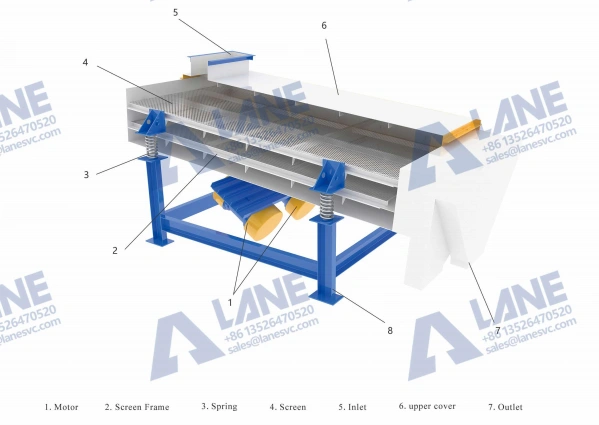
After drying, pellets are screened to ensure consistent size and quality.
✦ Equipment Used
✦ Function
♡ separating qualified pellets
♡ removing fine powder
♡ recycling oversized particles
Screening is the final quality control step in the Bentonite Cat Litter Production Process Flow, ensuring that only qualified products move forward to packaging.
7. Packaging Stage: From Production to Market
The final stage is packaging, where finished pellets are prepared for distribution.
✦ Equipment Used
-
Automatic Packing Machine
✦ Key Benefits
♡ accurate weighing
♡ fast and efficient packaging
♡ reduced manual labor
Automation at this stage ensures consistent packaging quality and improves overall production efficiency.
8. 🌟 LANE’s Integrated Production Line Solution
At LANE, we focus on designing complete production systems rather than supplying standalone machines.
✦ Integrated Equipment Configuration
-
crushing system
-
mixing system (Horizontal Mixer / Twin Shaft Mixer)
-
disc granulator
-
rotary dryer
-
screening system
-
automatic packing system
✦ Engineering Advantages
♡ optimized process flow
♡ stable equipment operation
♡ reduced energy consumption
✦ Service Support
♡ plant layout design
♡ installation and commissioning
♡ operator training
♡ long-term technical support
By combining engineering experience with practical process design, LANE ensures that each Bentonite Cat Litter Production Process Flow is tailored to customer needs.
9. How to Optimize Your Bentonite Production Process
A standard process flow is only the starting point. Real efficiency comes from optimization.
Key strategies include:
✦ controlling moisture at each stage
✦ balancing equipment capacity
✦ minimizing dust generation
✦ improving energy efficiency
A well-optimized Bentonite Cat Litter Production Process Flow not only improves product quality but also reduces long-term operating costs.
10. Conclusion: Process Design Determines Product Value
In cat litter manufacturing, product quality is not determined by a single machine—but by the entire production process.
By understanding and optimizing the Bentonite Cat Litter Production Process Flow, manufacturers can achieve:
✔ consistent pellet quality
✔ higher production efficiency
✔ lower operational costs
A well-designed production process is the foundation of a successful and competitive cat litter business.
LANE Machinery, your trustworthy partner.
For more details, please feel free to contact us.
Henan Lane Heavy Industry Machinery Technology Co., Ltd.
Email: sales@lanesvc.com
Contact number: +86 13526470520
Whatsapp: +86 13526470520