

Bentonite Cat Litter Granulator vs Tofu Cat Litter Granulator: Key Equipment Differences and Selection Guide
Bentonite Cat Litter Granulator vs Tofu Cat Litter Granulator: Key Equipment Differences and Selection Guide
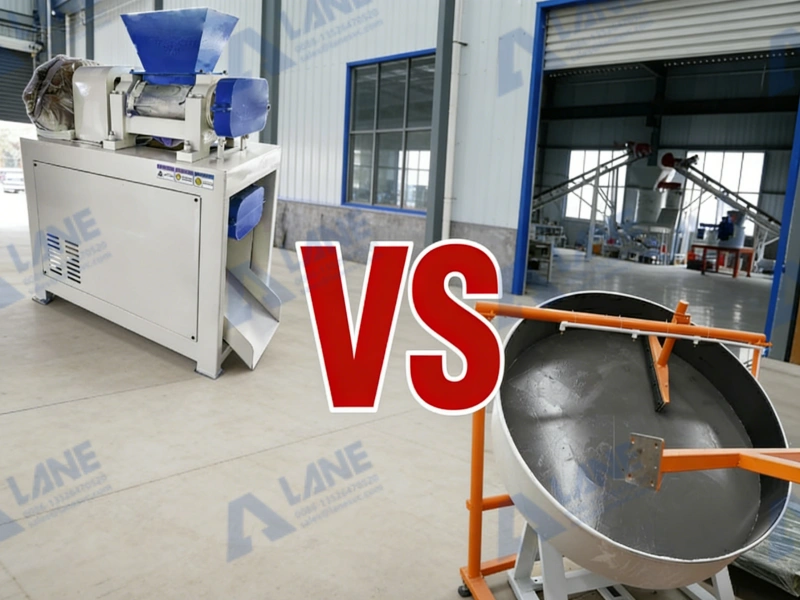
In the global pet care market, bentonite and tofu cat litter represent two dominant product categories with fundamentally different raw materials, particle shapes, and positioning. Understanding the differences between a bentonite cat litter granulator vs tofu cat litter granulator is essential for manufacturers planning equipment investment, product strategy, and production line design. In industrial production planning, the choice between bentonite cat litter granulator vs tofu cat litter granulator directly determines particle shape, strength, and downstream processing stability.
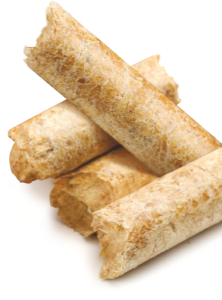
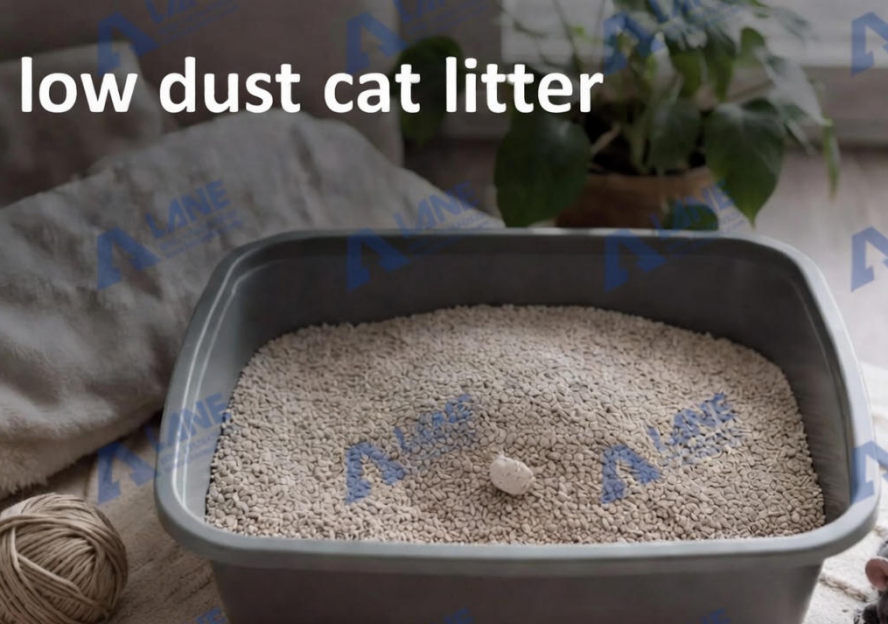
Bentonite litter is mineral-based and typically forms spherical granules designed for strong clumping and moisture absorption. In contrast, tofu litter is plant-based and usually produced as cylindrical pellets with low dust and flushable properties. These structural differences originate directly from the granulation technology applied.
Because the granulator determines particle morphology, density, strength, and dust level, selecting the correct system directly impacts product quality, cost efficiency, and market competitiveness. Choosing incorrectly can lead to unstable granules, excessive breakage, or poor consumer acceptance.
Raw Material Characteristics Driving Granulator Design
1. Bentonite Cat Litter Raw Material Features
Bentonite cat litter uses natural clay powder with high swelling capacity and water absorption. The mineral particles are extremely fine and rely on moisture-activated cohesion to form aggregates. These characteristics make bentonite ideal for wet agglomeration granulation.
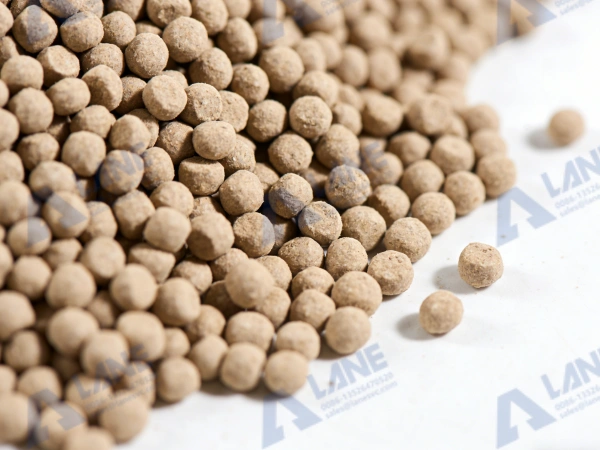
Key properties include:
- fine mineral powder
- strong water absorption and expansion
- plasticity when moist
- ability to form spherical aggregates
Because bentonite particles bind through surface moisture, tumbling granulation technologies such as disc granulators are most suitable.
2.Tofu Cat Litter Raw Material Features
Tofu cat litter is produced from soybean residue, plant fiber, or starch-based biomass materials. Unlike mineral powders, these fibers have inherent structural cohesion and respond well to pressure compaction. Their binding comes from natural polysaccharides rather than moisture swelling.
Typical features include:
- plant fiber structure
- natural starch binding
- compressibility under pressure
- suitability for extrusion shaping
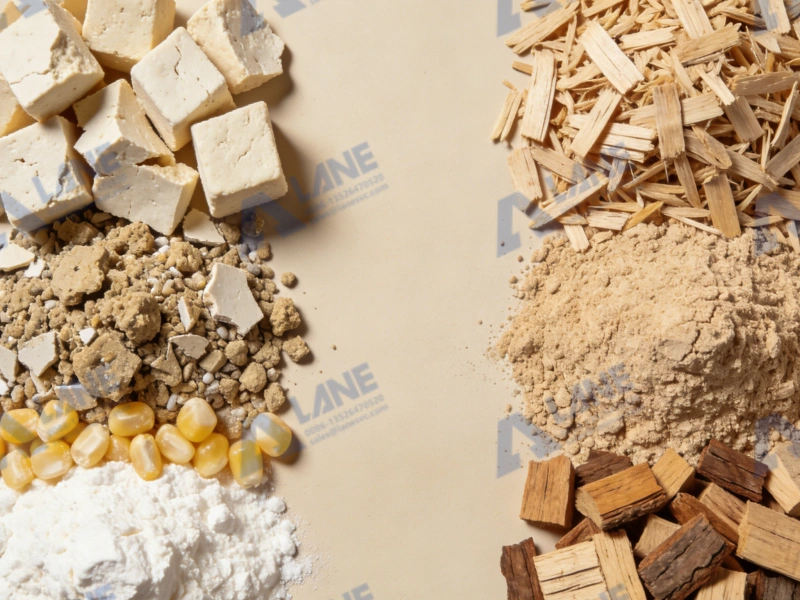
Therefore, tofu litter is most stable when formed by extrusion granulators that create cylindrical pellets rather than spheres.
These fundamental differences in moisture absorption and binding behavior explain why a bentonite cat litter granulator vs tofu cat litter granulator must use completely different mechanical principles. Because raw material behavior varies so significantly, bentonite cat litter granulator vs tofu cat litter granulator represents two fundamentally different granulation principles rather than interchangeable machines.
Bentonite Cat Litter Granulator: Typical Technologies and Equipment
1. Disc Granulator (Pan Granulator)
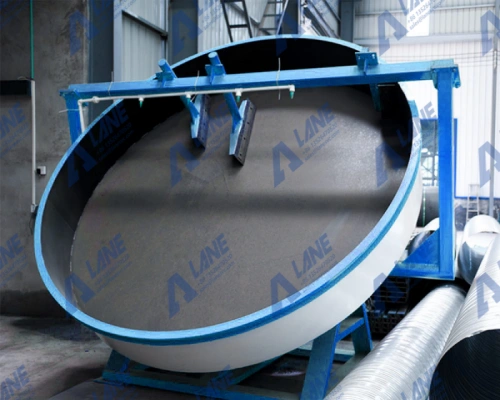
The disc granulator is the mainstream equipment for bentonite litter production. It creates spherical particles through tumbling, rolling, and controlled moisture spraying. Powder particles continuously adhere and grow into uniform granules.
Key advantages:
- high sphericity and smooth surface
- adjustable particle size
- stable agglomeration
- low breakage rate
Disc granulators create uniform spherical granules through tumbling and moisture agglomeration, making them ideal for clumping bentonite litter.
Rotary Drum Granulator (Optional)
For very large industrial capacity lines, rotary drum granulators can also be used. These systems enable continuous large-scale agglomeration and are suitable for export-grade bentonite litter production plants. From an engineering perspective, bentonite cat litter granulator vs tofu cat litter granulator highlights the contrast between wet agglomeration technology and mechanical extrusion forming.
2. LANE Bentonite Cat Litter Granulation Solutions
LANE has developed specialized bentonite granulation systems optimized for cat litter particle uniformity and strength control. Key design features include:
- anti-sticking pan structure
- precise liquid spraying system
- stable particle size control
- high-efficiency drying compatibility
These technologies ensure consistent spherical granules suitable for automatic litter boxes and premium markets.
Tofu Cat Litter Granulator: Typical Technologies and Equipment
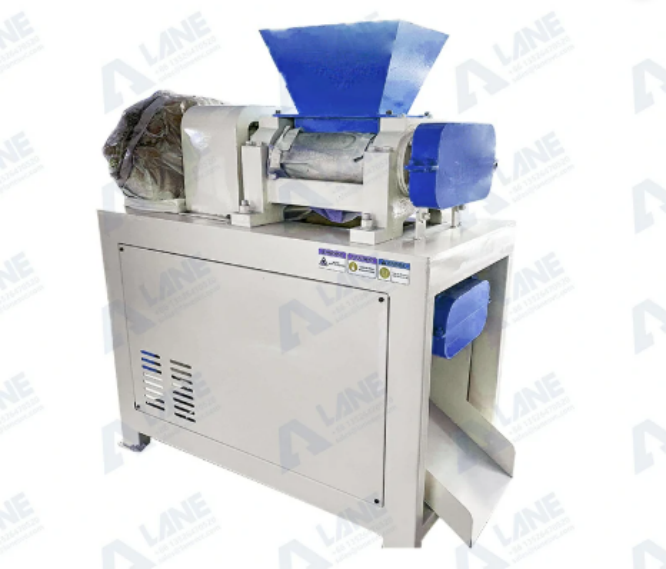
1. Double Roller Extrusion Granulator
The double roller extrusion granulator is the core machine for tofu litter pelletizing. It compresses biomass powder into dense cylindrical particles using high pressure and molding dies.
Main benefits:
- uniform pellet density
- stable cylindrical shape
- high forming rate
- low dust generation
Pressure-based pelletizing compresses biomass into cylindrical cat litter particles that maintain structural integrity during transport and use.
Ring Die Pellet Mill (High-Capacity Option)
For large-scale tofu litter plants, ring die pellet mills provide higher throughput and continuous pellet production. Pellet length can be automatically cut to achieve consistent product specifications.
2. LANE Tofu Cat Litter Granulation Solutions
LANE tofu litter granulators are engineered specifically for biomass materials such as soybean residue and wood fiber. Core advantages include:
- SUS304 contact material
- anti-blocking die design
- low-energy extrusion system
- compatibility with multiple biomass sources
These features ensure stable pellet formation and long equipment lifespan in high-fiber environments. Manufacturers targeting biodegradable litter markets must clearly understand bentonite cat litter granulator vs tofu cat litter granulator before selecting extrusion-based pelletizing systems.
Particle Shape and Performance Comparison
When comparing bentonite cat litter granulator vs tofu cat litter granulator, particle shape is the most visible outcome.
Bentonite Granules
1. spherical particles
2. 0.5–4 mm size range
3. strong clumping expansion
4. high liquid absorption
5. suitable for automatic litter boxes
Spherical bentonite granules swell and lock moisture, creating firm clumps for easy removal.
Tofu Granules
1. cylindrical pellets
2. lightweight structure
3. low dust generation
4. flushable capability
5. eco-friendly positioning
Fiber-based tofu pellets absorb liquid internally rather than expanding outward, resulting in lighter clumps and reduced tracking.
These physical differences directly reflect the granulation method selected.
Production Line Configuration Differences
The equipment layout also differs significantly between bentonite and tofu litter plants.
Typical process:
- crushing
- mixing
- disc granulation
- drying
- screening
Drying is essential because moisture-formed bentonite granules must be stabilized before packaging.
Typical process:
- crushing
- mixing
- extrusion granulation
- cooling
- screening
Cooling replaces drying because extrusion pellets exit at high temperature and require structural stabilization.
The granulator type determines the entire production flow, energy consumption, and plant footprint. At the full-line level, bentonite cat litter granulator vs tofu cat litter granulator leads to completely different drying, cooling, and screening configurations.
How to Choose: Bentonite Cat Litter Granulator vs Tofu Cat Litter Granulator
Selecting between a bentonite cat litter granulator vs tofu cat litter granulator depends on several strategic factors.
Key Selection Criteria:
-
target market (traditional vs eco-friendly)
-
raw material availability
-
product positioning
-
investment budget
-
capacity requirements
Practical Recommendations:
-
clumping mineral litter → bentonite granulator
-
flushable eco litter → tofu granulator
-
hybrid litter products → dual-technology line
Manufacturers entering emerging markets often choose tofu litter due to environmental trends, while established markets still favor bentonite for strong clumping performance.
LANE Engineering Expertise in Both Granulation Systems
LANE is one of the few manufacturers capable of supplying both bentonite and tofu cat litter granulation technologies within integrated production lines. This dual capability allows customers to align equipment selection with evolving market demand.
LANE services include:
- raw material testing and formulation optimization
- particle size and strength control engineering
- full cat litter line design
- global installation experience
- customized turnkey solutions
By understanding the technical differences between bentonite cat litter granulator vs tofu cat litter granulator, LANE helps clients avoid mismatched equipment and achieve stable commercial production.
Conclusion: Matching Granulator Type to Cat Litter Product Strategy
The comparison of bentonite cat litter granulator vs tofu cat litter granulator shows that these two systems are fundamentally different in principle, structure, and application.
1. Raw material determines granulation method.
2. Granulator determines particle shape.
3. Particle shape determines product performance.
4. Performance determines market positioning.
Ultimately, bentonite cat litter granulator vs tofu cat litter granulator is not simply an equipment comparison but a strategic decision linking raw materials, product positioning, and market demand. For cat litter manufacturers, selecting the correct granulator is not only an equipment decision but a strategic product choice. With complete expertise in both mineral and biomass granulation, LANE provides flexible solutions covering all cat litter categories, from traditional clumping bentonite to eco-friendly tofu pellets.
Companies planning new cat litter projects or upgrading existing plants can benefit from LANE’s engineering experience to ensure consistent granule quality, efficient production, and long-term market competitiveness.
For more details, please feel free to contact us.
Henan Lane Heavy Industry Machinery Technology Co., Ltd.
Email: sales@lanesvc.com
Contact number: +86 13526470520
Whatsapp: +86 13526470520