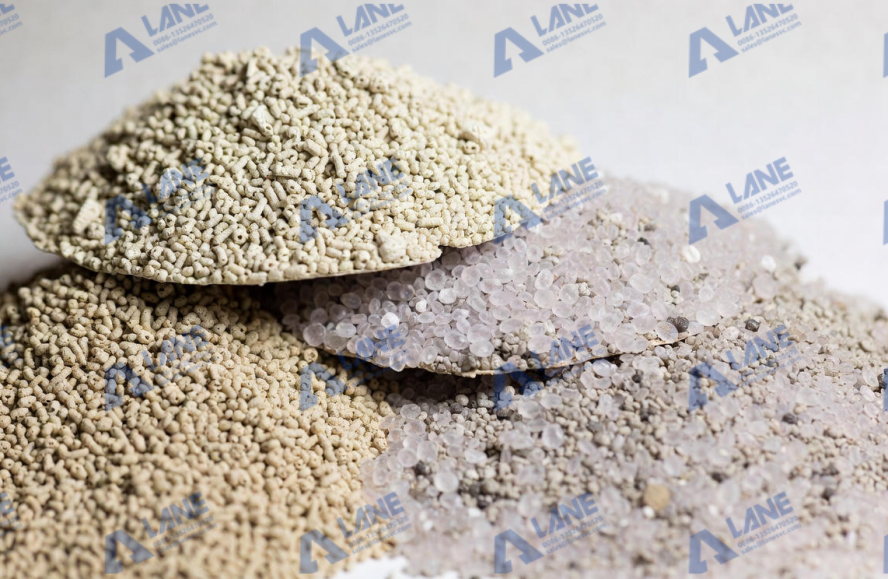


Bentonite Cat Litter Granulation Equipment: Process Design and Equipment Selection for Stable Production
Bentonite Cat Litter Granulation Equipment: Process Design and Equipment Selection for Stable Production
Producing high-quality bentonite cat litter is not simply a matter of choosing a granulator and starting the line. In industrial practice, the performance of bentonite cat litter granulation equipment is closely tied to raw material behavior, moisture control, and the way individual machines interact across the entire production process.
Unlike organic or biomass-based litter, bentonite presents a very specific set of challenges. Its strong water absorption, fine particle size, and natural cohesiveness make granulation possible—but only within a narrow processing window. For manufacturers aiming at consistent pellet size, stable strength, and long-term line reliability, equipment selection must follow process logic, not catalog descriptions.
Understanding Bentonite Properties in Cat Litter Granulation
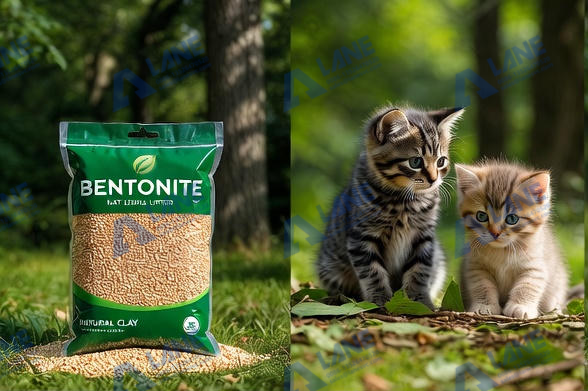
Bentonite is widely used in cat litter due to its swelling capacity and excellent clumping performance. These same properties, however, make granulation sensitive to operating conditions. When moisture is insufficient, bentonite fails to form stable nuclei. When moisture exceeds the optimal range, material agglomerates uncontrollably, leading to oversized lumps and downstream blockages.
Another critical aspect is particle distribution. Fine bentonite powder improves surface bonding, yet excessive fines increase dust load and recycling volume. As a result, bentonite cat litter granulation equipment must be selected with a clear understanding of how raw material characteristics evolve during processing, rather than being treated as static inputs.
Core Granulation Process for Bentonite Cat Litter
In a standard bentonite cat litter production line, granulation does not stand alone. It is part of a continuous sequence:
-
raw material preparation and batching
-
controlled mixing and moisture adjustment
-
granulation and shaping
-
drying and cooling
-
screening and material circulation
Each stage influences the next. Poor mixing uniformity, for example, directly reduces granulation efficiency. Likewise, unstable granules entering the dryer tend to fracture, generating fines that overload the screening system. From this perspective, bentonite cat litter granulation equipment should always be evaluated as part of an integrated process rather than an isolated unit.
Common Challenges in Bentonite Cat Litter Granulation
Manufacturers often encounter similar problems when working with bentonite-based formulations:
-
granules that break easily during drying
-
excessive powder return from screening
-
uneven pellet size distribution
-
frequent adjustments to moisture addition
These issues rarely stem from a single cause. More often, they are the result of mismatched equipment selection or insufficient coordination between machines. This is precisely why the choice of bentonite cat litter granulation equipment must reflect both material behavior and production objectives.
Equipment Selection Logic for Bentonite Cat Litter Granulation
When it comes to shaping bentonite into uniform cat litter granules, two equipment types are commonly applied in industrial projects: the disc granulator and the double roller extrusion granulator. Each serves a distinct purpose and fits different production scenarios.
Disc Granulator in Bentonite Cat Litter Production
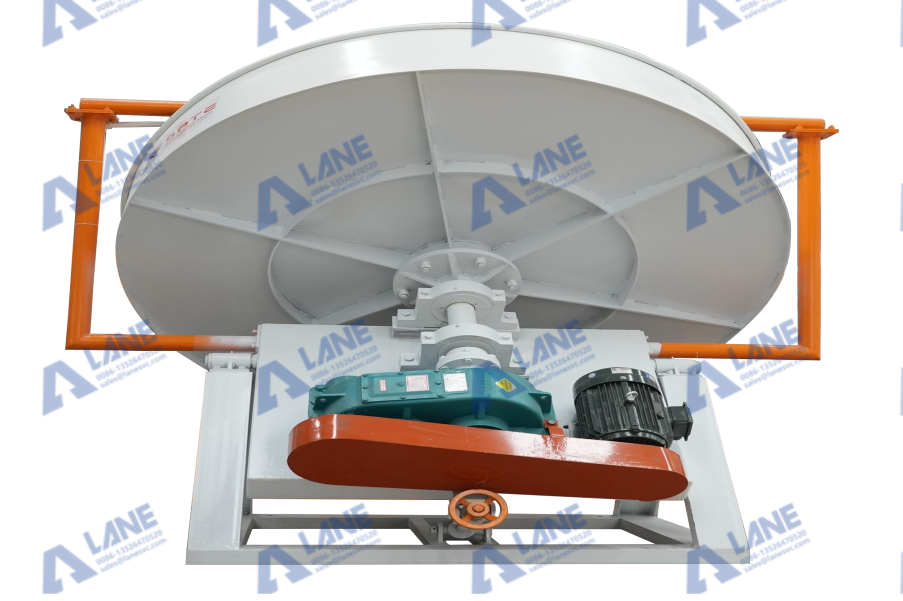
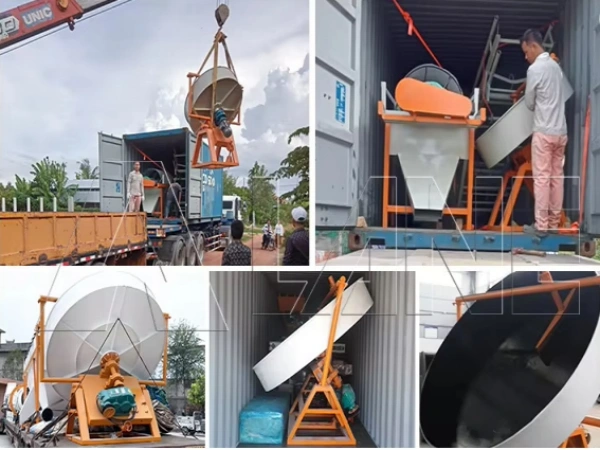
The disc granulator is widely used where flexible granule size control and continuous nucleation are required. Its inclined rotating disc allows material to roll, collide, and gradually grow into spherical pellets. For bentonite cat litter, this mechanism offers several advantages.
First, moisture distribution tends to be more forgiving. Fine water spray can be adjusted dynamically, allowing operators to respond to slight changes in raw material condition. Second, granule growth is progressive rather than forced, which reduces internal stress within the pellets. As a result, disc-based bentonite cat litter granulation equipment often performs well in lines that prioritize appearance uniformity and moderate output.
That said, disc granulators are more sensitive to upstream preparation. Stable feeding rate and consistent mixing quality are essential. Without them, pellet size fluctuation becomes difficult to control.
Double Roller Extrusion Granulator for Bentonite Cat Litter
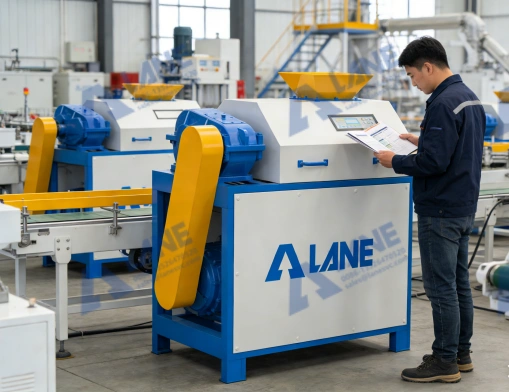
In contrast, the double roller extrusion granulator applies mechanical pressure to shape material through opposing rollers. This approach is particularly effective when higher bulk density and improved granule strength are required.
For bentonite cat litter manufacturers targeting compact pellets with reduced dust generation, extrusion-based bentonite cat litter granulation equipment provides a clear advantage. Granules formed under compression tend to maintain integrity during drying and transportation, lowering recycle load and improving overall line efficiency.
However, extrusion granulation demands stricter control of moisture and feed consistency. Material that is too dry will fail to compact properly, while overly wet feed may adhere to roller surfaces. In practice, successful application depends on precise coordination between mixing, feeding, and granulation stages.
Integrating Granulation Equipment into a Complete Production Line
Whether using disc or extrusion granulation, equipment performance depends heavily on system integration. Granulators do not compensate for unstable upstream processes, nor can they correct deficiencies in drying or screening.
In well-designed systems, bentonite cat litter granulation equipment operates within a balanced loop. Oversized particles are gently broken and returned, fines are recycled in controlled proportions, and finished granules move smoothly toward packaging. Automation and interlocking controls further reduce human intervention, improving repeatability across shifts.
This system-oriented design philosophy is where experienced equipment suppliers create long-term value. Rather than focusing on a single machine, they evaluate how each component contributes to stable, scalable production.
With years of experience in designing and supplying bentonite cat litter granulation equipment, LANE focuses on building stable, process-oriented solutions rather than promoting isolated machines. Instead of treating granulation as a standalone step, we evaluate how raw material behavior, moisture control, and downstream handling interact within the entire production line.
This system-level approach allows our bentonite cat litter granulation equipment to deliver consistent pellet strength, controlled particle size distribution, and long-term operational reliability. By combining disc granulators and double roller extrusion granulators within a well-matched equipment configuration, we help manufacturers adapt their bentonite cat litter granulation equipment to different capacity requirements and raw material conditions, while maintaining stable output and predictable maintenance cycles.
How Professional Equipment Design Improves Line Stability
From an engineering standpoint, durability and serviceability matter as much as granulation performance. Bentonite is abrasive, and long-term operation inevitably affects wear components. Thoughtful equipment design—such as optimized liner materials, accessible maintenance points, and standardized spare parts—directly impacts uptime.
Manufacturers who invest in professionally engineered bentonite cat litter granulation equipment benefit not only from improved pellet quality but also from predictable maintenance cycles and reduced operational risk. This is especially important for facilities aiming to expand capacity or serve multiple markets with varying product specifications.
Conclusion: Building a Reliable Bentonite Cat Litter Granulation System
Choosing the right bentonite cat litter granulation equipment is not about selecting a popular model or copying an existing line. It is about understanding material behavior, defining product goals, and aligning equipment choices with process logic.
Disc granulators and double roller extrusion granulators each play valuable roles when applied correctly. When integrated into a coherent production system and supported by solid engineering experience, they enable manufacturers to achieve consistent quality, stable output, and long-term operational confidence.
For producers planning new projects or upgrading existing lines, a solution-oriented approach to bentonite cat litter granulation remains the most reliable path forward.
For more details, please feel free to contact us.
Henan Lane Heavy Industry Machinery Technology Co., Ltd.
Email: sales@lanesvc.com
Contact number: +86 13526470520
Whatsapp: +86 13526470520