

How Controlled Production Improves Cat Litter Particle Size Distribution

How Controlled Production Improves Cat Litter Particle Size Distribution
In modern cat litter manufacturing, cat litter particle size distribution is a fundamental factor that directly affects product performance, appearance, and user satisfaction. Whether producing clumping litter, low dust formulations, or blended products, manufacturers must maintain a stable and predictable particle size range to ensure consistent results in real-world use.
As production volumes increase, uncontrolled variation in particle size distribution often becomes a hidden source of quality problems. Controlled production methods are essential for reducing this variability and achieving repeatable outcomes across batches. Rather than relying on manual adjustments, modern manufacturers focus on systematic control to improve cat litter particle size distribution at scale.
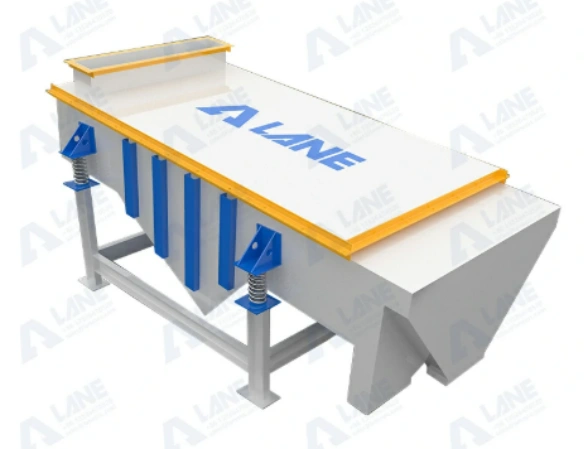
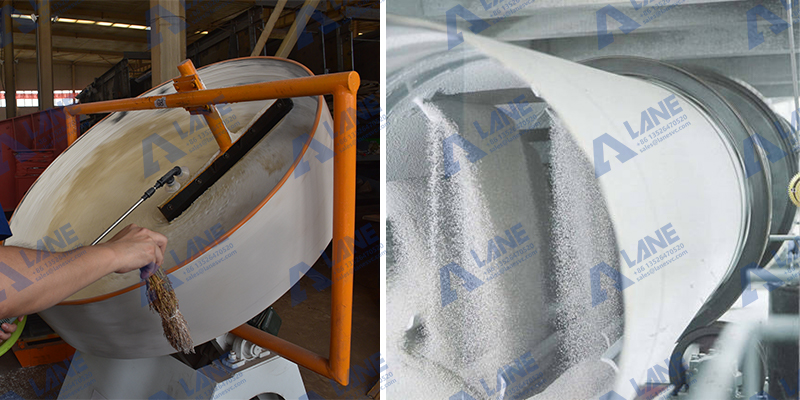
LANE Machinery offers granulators with adjustable particle size to meet the needs of different cat litter manufacturers and produce qualified, high-quality and diverse cat litter products.
Why Cat Litter Particle Size Distribution Matters
Particle size distribution determines how cat litter behaves during use. Uniform granules improve clumping behavior, reduce dust generation, and enhance overall handling characteristics. When particle sizes vary widely, performance becomes inconsistent, even if the formulation itself remains unchanged.
From a manufacturing perspective, stable cat litter particle size distribution contributes to predictable downstream performance, including packaging accuracy and transportation stability. Products with excessive fines or oversized particles often experience higher rejection rates and increased customer complaints.
Maintaining a controlled particle size range is therefore not only a quality requirement, but also a commercial necessity for manufacturers supplying competitive domestic and international markets.
Common Issues with Uncontrolled Particle Size Distribution
Many manufacturers encounter challenges related to cat litter particle size distribution when production conditions are not tightly controlled. These issues typically develop gradually and become more difficult to correct as output increases.
One common problem is excessive fine particles caused by inconsistent material handling or unstable forming conditions. Fines contribute to dust, reduce clump integrity, and negatively impact perceived quality. At the opposite end of the spectrum, oversized or irregular granules reduce surface contact, weakening performance and causing uneven litter beds.
Inconsistent throughput, frequent manual intervention, and variable processing conditions all contribute to uneven cat litter particle size distribution. Without controlled production, small deviations accumulate and lead to noticeable quality variation over time.
Key Factors Influencing Particle Size Distribution
- Material flow stability ensures uniform feeding and forming behavior
- Consistent processing conditions help maintain predictable granule formation
- Reduced mechanical stress minimizes unnecessary particle breakage
- Controlled separation of fines prevents excessive dust accumulation
These factors are difficult to manage through manual control alone. Stable particle size distribution is achieved when production operates within well-defined and repeatable parameters.
The Role of Controlled Production Systems
Controlled production focuses on minimizing variation throughout the manufacturing process. Instead of reacting to problems after they occur, controlled systems maintain consistent operating conditions from raw material input to final product handling.
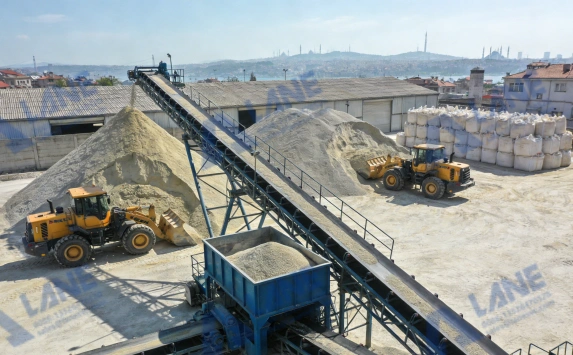
For manufacturers producing blended or multi-material formulations, an integrated mixed cat litter production line supports stable particle size distribution by ensuring uniform material interaction and predictable granule formation. Controlled feeding, forming, and handling reduce the likelihood of particle size drift during continuous operation.
By treating particle size distribution as a system-level outcome rather than an isolated issue, manufacturers can achieve more reliable results across long production runs.
Automation and Consistency in Particle Size Control
Automation plays a crucial role in maintaining consistent cat litter particle size distribution. Automated systems reduce dependency on operator judgment and help maintain steady production conditions regardless of output volume.
With automated monitoring and control, fluctuations in throughput or material behavior are corrected before they affect final product quality. This level of consistency is particularly important for manufacturers supplying private-label customers or export markets, where uniform appearance and performance are critical.
Stable cat litter particle size distribution is finally a reflection of controlled, repeatable production rather than frequent manual intervention.
Interaction Between Particle Size and Other Performance Metrics
Particle size distribution does not exist in isolation. It directly influences other key performance characteristics such as clumping behavior, dust levels, and bulk density. Even minor shifts in distribution can lead to noticeable changes in how the product performs during use.
For example, excessive fines increase dust and reduce clump stability, while oversized particles may weaken bonding and reduce cleaning efficiency. Controlled production helps maintain balance, ensuring that cat litter particle size distribution supports consistent performance across all usage scenarios.
This interdependence makes particle size control a central element of overall product quality management.
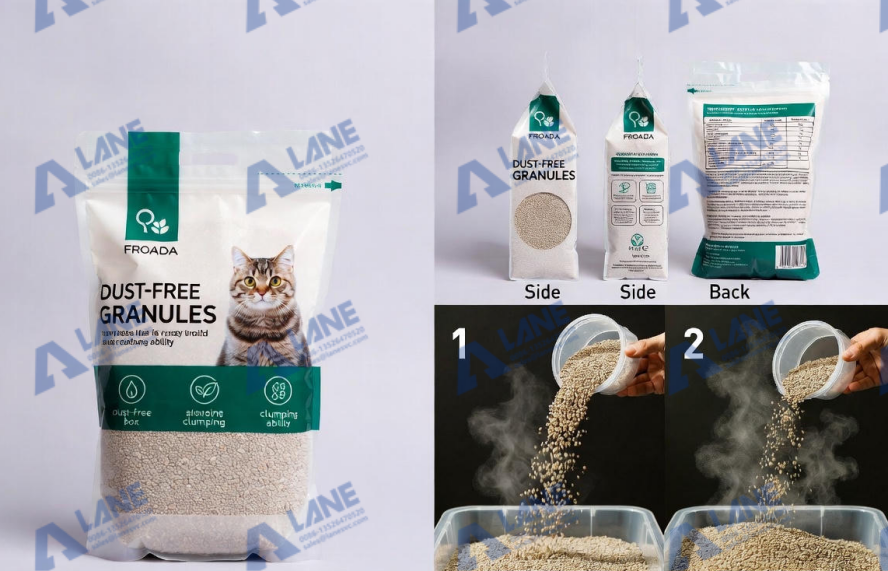
Packaging Considerations for Particle Size Stability
Once particle size distribution is achieved, it must be preserved through proper handling and packaging. Excessive compression or inconsistent filling can damage granules and introduce new size variation before the product reaches the end user.
A reliable cat litter packaging machine helps maintain particle integrity by ensuring accurate filling, gentle handling, and consistent bag sealing. Packaging stability supports the overall goal of preserving cat litter particle size distribution throughout storage and transportation.
Packaging should be viewed as a continuation of controlled production rather than a separate step.
Quality Control and Long-Term Stability
Effective quality control focuses on monitoring particle size distribution trends rather than isolated measurements. By tracking consistency across batches, manufacturers can identify early signs of deviation and adjust production conditions proactively.
Regular evaluation of particle size distribution, combined with stable production systems, reduces waste and improves operational efficiency. When particle size control is embedded into daily operations, manufacturers achieve higher reliability with fewer corrective actions.
Long-term stability is the true indicator of successful controlled production.
Conclusion
Controlled production is essential for improving cat litter particle size distribution in modern manufacturing environments. By minimizing variation, stabilizing processing conditions, and reducing reliance on manual adjustments, manufacturers can achieve consistent product quality at scale.
As market expectations continue to rise, stable cat litter particle size distribution becomes a defining factor in performance, appearance, and customer satisfaction. Controlled, automated production systems provide the foundation needed to meet these demands efficiently and sustainably.
For more details, please feel free to contact us.
Henan Lane Heavy Industry Machinery Technology Co., Ltd.
Email: sales@lanesvc.com
Contact number: +86 13526470520
Whatsapp: +86 13526470520