

1-2 T/h Tofu Cat Litter Production Line in Belarus for Plant‑Based Eco Cat Litter
1-2 T/h Tofu Cat Litter Production Line in Belarus for Plant‑Based Eco Cat Litter
Introduction: Case Overview of 1-2 T/h Tofu Cat Litter Production Line in Belarus
The 1-2 T/h Tofu Cat Litter Production Line in Belarus project represents a successful implementation of a medium‑scale, plant‑based cat litter manufacturing plant designed to produce high‑quality eco‑friendly cat litter for both domestic distribution and regional export. This project integrates advanced process design with efficient production lines tailored to plant‑based raw materials such as straw particles, montmorillonite clay, and polyacrylamide, resulting in an annual capacity of approximately 20,000 tons of finished product.
In this case study, we detail the entire implementation — from market analysis and raw material handling to equipment configuration, installation, commissioning, and final output quality — demonstrating the technical reliability and commercial viability of a 1-2 T/h Tofu Cat Litter Production Line in Belarus.
1. Why Choose a 1-2 T/h Tofu Cat Litter Production Line in Belarus
Selecting the right capacity is critical for balancing investment cost, operational efficiency, and market demand. The 1-2 T/h Tofu Cat Litter Production Line in Belarus was chosen for the following reasons:
-
Balanced Investment and Output: A production capacity of 1–2 tons per hour enables cost‑effective construction and quick return on investment, particularly for first‑time entrants into the eco‑litter market.
-
Market Demand Fit: Belarus and nearby regions have seen increasing interest in biodegradable, plant‑based cat litter products due to rising pet ownership and environmental awareness.
-
Flexible Raw Material Use: The production line supports a range of plant‑based raw materials, with modular design allowing adaptation to future raw material availability or product diversification.
By applying this capacity, the project team was able to build a plant that met both production efficiency and sustainability criteria without over-investing in oversized infrastructure.
2. Plant‑Based Raw Materials and Product Characteristics
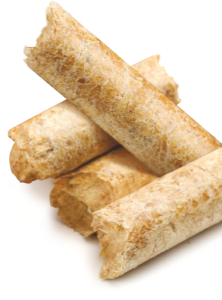
The plant‑based eco cat litter produced by the 1-2 T/h Tofu Cat Litter Production Line in Belarus primarily uses straw particles and montmorillonite as the base, with polyacrylamide acting as a bonding agent.
-
Straw Particles: Straw with a length of approximately 1–2 cm forms the bulk of the primary raw material, providing a biodegradable fiber base for the cat litter.
-
Montmorillonite Clay: A layered silicate clay that enhances absorbency and contributes to the litter’s clumping and odor‑control performance.
-
Polyacrylamide: A water‑soluble polymer that helps bind particles together during granulation, ensuring structural integrity of the cat litter granules.
The mixture of these materials allows the finished cat litter to deliver strong absorbency, reliable clumping, and low dust emissions — key performance indicators demanded by modern eco‑driven consumers.
3. Production Process Flow and Core Equipment Configuration
A well‑designed production process is crucial to achieving consistent product quality from a 1-2 T/h Tofu Cat Litter Production Line in Belarus. The production flow consists of seven key stages:
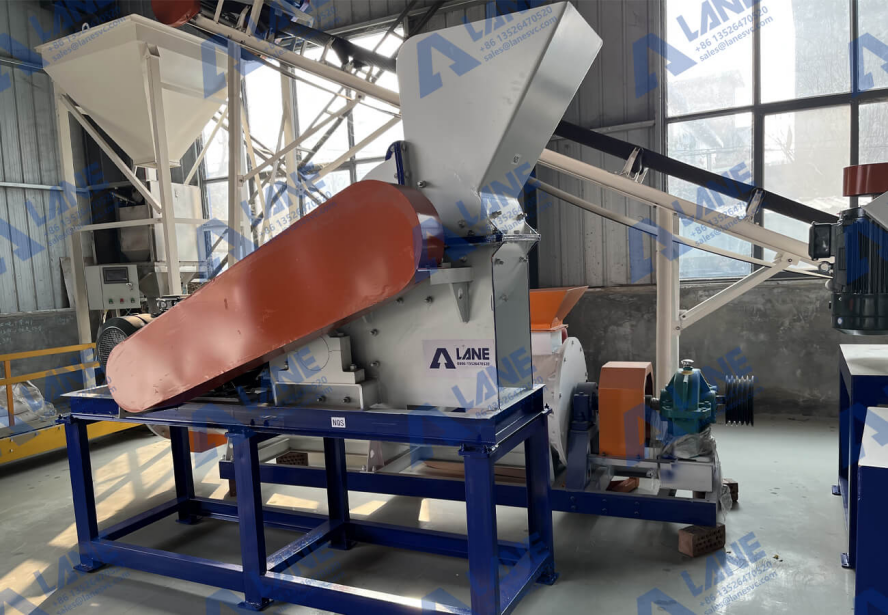
- Raw Material Crushing:
Raw straw and straw particles are first crushed into a uniform size suitable for mixing and granulation.
- Grinding:
Crushed materials and montmorillonite are further ground in the mill to ensure fine raw material uniformity for high quality pellets. - Mixing and Conditioning:
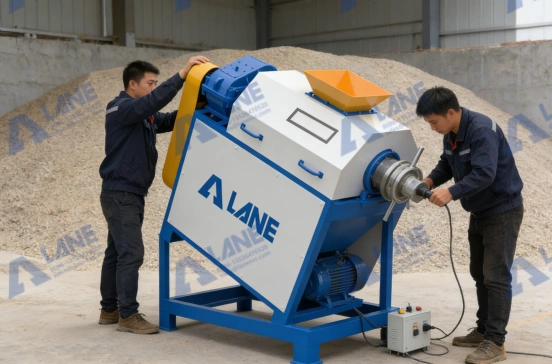
Ground materials are thoroughly blended in the mixer with polyacrylamide and water to achieve the optimal consistency for granulation. - Granulation:
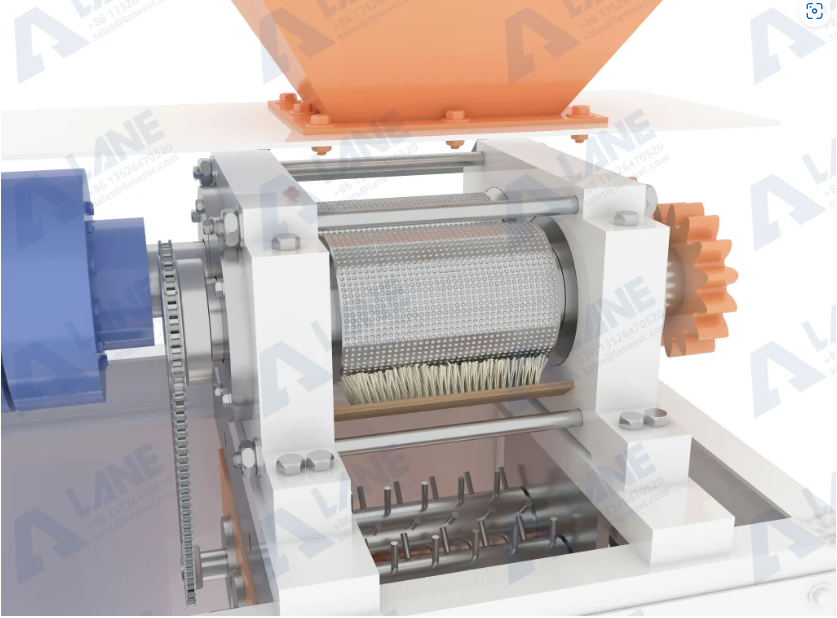
The blended mixture enters the pellet machine where polyacrylamide solution is sprayed and raw materials are granulated into pellets of approximately 2–4 mm diameter — the ideal size for plant‑based cat litter.
- Drying:
Pellets are dried in a drying oven at temperatures of 80–120 ℃, reducing moisture content to approximately 10–15%. - Screening:
After drying, pellets are screened to separate correctly sized eco cat litter from fines and oversized pieces. - Packaging and Warehousing:
Qualified products are vacuum‑packed into standard consumer sizes, such as 5 kg, 10 kg, and 25 kg bags.
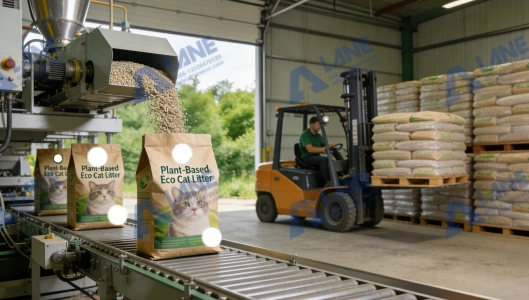
The main equipment deployed includes crushers, grinders, mixers, pellet machines, dryers, screening machines, and vacuum packaging systems — all configured to support the 1–2 t/h capacity target.
4. Strategic Installation and Commissioning Plan
Implementation of a 1-2 T/h Tofu Cat Litter Production Line in Belarus requires meticulous planning around factory layout, utilities, and equipment coordination.
-
Layout Optimization:
The production workshop was strategically organized to place crushers, granulators, and dryers in smooth material flow order, minimizing conveyor distances and operational bottlenecks. -
Utility Infrastructure:
The plant maintains a dedicated power distribution system that supports continuous production, drawing approximately 1 million kWh/a from the municipal grid. -
Material Handling Areas:
Separate zones for raw material storage, finished goods warehousing, and temporary solid waste storage were established to ensure safety and operational efficiency.
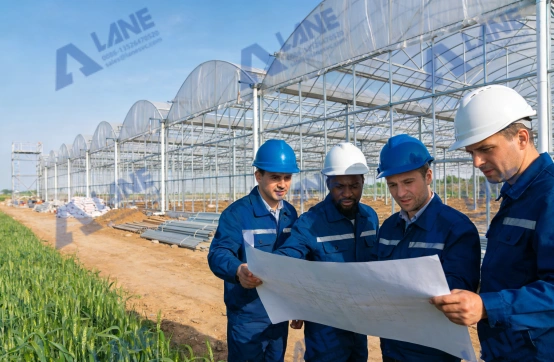
During commissioning, our engineering team executed precision calibration of moisture levels, granulating pressure, and drying parameters to ensure the eco cat litter met performance standards.
5. Production Performance and Quality Evaluation
Upon completion, the 1-2 T/h Tofu Cat Litter Production Line in Belarus demonstrated stable performance and high‑quality outcomes in line with design expectations. Feedback from early production runs on the 1-2 T/h Tofu Cat Litter Production Line in Belarus indicates consistently high product demand, with materials like soybean residue and straw cat litter pellets showing strong usability and customer acceptance in standard pet supply channels.
-
Consistent Throughput:
The plant consistently delivered an output rate of approximately 1–2 tons of finished cat litter per hour, matching the projected capacity. -
Product Specifications:
Finished pellets measured 2–4 mm in diameter, delivering strong absorbency and acceptable clumping behavior for plant‑based cat litter. -
Annual Output:
With a single production line operating 24 hours per day over 300 working days per year, the annual production capacity reached around 20,000 tons of eco cat litter. -
Operational Reliability:
Automated process controls and optimized material flow reduced downtime and improved overall efficiency.
These results reflect a well‑executed engineering project that harmonizes production demands with eco‑friendly product goals.
6. Why Our Turnkey Solutions Excel
The success of the 1-2 T/h Tofu Cat Litter Production Line in Belarus project stems from our comprehensive approach, which includes:
-
Customized Engineering: Tailored process designs to accommodate raw material variations and product requirements.
-
Integrated Equipment Selection: High‑quality machines selected for optimal throughput and long‑term reliability.
-
Professional Commissioning Support: Onsite technical supervision and process optimization to ensure smooth ramp‑up.
Our expertise in plant‑based cat litter lines ensures that clients receive solutions that deliver performance, sustainability, and competitive advantage.
Conclusion: The Value of 1-2 T/h Tofu Cat Litter Production Line in Belarus
In conclusion, the 1-2 T/h Tofu Cat Litter Production Line in Belarus project exemplifies how medium‑scale plant‑based cat litter facilities can be successfully designed, implemented, and operated to meet modern environmental and market demands. The project’s strong performance, efficient use of plant‑based raw materials, and reliable output showcase the maturity of tofu cat litter manufacturing technologies. Looking ahead, the 1-2 T/h Tofu Cat Litter Production Line in Belarus serves as a benchmark for similar eco-friendly cat litter projects worldwide, illustrating how mid-range capacity production lines can successfully bridge the gap between sustainability and scalable manufacturing.
If your company is considering building a plant‑based cat litter production line with similar capacity or exploring larger scale options, we invite you to contact our team for tailored engineering solutions and detailed quotations.
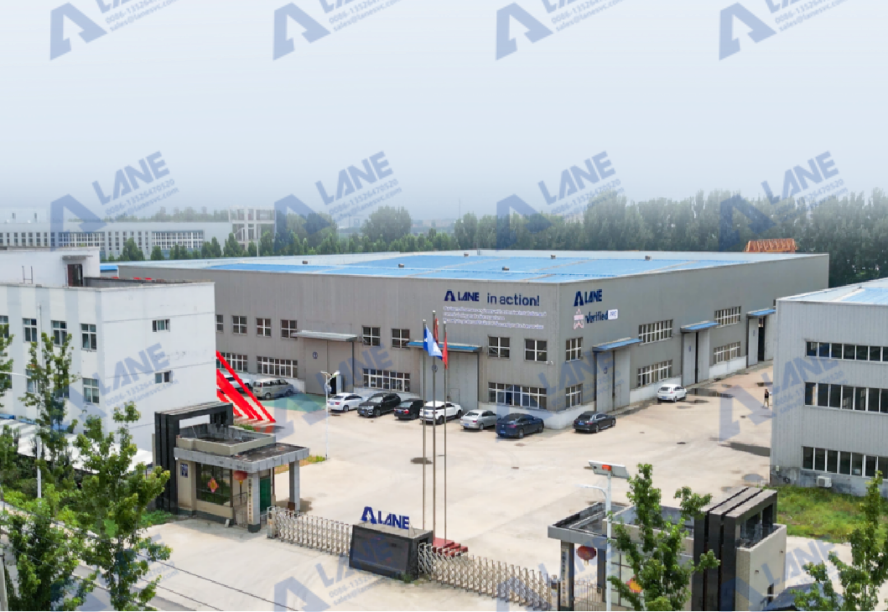
For more details, please feel free to contact us.
Henan Lane Heavy Industry Machinery Technology Co., Ltd.
Email: sales@lanesvc.com
Contact number: +86 13526470520
Whatsapp: +86 13526470520